Heavy-Industry Park and Energy Support Construction in Elk City
Buildings, yards and rail-adjacent sites in Elk City, planned around Big Elk Industrial Park, I-40, the Farmrail line and the energy sector.
Buyers who need heavy-industry zoning near an interstate will find that Elk City's Big Elk Industrial Park offers just that, and we build for owners who want to use it well. The City of Elk City describes the park as 130 platted acres with individual sites from 6.6 to 35 acres, zoned I-3 (Heavy Industry). That range of lot sizes suits a service yard, a fabrication shop or a plant with room for outdoor storage and expansion.
The city also says the park is on rail, adjacent to the Farmrail main line, which links to BNSF and Union Pacific, and less than 1.5 miles from the I-40 access ramps, with both east and west entry and exit. For a builder, that combination of heavy zoning, rail adjacency and highway access means the site plan is a series of choices about trucks, track and storage.
We start with the buyer's use and work backward. How many trucks per day? What do they carry? Is rail a daily need or an option? How much outdoor storage? Where will employees park and how will they enter? The answers produce a layout that gives the owner room to grow without paying for ground they will not use.
Heavy-industry lots reward early planning for the second phase. Utilities, drainage and truck circulation sized for the first building can often serve a larger second building if sleeves, easements and setbacks are planned at the beginning, and that planning costs far less than rebuilding finished work.
An energy-sector economy
Wikipedia states that the petroleum industry is the heart of Elk City's economy and that Great Plains Regional Medical Center is its largest employer. A town with that mix has steady demand for equipment yards, repair shops, supply warehouses and fabrication space, as well as for medical and service buildings.
Wikipedia also reports that Red Hills Wind Farm near Elk City, in Roger Mills and Custer counties, has 82 turbines producing 123 MW, was commissioned in June 2009 and created 15 new full-time local jobs. Wind work adds maintenance and logistics needs. See utilities and power for how we serve those users.
Shops, yards and storage
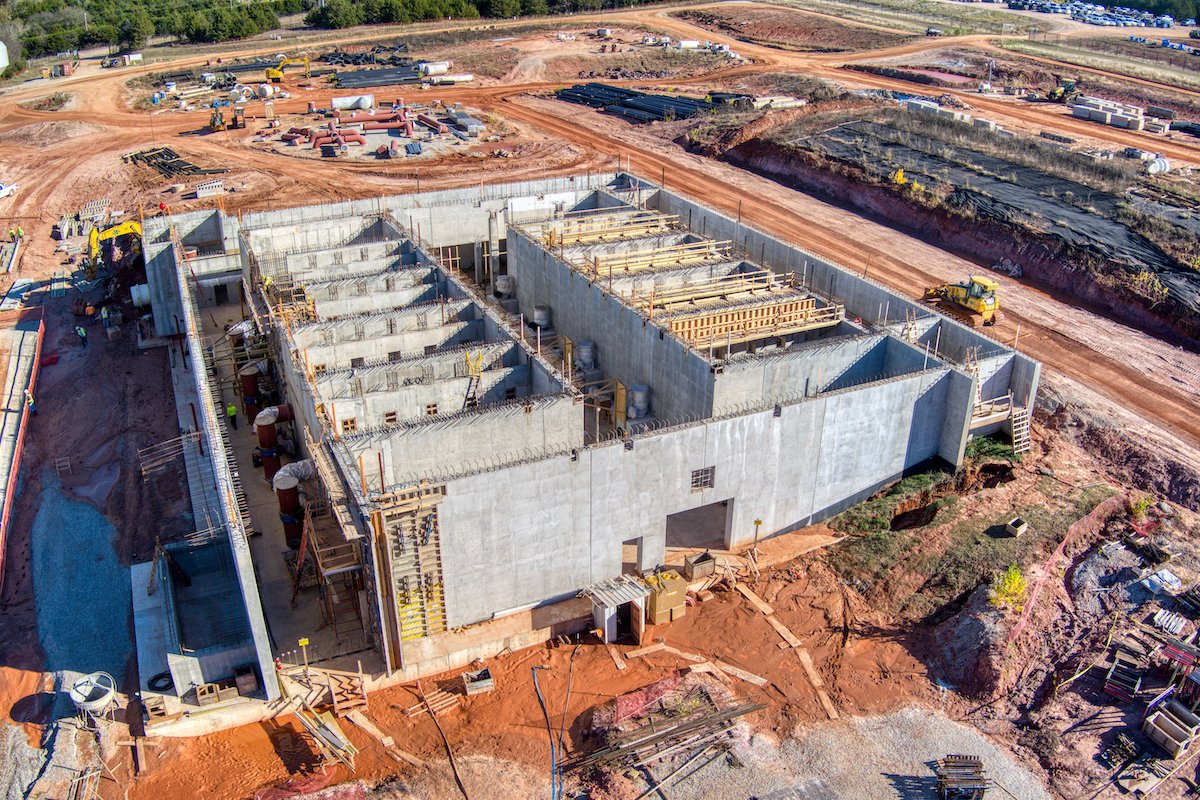
A typical Elk City project includes a steel-framed shop with heavy overhead doors, a concrete apron, an office, a fenced yard and utility service. We often build pre-engineered metal buildings for this work because they are economical and can be expanded.
Yards deserve equal attention. Truck courts and trailer yards need a base that holds loaded rigs, drainage that sheds water and lighting that supports night work. Where heavy equipment is stored outdoors, we design stabilized surfaces, and our stabilized laydown yards work covers the details.
Highways, airport and surrounding towns
The Encyclopedia of Oklahoma History and Culture says Elk City sits at the intersection of Interstate 40 and State Highway 6 in northeastern Beckham County. Wikipedia reports that Elk City Regional Business Airport lies about 1 mile northeast of the city and has a 5399' x 75' paved runway. Together, they provide road and air access for parts, people and specialists.
Western Oklahoma owners often serve a wide area, and we serve it as well. If you are comparing Elk City with other nearby sites, our pages for Clinton and Weatherford describe their local conditions.
Dirt, concrete and underground work
We schedule and supervise site grading, utility trenching, foundations, slabs and paving. Managing them together keeps the sequence tight: the pad is graded, the utilities are laid, the slab is poured and the apron is built by the same team. That reduces the risk of damage between trades and keeps a clear line of responsibility.
Heavy-industry lots often need underground power, water, sewer and drainage. Our site utilities package and electrical duct bank and underground pages describe how we route and protect these systems.
What controls the budget
The main drivers are lot preparation, floor design, yard size and rail work. Lots in a platted park may come with some infrastructure, but extensions and connections still cost money. We list what the park provides and what the owner must add.
Rail connections can be the largest single item, and they involve a railroad, a design and approvals. If you may want rail later, we can leave room and sleeves now, which costs little and keeps the option open.
Yard surfacing is the other place where owners save in year one and spend in year three. A cheaper base can rut under loaded rigs and need replacement long before the building does. We price a base designed for the heaviest vehicle you expect and show a lighter option beside it, with a plain statement of what each is likely to cost over the life of the yard.
Sequencing a park project
Our standard sequence is permits and utility locates, clearing and grading, underground utilities, foundations and slabs, building erection, interior work and paving. We overlap steps where possible, such as starting the yard base while the building is under way.
We update the schedule weekly and share it with the owner. If a delivery or approval slips, we show the effect and propose ways to recover.
In western Oklahoma, distance is a schedule item. Steel, doors, electrical gear and some concrete products come from far away, so we place those orders as soon as the design is firm and confirm shipping dates in writing. We also keep the owner informed about utility connection dates, since a building that is finished but not energized cannot open.
Heavy-industry safety on the ground
Heavy-industry sites involve heavy equipment, moving trucks, excavation and lifts. We use traffic plans, spotters, trench protection, lift plans and daily briefings. Visitors and deliveries sign in and receive a briefing.
Open-plains weather adds wind and storms. We secure materials, monitor forecasts and stop work for conditions that make lifts unsafe. For more on our approach near operating businesses, see phased construction on occupied sites.
Send us your park lot and your use
Tell us the lot, the use and any rail needs. We will return a scope, a schedule and a price for your Elk City project.
Common Questions
Can I build any heavy-industry use in the park?
The zoning is I-3, Heavy Industry, according to the city. Specific uses can still require permits, environmental review and covenants. We help you check the use, the lot and the approvals before you buy.
How much does rail access matter?
It matters if you ship or receive bulk materials regularly. The park is described as adjacent to the Farmrail main line, but a lot-level connection must still be designed and approved. We study your volume and tell you if rail pays for itself.
What size lot should I buy?
Lots range from 6.6 to 35 acres. The right size depends on building footprint, yard, trucks and expansion. We often help buyers sketch a layout before they sign so they buy the right amount.
How do you deal with wind on site?
We monitor forecasts, secure materials and set wind limits for lifts. Steel and panels are braced as they go up. The schedule includes weather allowances so crews are not pushed to work in unsafe conditions.
Can you build for oil and gas support companies?
We build shops, yards, warehouses and offices for companies serving the energy sector. We do not do the field work itself. Our focus is the ground and buildings that make your operation efficient.
How soon can work start?
Start dates depend on permits, utility locates, material lead times and weather. Site work often begins while the building package is being produced. We give you a written schedule that shows the critical items.