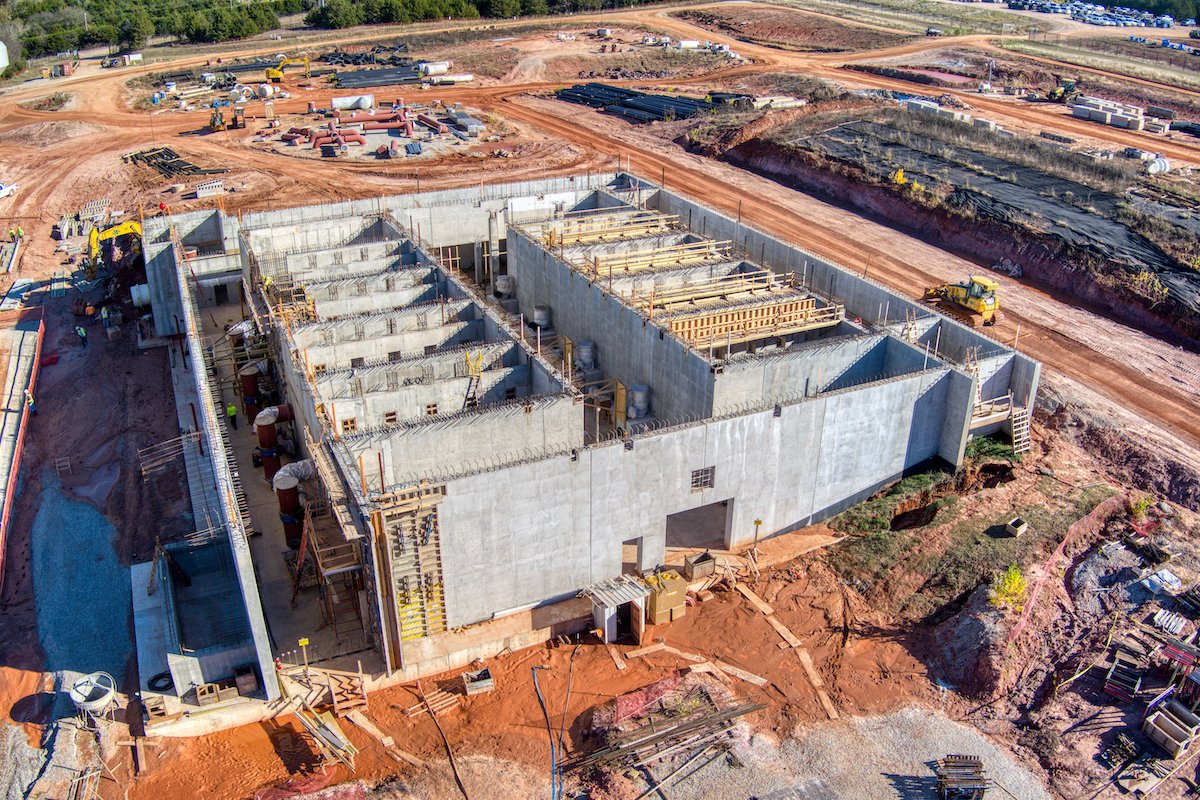
Stabilized Laydown Yards for Oklahoma Industrial Projects
Stabilized laydown and staging yards for Oklahoma plant projects: subgrade treatment, crane pads, drainage and haul loops that hold up through a wet spring.
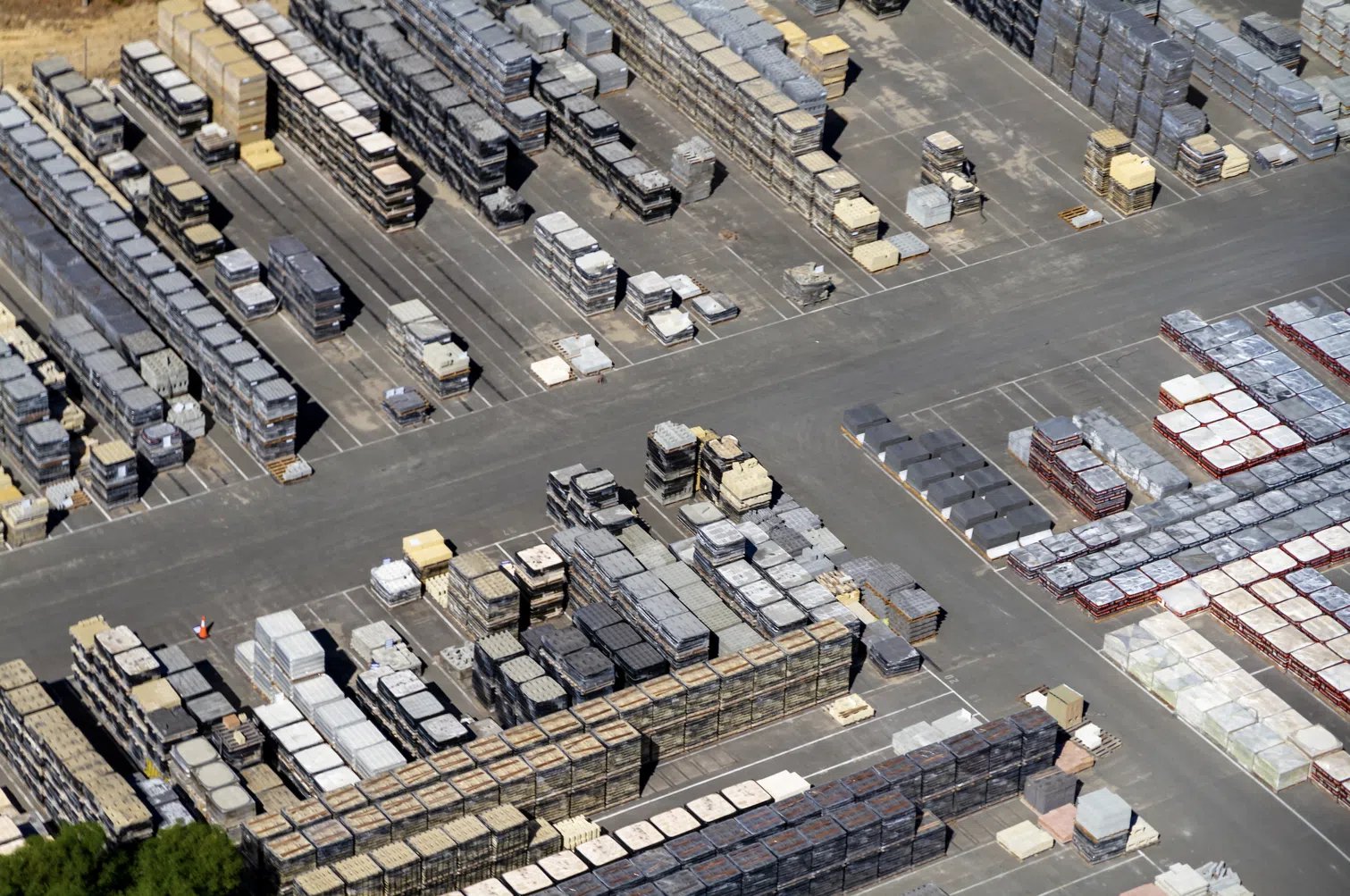
Cranes arrive before the building does, and so do the steel, the precast, the process piping and the trailers that carry them. Somewhere on the site all of that has to sit until it is lifted, and the ground under it has to carry a loaded trailer one day and a crawler crane the next. A laydown yard is the part of an industrial project that nobody draws carefully and everybody depends on.
We build stabilized laydown yards as working pavements, not as graded dirt. After the site clearing and grading is done, that means stripping topsoil, proof rolling the subgrade, treating soft areas with lime, cement or geogrid where the soil calls for it, and placing compacted aggregate to a depth set by the heaviest load planned for each zone. Gates, haul loops, crane pads, material rows and drainage are laid out before the first truck unloads, so the yard keeps working through a wet May as well as a dry August.
Some owners want a temporary yard that is removed at turnover. Others want it to become permanent trailer storage or the pad for a later building. We plan for both and price the yard once, so the decision is made on real numbers rather than on a guess at the start of the job.
What goes into a yard that will not rut
The work starts with a survey and a look at the geotechnical report, then clearing and stripping to firm ground. We proof roll with a loaded truck, mark every soft spot, and decide area by area whether to undercut, chemically treat or bridge with fabric and stone. The aggregate base is placed in lifts, compacted and tested, then graded to a crown or a single slope so water leaves the yard instead of standing in it.
On top of the base we build the pieces that make a yard usable: crane pads with a thicker section and mats where outriggers will sit, a stabilized entrance with a rumble apron so the public road stays clean, perimeter fence and gates, a lighting conduit run, and a surface that can be re-dressed as the job moves. Material rows are marked on the ground and tied to the erection sequence, so the steel needed first is the steel nearest the crane.
Reading the project before the yard
The size of a yard follows the size of the building and the speed of the schedule. A tilt-wall building wants room for panels to be cast, cured and lifted. A structural steel erection package wants long rows of members sorted by erection order and a clear lane for the delivery trucks. A process project wants piping spools, vessels and skids staged near the unit that will receive them. We ask the owner and the erector for the lift sequence early, because it tells us where the heavy traffic will run.
Existing plant operations matter just as much. On an occupied site the yard may be squeezed between live roadways, fire lanes and utility corridors, and some ground cannot be disturbed at all. We map those limits with the owner, keep haul routes away from operating areas, and agree on where trucks stop, who flags them and how the yard is closed in a storm.
Large multi-phase work across the state
Oklahoma now has projects that need real staging ground. A data center campus announced on unincorporated land north of Tulsa is described as reaching $3 billion across multiple phases, with up to four facilities and close to 1.2 million square feet. Work like that is built in sequences, which means the yard cannot be a one-time clearing. It has to be set up so the second and third phases can reuse it, with haul roads and drainage that already work. We talk through that kind of staging with owners of data center campuses before a design is final.
Reclaimed ground is another pattern. The Air Force acquired 158 acres of former rail yard on the west side of Tinker for KC-46A maintenance, and old rail yards and industrial lots across the state often carry fill, buried ties and abandoned utilities that change how a yard has to be prepared. We probe before we promise, and we tell the owner what we find. Our work around Will Rogers Airport and Tinker reflects that habit of looking under the surface first.
Weather, timing and a yard that is ready on day one
Oklahoma weather is the schedule risk we plan around. The National Weather Service Norman office counts 4,518 tornadoes in the state from 1950 to the present, with May the peak month at 1,851, so spring is also the season when loose material, light fabrications and tall stacks of lumber need a plan for wind and for a fast shutdown. We build the yard early, usually in the first weeks of mobilization, so it is compacted and drained before the rains and before the heavy deliveries begin.
A yard also has an end date. We schedule its removal or conversion with the turnover plan so the area is released when the owner needs it, whether that means reclaiming the ground for landscaping, adding a final pavement section or leaving a stabilized pad in place. Doing that cleanly is easier when it was part of the original schedule.
Traffic, dust and stormwater on a working site
Laydown yards concentrate vehicles, people and suspended loads, so we treat them as a safety area from the first day. We separate pedestrian paths from truck lanes, set speed limits, mark swing radii for cranes, and keep an unloading area clear of storage. Dust control is routine, using water or approved palliatives, and the stabilized entrance keeps mud off the public road.
Disturbed ground also brings stormwater obligations. We install perimeter controls, inlet protection and a concrete washout before significant work begins, keep them maintained after every rain, and coordinate with the owner on the site stormwater plan. Where the yard sits near the work described in our stormwater detention and drainage scope, we build the two so they drain to the same place.
What makes one yard cost more than another
Subgrade is the first driver. A firm, well-drained site may need only a few inches of stone, while soft ground can call for treatment or thick base that doubles the cost per square foot. Haul distance for aggregate is the second, and it changes sharply from one part of the state to another. Size is the third: a yard sized for the peak week of deliveries costs more than one sized for the average, and we help owners decide which is worth paying for.
We keep fencing, lighting, crane pads and drainage as separate lines so the owner can see what each piece costs. If a yard will become permanent, we can compare the temporary build with the permanent one, which is often a small step up, and with the work in our stabilized parking lots scope, which shares much of the same base design.
Plan the yard before the first delivery
Send us the site plan and the erection or equipment sequence. We will walk the ground, tell you what it will take to stabilize it and give you a price for a yard that works from the first truck to turnover.
Common Questions
How thick should the aggregate base be in a laydown yard?
It depends on the heaviest load and the soil beneath it. A yard for pallets and light trailers can work on a modest base, while a crane pad or a lane for loaded heavy haul may need a much thicker section, a geogrid or a treated subgrade. We size each zone separately, using the geotechnical report and the planned equipment weights, so you do not pay for heavy construction across the whole yard.
Can a laydown yard be built in the rain season?
Yes, but it costs more and takes longer, and the first priority is drainage. We build the base in lifts, grade it quickly to shed water and cover or seal exposed lifts before storms. If a long wet stretch arrives, we pause placement rather than bury soft material under stone. Starting early in mobilization gives the best chance of finishing before spring storms.
Who pays for removing the yard at the end of the job?
That is set in the contract, so we put it in the price from the beginning. Some owners want the stone removed and the topsoil restored. Others keep the pad for storage or a future building. We give separate numbers for removal and for conversion so you can compare them and choose what makes sense for the site.
How do you keep a yard from tracking mud onto public roads?
A stabilized entrance with clean stone, a rumble apron and a wash area is built first, and we sweep or wash the road as needed. Haul routes are paved or stoned inside the site, so tires are mostly clean before they reach the gate. We also plan truck queuing so vehicles wait on the property rather than on the shoulder.
What do you need from us to price a yard?
A site plan, the geotechnical report if one exists, the expected sequence of deliveries and lifts, and the heaviest equipment you expect. We can work from less and fill in the gaps with site visits and test pits. The more we know about the erection sequence, the better we can size the yard and place the crane pads.