Stormwater Detention and Drainage for Oklahoma Industrial Sites
Stormwater detention, storm sewer and site drainage for Oklahoma industrial projects: ponds, inlets, outfalls and containment built to the approved plan.
Industrial sites turn rain into runoff faster than almost any other land use. Roofs of hundreds of thousands of square feet, truck courts of concrete and compacted stone yards send a thunderstorm's worth of water toward the property line within minutes. Oklahoma's storms are heavy enough that drainage cannot be an afterthought, and an owner who treats it as one usually pays for it twice, first in a hurried redesign and later in a flooded dock.
We build the whole drainage system on the site: detention basins and ponds, storm sewer, inlets, culverts, channels, outlet structures, erosion protection and, where the plant needs it, spill containment ahead of the outfall. The pond is usually the first major structure we build, because it also serves as a sediment basin during construction, and the order of its construction matters. If the pond is built late, the site sheds mud onto the road and into the neighbors' ditches for months, which is how a project earns a notice of violation before it has laid a single slab.
Our trade partners work from the engineer's approved plan and the stormwater permit, but we bring field experience to details the plan cannot show: how a clay embankment behaves after rain, where an outlet structure needs extra stone and what a pond looks like three years after a bad compaction job.
Why Oklahoma drainage deserves respect
The state's history makes the point. The Memorial Day flood in Tulsa in 1984 killed 14 people and caused about $180 million in damage, with Mingo Creek alone responsible for $125 million of it. More recently, the Army Corps of Engineers rates the river levee system in Tulsa County among the top five percent most at risk for failure, with state and federal money proposed for repairs. In Muskogee, the river rose more than 42 feet in May 2019, well above the 39.6-foot level reached in 1986.
Those are public facts, not statements about any one parcel. They explain why local reviewers look hard at drainage and why we do too. Reviewers often ask for downstream analysis, pond routing and proof that the new release will not worsen a neighbor's flooding, and we help the engineer's submittal answer those questions the first time. An industrial site near a creek or river should assume that floodwater is possible, set floor elevations with margin and keep the detention volume from becoming part of the problem.
Permits and design standards
Stormwater approvals run through the city or county, and often through a state permit for construction activity. Cities set detention requirements, release rates and outlet details in their own criteria, and the engineer designs to them. We read the criteria in the first week, because a requirement for a larger pond or a lower release rate can change the site layout.
We also coordinate floodplain development permits where they apply and keep the records an inspector will ask for: pond as-builts, compaction tests, inspection logs and maintenance guidance. These documents are part of our permitting coordination package, not an extra chore at the end.
Building ponds, pipes and structures
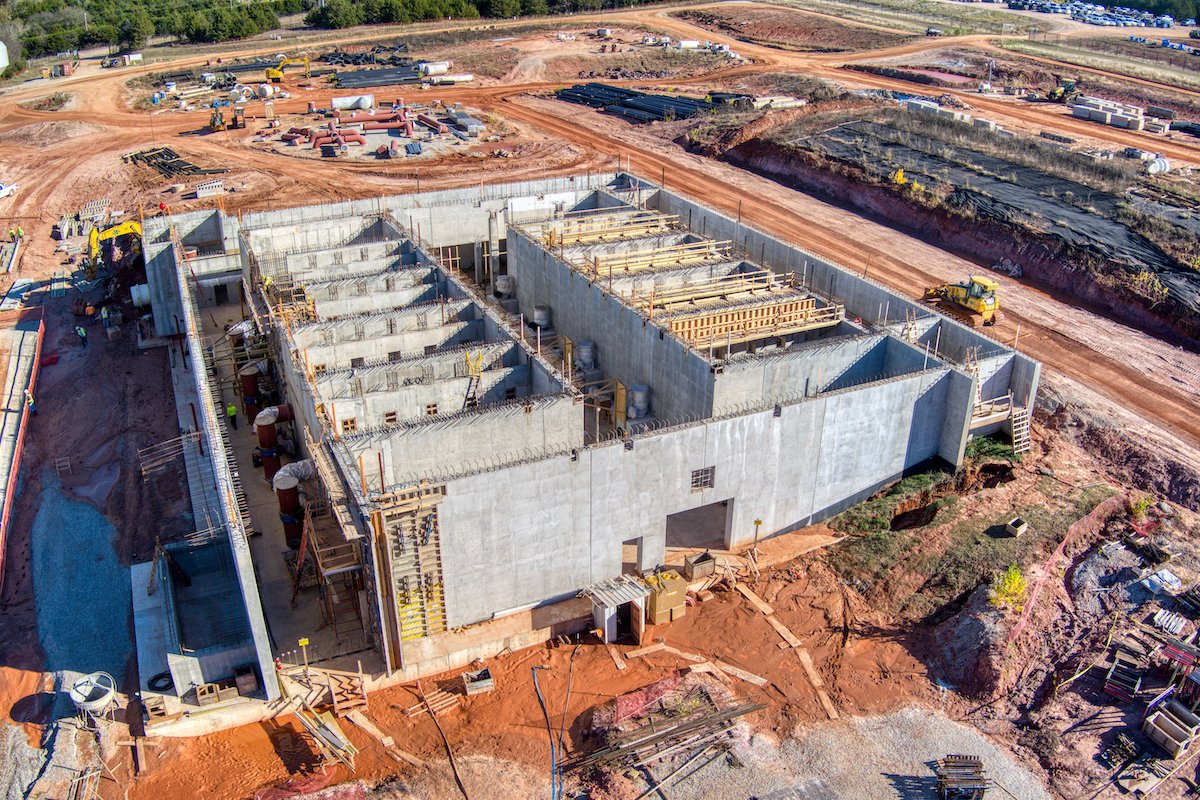
We schedule and supervise excavation, embankment construction, pipe installation and concrete structures for drainage. An earthen pond embankment is built in compacted lifts with a keyway, tested and finished to design slopes. Outlet structures are formed and poured to the plan, with trash racks, weirs and orifices set to the engineer's dimensions.
We install storm sewer to line and grade, set inlets and manholes with proper bedding and backfill, and test where specified. Erosion protection, such as riprap or turf reinforcement at outfalls, goes in at the same time, not weeks later. We photograph pipe bedding and joints before backfill so the owner and the inspector have a record of what is underground. Our approach follows the underground utility package so trenches are coordinated and not duplicated.
What the drainage package covers
The package runs from the first erosion controls through final stabilization. During earthwork we build sediment traps and temporary swales, then convert the traps into permanent ponds. We install storm sewer and inlets as the pad takes shape, and we shape the site so water reaches them at the design slopes.
On sites with chemical, fuel or process liquids, we also build containment: curbed areas, sumps, oil-water separators and valves that can close the outlet. That detail sets industrial drainage apart from commercial work. We coordinate containment with the owner's environmental staff and the engineer so it works under real conditions, such as a spill during a storm. Valves are labeled, operators are shown how they work and the closing procedure is written into the plant's own emergency plan.
Drainage by region
Western Oklahoma often brings intense but sparse storms and dry channels that fill suddenly. Eastern Oklahoma has more rain and more creek-bottom sites, where high groundwater and soft soil complicate pond construction. The Tulsa area, with its river and levee system, brings floodplain mapping into nearly every site decision.
We adjust methods to each region. In wet, clay-heavy ground we plan for dewatering, moisture-conditioned fill and slower production. In dry, hard ground we plan for rough excavation and sharp erosion risk when rain comes. Either way, the pond has to be right the first time because it is difficult to fix after pavement is placed.
Settle the drainage before the layout is final
Send us the grading plan, the stormwater permit and the soils report. We will check that the ponds, pipes and outlets are buildable and priced. If the site is still being cleared, we can pair drainage with mass grading in one schedule.
Common Questions
How big does a detention pond need to be?
The engineer sizes it from the design storm, the impervious area and the allowed release rate set by the city or county. It is often a larger share of the site than owners expect, so we recommend raising it in the first site layout, not after the building is placed.
Can detention be placed under the parking lot?
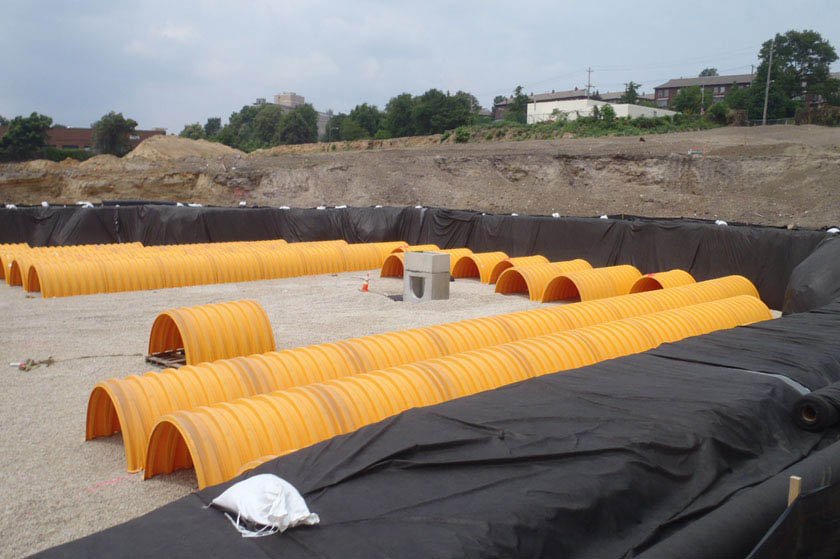
Yes, with underground chambers or pipe systems, but they cost more per cubic foot than an open pond and need maintenance access. Owners sometimes choose them where land is expensive. We price both options when the site is tight.
What maintenance does a detention pond need?
Regular mowing, sediment removal, inspection of the outlet and repair of erosion. We provide an as-built and a simple maintenance guide. A neglected pond loses volume and can become a liability.
Does stormwater affect the truck court design?
Directly. Slopes, inlets and trench drains determine how water leaves the pavement, and ponding at a dock is both a safety and a durability issue. Our truck court and trailer yard work is designed together with the drainage plan.
How do you handle a site in or near a floodplain?
We confirm the mapped floodplain, check elevations against the building and keep detention out of areas where it would be flooded by the stream. For utilities and power and other owners with critical equipment, we recommend raising key systems above the design flood.