Site Clearing and Mass Grading for Oklahoma Industrial Pads
Site clearing, mass grading and pad preparation for Oklahoma industrial sites: balanced earthwork, proof-rolled subgrade, erosion control and haul planning.
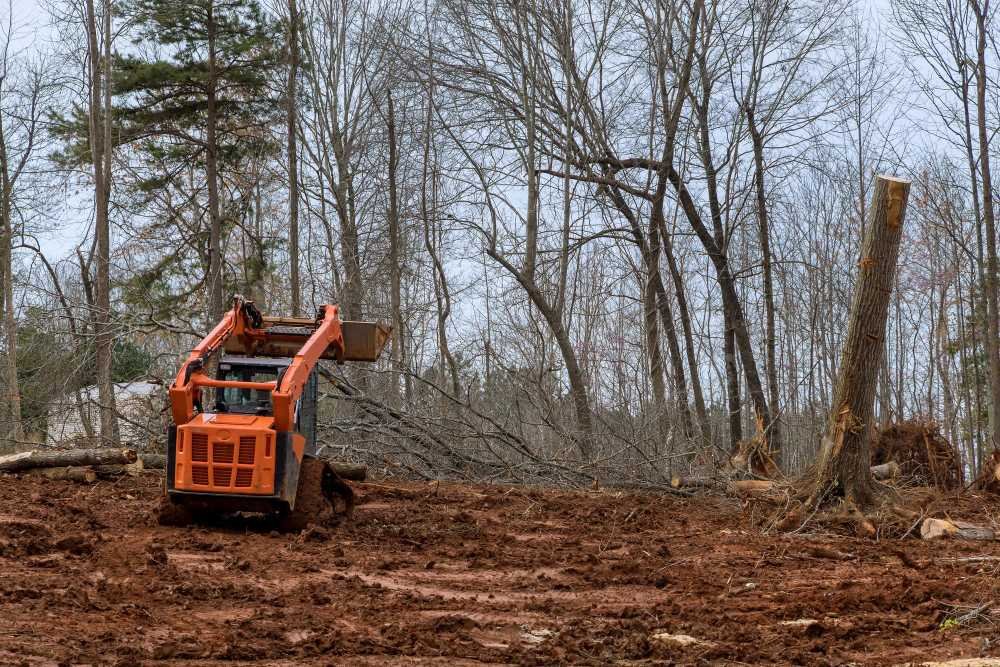
Before a pad exists, someone has to decide where the dirt goes. On an industrial site that decision involves tens of thousands of cubic yards, a drainage plan that has to work after the last truck leaves and a subgrade that will carry floors and equipment for the life of the plant. We schedule and supervise clearing and mass grading because the quality of everything built on top depends on the first pass of the dozer, and we would rather own that quality than inherit it.
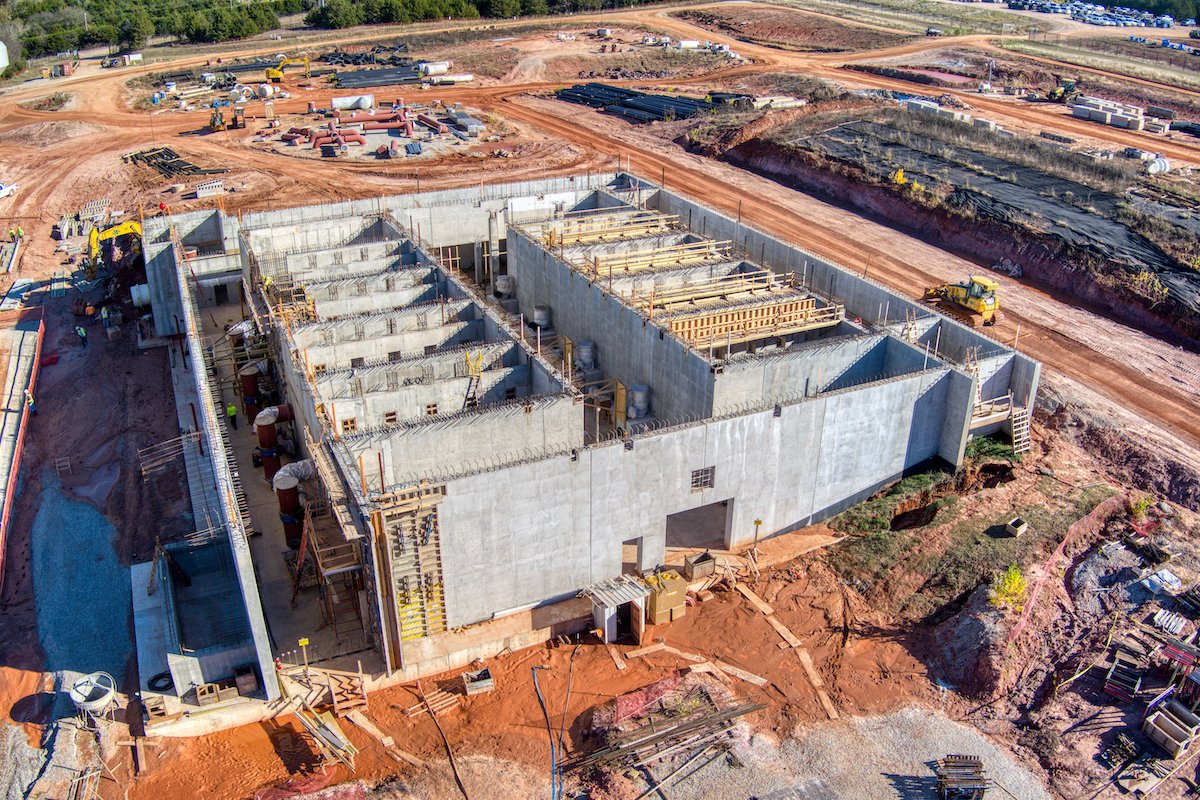
Our trade partners strip, clear and grub the site, haul or process vegetation, cut and fill to the design grades, build the pad and shape the drainage in a single plan. We set out the site from the engineer's drawings and use machine-controlled equipment where it helps, checking the work with surveys at every stage, not only at the end.
Industrial grading in Oklahoma is shaped by weather, clay and the size of the parcel. A sunny week is an opportunity; a wet one can shut down a clay site completely. We plan around both, and we tell owners the expected earthwork window in the proposal, not after the first rain.
Equipment and crews we put on the ground
We schedule and supervise the main earthwork operations: clearing, scraping, cut and fill, compaction, finish grading and erosion control installation. That means one team is responsible for how the site drains, how the pad is built and how the construction entrance is kept clean. When a design issue appears in the field, the foreman and the project manager are the people who can solve it.
Our supervisors work with the owner's geotechnical engineer on testing. Fill is placed in lifts, compacted to the specified density and tested, and the pad is proof-rolled before any stone or slab goes down. Soft spots are cut out and replaced, not covered. A pad that passes the proof roll is cheaper than any repair under a slab.
Parcel sizes we see across the state
Oklahoma industrial land comes in many sizes. The state's largest industrial park, MidAmerica, is reported at about 9,000 acres with more than 75 businesses, and it offers parcels for large plants. A Chickasha airport-area tract of 320 undeveloped acres was sold with a first phase of 50 lots of two to ten acres each, and Elk City's heavy-industry park is platted into sites from 6.6 to 35 acres. A small-lot plan and a large-pad plan are very different earthwork jobs.
On a multi-lot park, the grading often has to satisfy several users: shared drainage, a common detention area, street grades and lots that must be graded to a rough pad for later users. On a single-user site, we build the pad to the plant's exact elevations. In both cases we plan haul distances, stockpiles and phasing before the first cut, and for logistics and distribution users we shape the pad around truck circulation from the start.
The steps in a clearing and grading package
We start with erosion control, a construction entrance and the limits of clearing, then strip topsoil and stockpile it for reuse where the design calls for it. We remove trees, stumps and debris, haul or process what cannot stay, and survey existing utilities that must be protected or relocated. Cut and fill follow, with the aim of balancing quantities on site.
Then comes pad construction, with subgrade preparation and compaction, followed by finish grading to design tolerance and the shaping of swales, berms and detention areas. We hand over a pad that is tested, surveyed and ready for the underground utility package and foundations.
What changes an earthwork plan
Soil is the main variable. Clay holds water and can be unworkable when wet, while rocky ground can slow production and add cost. We ask for the geotechnical report before pricing and plan the moisture conditioning, lime or cement treatment and haul-off that the soils may require. Where a report does not exist, we recommend borings before the grading plan is final.
Weather is the second. May is the peak month for tornadoes in the National Weather Service's Oklahoma record, and spring storms often bring heavy rain, so we stage the work to leave the site stable and drained at the end of every day. Equipment is parked on high ground, fuel is contained and stockpiles are shaped so they do not wash into stormwater detention areas.
What drives the earthwork price
The largest cost drivers are the quantity of cut and fill, the haul distance, the soil condition and the finished grade tolerance. A site that balances needs only to move earth across the property, while one that must import or export fill pays for every truck. Early agreement on the pad elevation can change the price more than any other single decision.
We give owners the earthwork balance in cubic yards, the assumptions behind it and the unit prices for adding or removing fill. When the field condition differs, the owner sees the unit price already agreed, rather than a new negotiation. This approach keeps change orders short and calm.
Safety in a moving-equipment environment
A grading site is a traffic environment. We separate foot traffic from machines, use spotters near blind areas, keep daily equipment inspections and limit work near overhead lines and underground utilities. Dust control and a clean construction entrance protect neighbors and the public road.
Environmental compliance matters as much. Stormwater controls must be installed, inspected and maintained, and records kept. We handle that as part of the grading contract, and we coordinate it with permitting and entitlements work so a site inspection never finds a missing silt fence.
Get the pad right before anything else
Send us the site plan and the geotechnical report if you have one. We will review the earthwork balance, flag the risks and return a price and schedule. For plants that need distribution space, we can continue directly into truck courts and trailer yards on the same site.
Common Questions
How long does mass grading take?
It depends on the area and the quantities, but a typical mid-size plant pad is a matter of weeks, not months, in good weather. Rain and soil conditions are the biggest variables. We provide a schedule with a weather allowance in the proposal.
Do you import or export fill?
Yes, when the site does not balance. We look first for a balanced design, because trucking is expensive, and we recommend design changes that reduce it where possible. If the owner wants a particular pad elevation, we price that against a balanced alternative.
What testing do you provide?
We work with the owner's geotechnical firm on density testing and proof-rolling, and we provide survey checks of grades. We keep a record of lifts and tests for the owner's file.
Can you grade a site for rail service?
Yes. Rail-served sites need grading to specific slopes and clearances, and we coordinate with the rail provider's requirements. See our rail spur site improvements for the related work.
How do you control erosion?
With the plan the engineer prepares and the permit requires: perimeter controls, inlet protection, a stabilized entrance and seeding or cover as areas reach final grade. We inspect after storms and repair what fails.