Manufacturing Plant Construction in Broken Arrow
Process plants, light assembly space and warehouses in Broken Arrow, with parcel studies for Creek Turnpike and Highway 51 industrial sites.
Manufacturers looking at Broken Arrow are choosing between a handful of industrial corridors on the southeast edge of the Tulsa metro, and our job is to turn a short list of parcels into a building that can start production. We build process plants, light assembly space, warehouses and the yards that go with them, with particular attention to power, truck access and expansion room. Many of the buyers we talk to are aerospace and energy-sector suppliers who need precise floors, secure storage and offices attached to production.
The road system makes the area workable. The Creek Turnpike (SH-364) is a 33.22-mile partial beltway operated by the Oklahoma Turnpike Authority and has interchanges with SH-51 and the Muskogee Turnpike (SH-351) near Broken Arrow. The Broken Arrow Expressway (State Highway 51) provides the east-west connection. A plant near the intersection of those routes can reach Tulsa, the Port of Catoosa and the eastern part of the state quickly.
Reference material describes Broken Arrow as having a large concentration of manufacturers and an engineering-heavy aviation training employer, and while those are secondary sources we treat them as context, not as a promise of local labor.
Who builds here and what they need
Aerospace, energy equipment, metal fabrication and packaging are the sectors we see most often in the Broken Arrow corridor. Each of them values a shell with a clean span, strong power service and a floor that holds heavy equipment. The metals and heavy industry sector adds bridge cranes and ventilation; advanced manufacturing adds precise slabs, clean power and security.
Offices matter more than they look. A plant that employs engineers needs conference space, a lab or test area and visitor parking at the front, and the front of the building often decides how the company is seen. We design the office wing as part of the shell, so mechanical and electrical service runs once.
Expansion is the other planning question. A plant that is full in five years will want a bay added on the side that was left open, so we site the building, the yard and the utility mains to leave that side clear. We also leave stub-outs and capacity in the electrical yard for the second phase. It costs little now and saves a shutdown later.
The two industrial parks at the interchange
The Broken Arrow Economic Development Corporation lists Creek 51 Business Park as 85 acres at the southwest corner of the Creek Turnpike and Highway 51 in Wagoner County, zoned industrial. It also lists Jackson Mills as 52 acres at the intersection of Highway 51 and the Creek Turnpike in Wagoner County, described as being along the Highway 51 industrial corridor. We do not own or market these properties; we help buyers evaluate them.
An evaluation covers the things a listing cannot: the depth to rock, the capacity of the sewer and water mains, power availability, drainage paths and the effect of Wagoner County's review process. We prepare a one-page summary for each parcel and compare them on the same terms, so a decision can be made with data. Our preconstruction services include that work.
From pad to production
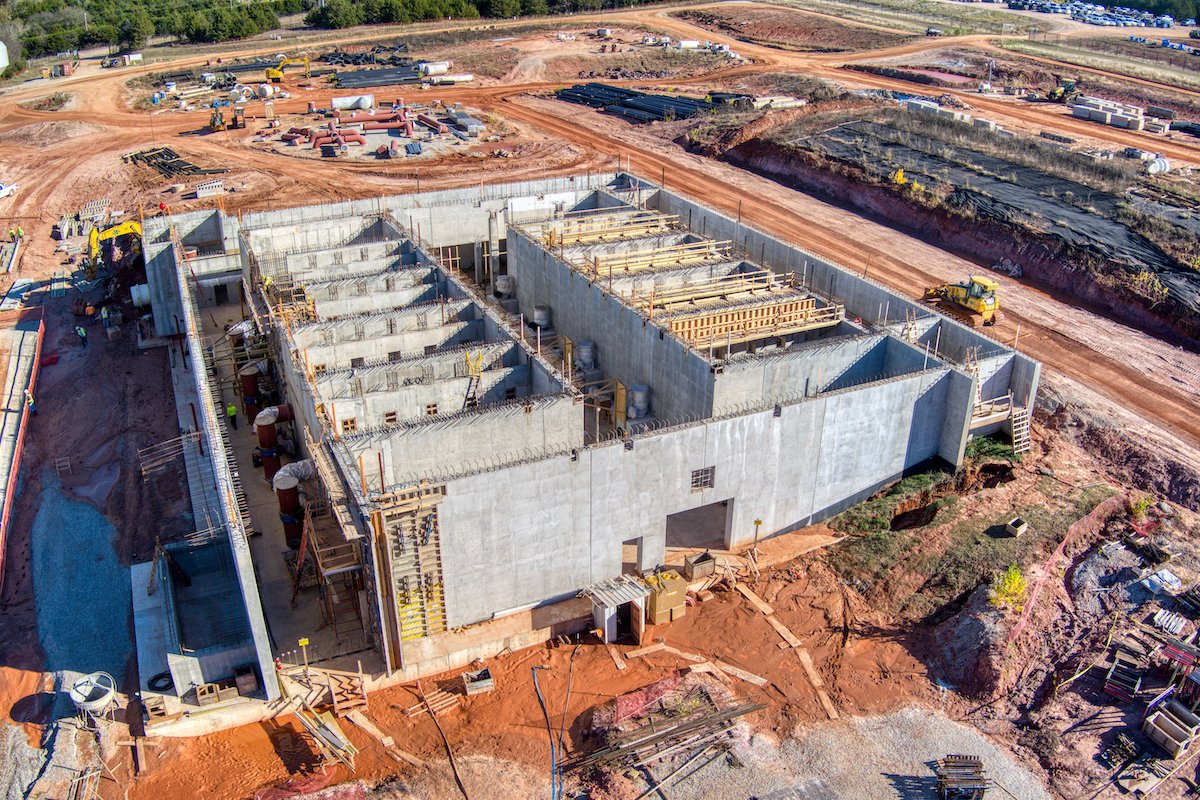
A typical Broken Arrow industrial job begins with site preparation and a building pad, then utilities, foundations, structure, envelope and interior systems. We erect structural steel or tilt-up panels depending on the building size and the owner's schedule, pour the slab and install the exterior. Where a process requires pits, trenches or equipment pads, we place them during the pour, not after.
Equipment installation is where plans and reality meet. We coordinate delivery dates, rigging paths and anchor bolt templates with the equipment vendor, so the machine lands on a foundation that was built for it. If a machine arrives early, we plan storage; if it arrives late, we plan the finished floor so installation can still begin.
What changes the price of a plant
Process utilities often outweigh the building in a manufacturing job. Compressed air, process water, wastewater, gas and three-phase power each add cost, and each has lead time. We separate those items in the estimate and show which are owner-driven and which are code-driven. Wastewater is the quiet one: a plant that discharges process water may need pretreatment or a permit, and the city will want to see the plan before it connects anything.
Site cost is the other swing. Two parcels a mile apart can differ by hundreds of thousands of dollars in fill, detention or utility extension. Because the Creek Turnpike and Highway 51 sites sit on a county line area where review rules differ, we confirm permit fees and timelines with the right authority before pricing is final. Nearby cities such as Tulsa and Jenks have their own review processes and costs.
Process safety during construction
Industrial construction involves heavy lifts, hot work and equipment installation, often alongside an operating line if the owner is expanding. We prepare a site-specific safety plan, hold daily briefings and require permits for hot work and confined space. When the project adjoins an operating plant, we agree on lockout and access with the owner's safety lead before mobilization.
Visitors and employees see the site differently from the crews we coordinate, so we separate their paths, mark pedestrian routes clearly and keep construction traffic away from entrances. These steps are inexpensive and prevent most incidents.
Some owners prefer one team from concept to turnover. For them we offer industrial design-build, which puts the architect, engineer and builder under one agreement and keeps the program, price and schedule in one conversation. It suits plants where the process drives the building and the owner wants to hold a firm date.
Bring us the process and the parcel
Describe the product, the equipment and the people who will run it, and send the address you are considering. We will return a building concept, a utility list and a sequence that shows what has to be settled first.
Common Questions
What is the difference between the two parks at the Creek Turnpike and Highway 51?
The Economic Development Corporation lists Creek 51 Business Park at 85 acres and Jackson Mills at 52 acres, both in Wagoner County and both at the interchange. We compare them for utilities, drainage, soils and access, because the listings do not show those details.
Which review authority applies to a Wagoner County parcel?
It depends on the exact location and whether the land lies within a city. We confirm the authority, the fee schedule and the typical timeline before a design is final.
Can you coordinate with my equipment vendor?
Yes. We collect foundation requirements, bolt templates, rigging paths and delivery dates from the vendor and build them into the schedule and the pour sequence.
How do you handle power for a manufacturing plant?
We ask the utility for a service study as early as possible, because transformers and line extensions often take longer than construction. We size the electrical yard and duct bank around the load the owner provides.