Metals and Heavy Industry Construction in Oklahoma
Industrial contractor for Oklahoma refineries, mills, glass and metals plants: shutdown-window foundations, containment, hot work discipline and heavy haul.
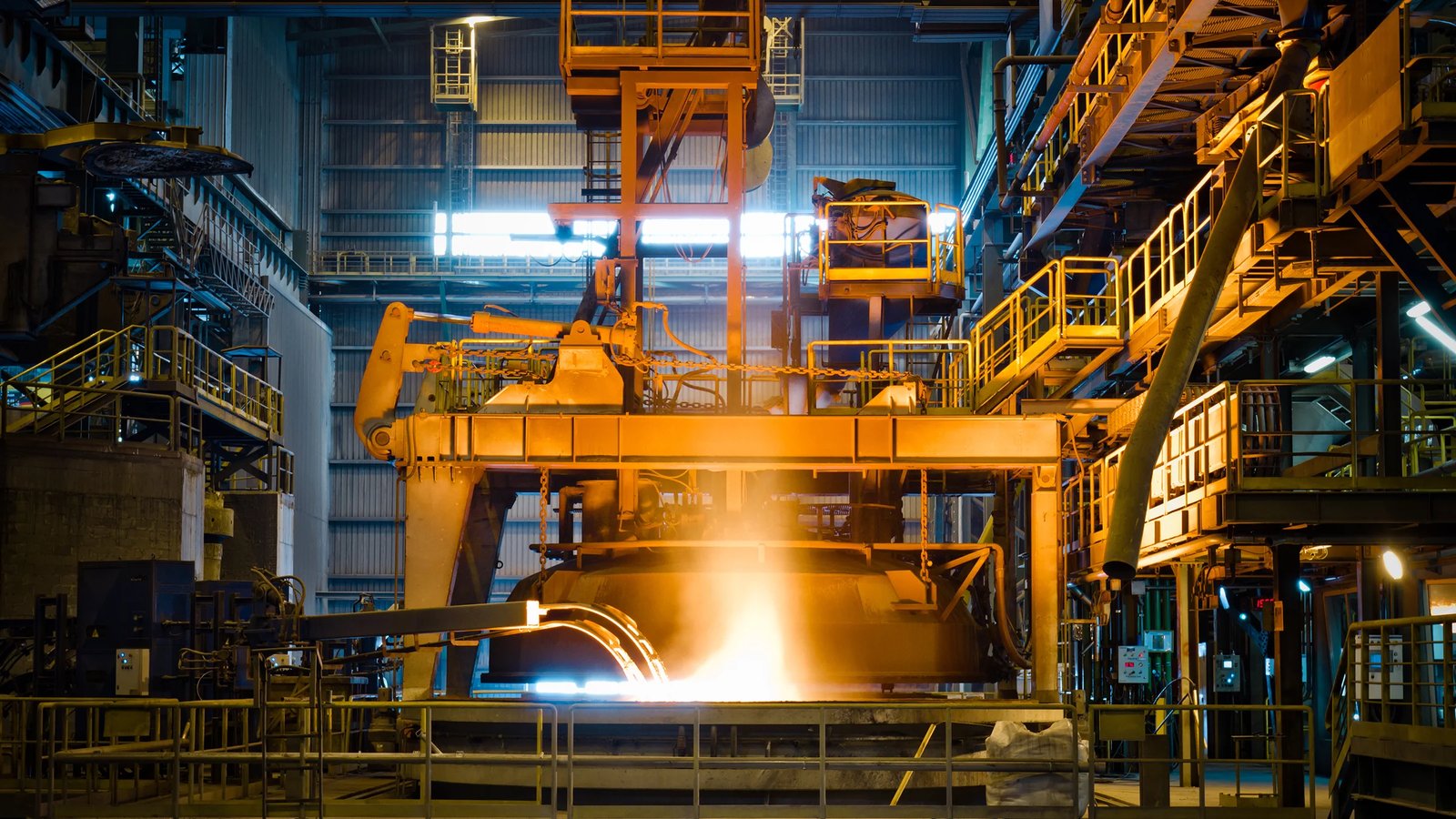
The word turnaround means something specific on the Oklahoma prairie. In 2023 a refinery at Ponca City ran what its local development authority called its largest turnaround ever, and about 2,200 contractors came to town over a two-month stretch. That is the scale heavy industry works at: a process unit comes down on a date set a year earlier, thousands of people arrive, and every hour the unit stays down costs the owner money that no schedule can recover.
Heavy industry in the state is wider than refining. A glass container plant at Muskogee employs about 200 people; a paper and tissue mill there is listed at 2.9 million square feet; a heat exchanger manufacturer at the Tulsa Port of Catoosa announced a $6 million investment and up to 160 jobs; an ammunition plant near McAlester broke ground in 2026 on a $74 million demolition shop. A proposed lithium refinery at Muskogee, with a stated investment of $1 billion, shows that new metals and materials processing is also on the table, though announcements need to be tracked against permits and financing.
These buyers want a contractor who is comfortable inside a fence line. We work by their permit systems, build to their tolerances and treat the operating plant as the first thing that has to stay safe.
Inside the fence: permits, hot work and the daily plan
Our first week on an operating plant is mostly paperwork and walking. We attend the site orientation, learn the owner's permit system for hot work, confined space, excavation and line breaks, and agree on how the crews we coordinate will be badged, escorted and supervised. Lockout and tagout boundaries are drawn with the owner's operations staff before any tool is lifted, and our foremen carry the same gas monitors and radios that the plant's own crews use.
We plan around the operating plant, which means we know that the unit next to ours may be live while ours is not. Excavation near buried process lines is potholed by hand, fire water and hydrant locations are marked before cranes set up, and heavy lifts are rehearsed with the owner's rigging lead. Our fire water loops are built and tested to the plant's own standards, because a hydrant that does not flow is more dangerous than no hydrant.
Turnaround and shutdown windows
A shutdown window is a fixed calendar slot with a fixed budget, and civil and structural work usually sits on its critical path. Foundations for replacement equipment, containment curbs, pipe rack supports and access platforms have to be cured and ready before the new equipment is set. If the work cannot be done during the outage, we do it before, with temporary supports and prefabrication, and use the outage for tie-ins only.
We work backward from the shutdown date in the preconstruction phase. Long-lead steel, anchor bolt sets and embeds are ordered first, the demolition sequence is rehearsed on paper and the crews are scheduled in shifts that match the plant's. When an owner needs industrial demolition services to clear a footprint, we plan the removal of slabs, foundations and abandoned equipment to avoid damaging live utilities nearby.
Foundations, containment and structural support
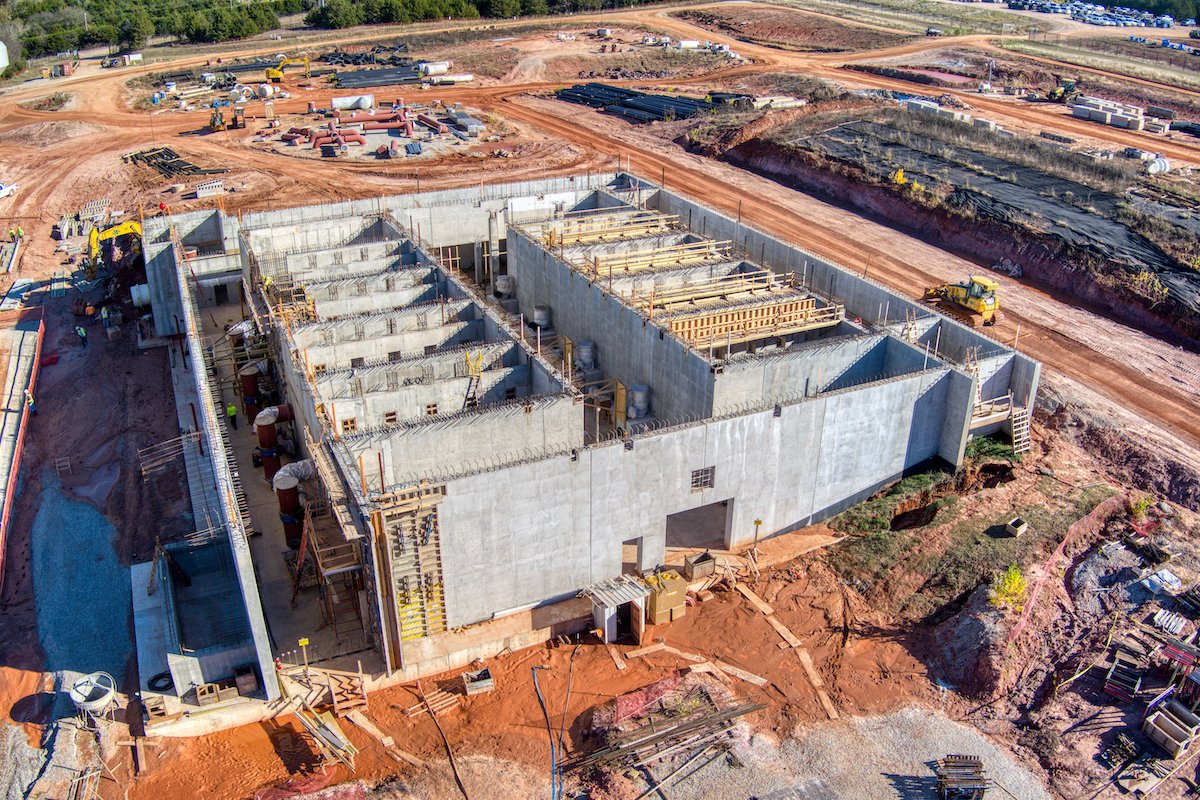
Heavy industry loads a foundation differently from a warehouse. A compressor, a rolling mill or a furnace creates dynamic and thermal loads, and the soil under it may not support them without piers or improvement. Our deep foundations and piers are designed with the owner's geotechnical engineer and tested as they are installed, and heavy equipment mats are poured in controlled lifts to manage heat of hydration.
Containment is the other signature item. Dikes, sumps, curbs and chemical-resistant coatings keep spills from reaching the ground or storm drains, and they are inspected by environmental staff. We build them with the right concrete mix, joint sealants and slopes to drains, and we coordinate drainage with the plant's wastewater system. Around the equipment, structural steel erection for pipe racks, platforms and crane runways follows the owner's fabrication and inspection requirements.
What we manage closely on a heavy site
On a plant with limited access, every subcontractor adds badging, orientation and supervision. We schedule and supervise the earthwork, concrete, underground utilities and much of the site civil work, so the number of crews that need to enter the fence is smaller and our supervision is direct. That helps schedule as well as safety, because the same foreman who sets forms also watches the pour and the cure.
Heavy-haul movements are another area where control matters. Large equipment travels on public highways, rail and sometimes barge, and the last mile is on our roads. We coordinate with the hauler and the owner to confirm weights, turning paths and bridge limits, and we reinforce temporary crossings. Our industrial renovations and modernization approach applies the same discipline to replacing aging equipment inside operating buildings.
Codes, environmental review and how they overlap
A heavy industrial site is subject to building code on its structures, fire code for hazardous materials and a range of environmental and process-safety regulations that sit outside our scope but shape it. Oklahoma's statewide minimum codes are the International Codes, and the National Electrical Code is already in force. Cities adopt their own editions, so we verify which applies to each building on a multi-building plant.
Many owners require their own engineering standards that exceed code, and we work to the stricter requirement. Similar demands appear in adjacent segments such as utilities and power, where the same civil and foundation skills apply, and in automotive and EV supply chains, where metal forming and casting plants face similar loads. The material for a lithium or battery chemicals plant may involve specialized permits, and we tell owners early which approvals sit on the critical path.
Planning shutdown or plant work?
Send us the unit, the shutdown dates and the owner's contractor requirements. We will answer with a pre-shutdown scope, a staffing plan and the lead times that set your outage.
Common Questions
Can you work during a turnaround?
We work before and after, and sometimes during, depending on the owner's permit system and the scope. The usual split is that we complete foundations, supports and prefabrication ahead of the outage so the outage crews can focus on tie-ins and equipment.
How do you handle contractor safety prequalification?
We supply the safety statistics, program documents and insurance certificates that the owner requires, attend the owner's orientation and follow the site rules. The crews we coordinate do not begin work until permits and badges are in place.
What is involved in building a heavy equipment foundation?
It begins with geotechnical data, then a design for static and dynamic loads, anchor bolt templates from the vendor and a controlled pour. For large mats, we plan lifts and cooling to limit cracking. After curing, we survey and grout the base to the manufacturer's tolerance.
Do you build containment and secondary containment?
Yes. We build concrete dikes, curbs, sumps and trenches with the sealants and coatings the owner specifies, and we coordinate drainage to the plant's treatment system. The environmental team inspects, and we keep the records.
How do you plan for new materials plants that are still being announced?
We treat announcements as indicators, not contracts. We watch for permits, financing and utility agreements, and we offer owners a preconstruction agreement so site work can begin once those pieces are in place.