Industrial Demolition Services Across Oklahoma
Interior strip-out, selective demolition and full teardown of Oklahoma plants and warehouses, with isolation, abatement coordination and scrap recovery.
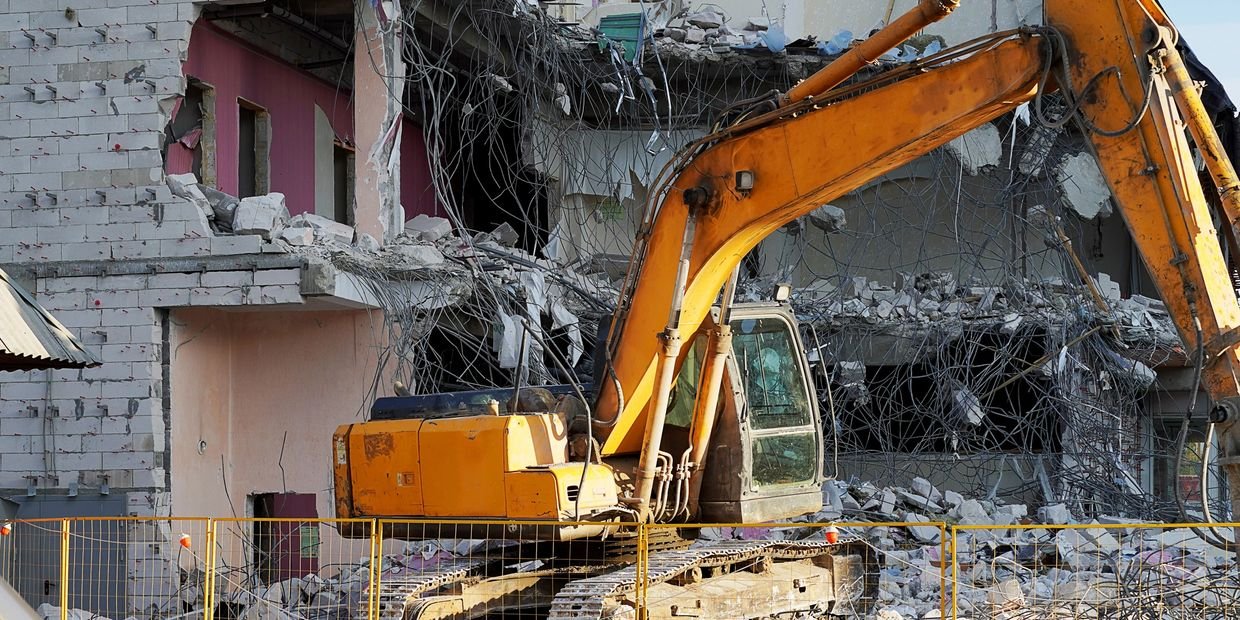
Taking down a plant starts long before the first excavator arrives. Someone has to know what is in the pipes, what is under the floor, which panels are still live, what the roof is made of and whether the bricks in the boiler room contain something that cannot go to an ordinary landfill. Industrial demolition is a safety and records problem first, and a machinery problem second.
We provide industrial demolition for Oklahoma owners who are retiring a building, clearing a site for a new plant, removing an obsolete process area from a live facility or preparing a property for sale. The work includes interior strip-out, selective demolition inside operating plants, structural steel and concrete removal, slab and foundation removal, tank and vessel dismantling by the right specialists, utility termination and site restoration. We manage sorting and hauling, and we manage hazardous material specialists, scrap buyers and the regulators that touch the project.
A good demolition plan reduces cost by finding value in what is removed, avoiding surprises beneath the surface and putting the site into a condition the next user can build on. We approach every job in that order, and we put the plan in writing for the owner, the insurer and the neighbors before equipment mobilizes.
Isolate, identify, then cut
Every demolition begins with isolation. Electrical feeds are de-energized and verified by the owner or a licensed electrician, process lines are drained, purged and blanked, and fuel, steam, water and air supplies are shut and tagged. We do not cut into a pipe or a vessel until the owner's process safety group has released it in writing, and we keep a log that shows each system, its status and who signed.
Next is identification. Older industrial buildings may contain asbestos-containing materials, lead paint, PCBs, mercury switches, refractory materials and residues from the old process. Surveys by qualified firms precede any disturbance, and abatement by licensed contractors precedes demolition. We structure the schedule so that abatement, clearance testing and demolition follow one another without gaps or overlaps. Workers on site are trained for the hazards of the specific building, and a daily briefing covers what changed overnight, which areas are cleared and where the exclusion zones sit. Mechanical demolition never starts in an area until the person who owns that system has signed it off.
Permits, notices and waste
A demolition permit from the city or county is the start. Notices to regulators about asbestos, to the utility about disconnection and to neighbors about hours and traffic are part of the file. Stormwater controls apply to the site during and after demolition, and disturbed acreage may trigger additional state requirements. We prepare the notices and confirm the sequence with each agency.
Waste is its own subject. Clean concrete and masonry can often be crushed and reused as base, steel is sold as scrap, and mixed debris goes to licensed landfills with tickets and manifests. Hazardous waste follows its own path. The owner keeps the records after we finish, so we document weights, destinations and certificates in a form that an auditor or a future buyer can read. For site follow-up, see site clearing and mass grading.
Plan the removal in reverse
We plan demolition in the reverse order of how the structure stands. Interior contents and nonstructural elements come first, then the roof and cladding, then secondary framing, then primary structure, and finally slab and foundations. Where a structure is unstable, shoring and temporary bracing are designed by an engineer, and a demolition engineer's plan is part of the submittal for large buildings.
The method depends on the structure. Steel frames are cut and lowered or dropped within controlled areas, tilt-wall panels are cut into sections and lifted, masonry is removed in lifts, and heavy concrete is broken by hydraulic attachments. Near operating equipment, we use cutting, sawing and low-vibration methods and monitor for movement. Where the work happens inside a live facility, our phased construction practices set the boundaries.
Why Oklahoma owners take buildings down
Oklahoma has a deep industrial base, and buildings leave service for many reasons. A large tire manufacturer announced that it would wind down its Ardmore plant, which opened in 1970, by the end of 2025, affecting about 1,400 jobs. Plants like that leave behind big buildings, heavy slabs, utilities and a community that wants the site used again. See Ardmore.
Scale matters in other places. A refinery in Ponca City covers about 2,500 acres, and a 2.9 million-square-foot paper products plant in Muskogee is described as the city's largest employer. Units in plants that large are retired in sections, so selective demolition inside operating sites is as common as whole-building teardown. Our work in Ponca City and Muskogee reflects that, and the metals and heavy industry and utilities and power sectors both generate retirement work.
What drives the price
The price of demolition depends on the structure, the contents, the hazardous materials, the access and the salvage value. Steel prices matter: a building full of heavy steel can offset a large share of the cost, while a masonry building with poor access costs more. Abatement, special waste, utility work and restoration are the items that vary most.
We give owners a line-by-line estimate that shows salvage credits separately, so the effect of scrap prices is transparent. A site that is to be sold may need only demolition to grade and clean fill, while one that is to be rebuilt may need removal of foundations and compaction. Owners planning to reuse the slab should read our page on demolition and slab replacement before deciding.
Tell us what must come down
Send photographs, drawings and any environmental surveys. We will walk the building with your safety lead and return a demolition plan, a schedule and a line-by-line price with salvage credits shown.
Common Questions
Who is responsible for hazardous materials found during demolition?
The owner is generally responsible for identifying and disposing of hazardous materials, and the contract defines how unknowns are handled. A pre-demolition survey reduces surprises. If we find something suspicious, we stop, protect workers and notify the owner.
Can you demolish part of an operating plant?
Yes. Selective demolition is common in plants. We isolate the area, put up barriers and dust control, and follow the plant permits for hot work, lockout and access. Work in the area next to live equipment is usually done with low-vibration methods.
Do we get credit for scrap steel?
Usually, yes. We track scrap weights and sale tickets, and credit the owner according to the contract. Scrap prices change, so the credit varies.
How long does industrial demolition take?
Small buildings take weeks, and large plants take months. Permits, abatement and utility disconnection set the front of the schedule. The physical demolition is often the shortest part, and owners who release the survey and the utility shutoff requests early save the most calendar time. We give a milestone schedule that names who owes what and by when.
What condition is the site left in?
It depends on the next use. We can leave a graded, stabilized pad with erosion control, or remove foundations and place compacted fill for a new building. We agree on the end condition in writing at the start.