Utilities and Power Infrastructure Construction in Oklahoma
Industrial contractor for Oklahoma power, wind, water and wastewater owners: haul roads, laydown, foundations, underground and public bidding support.
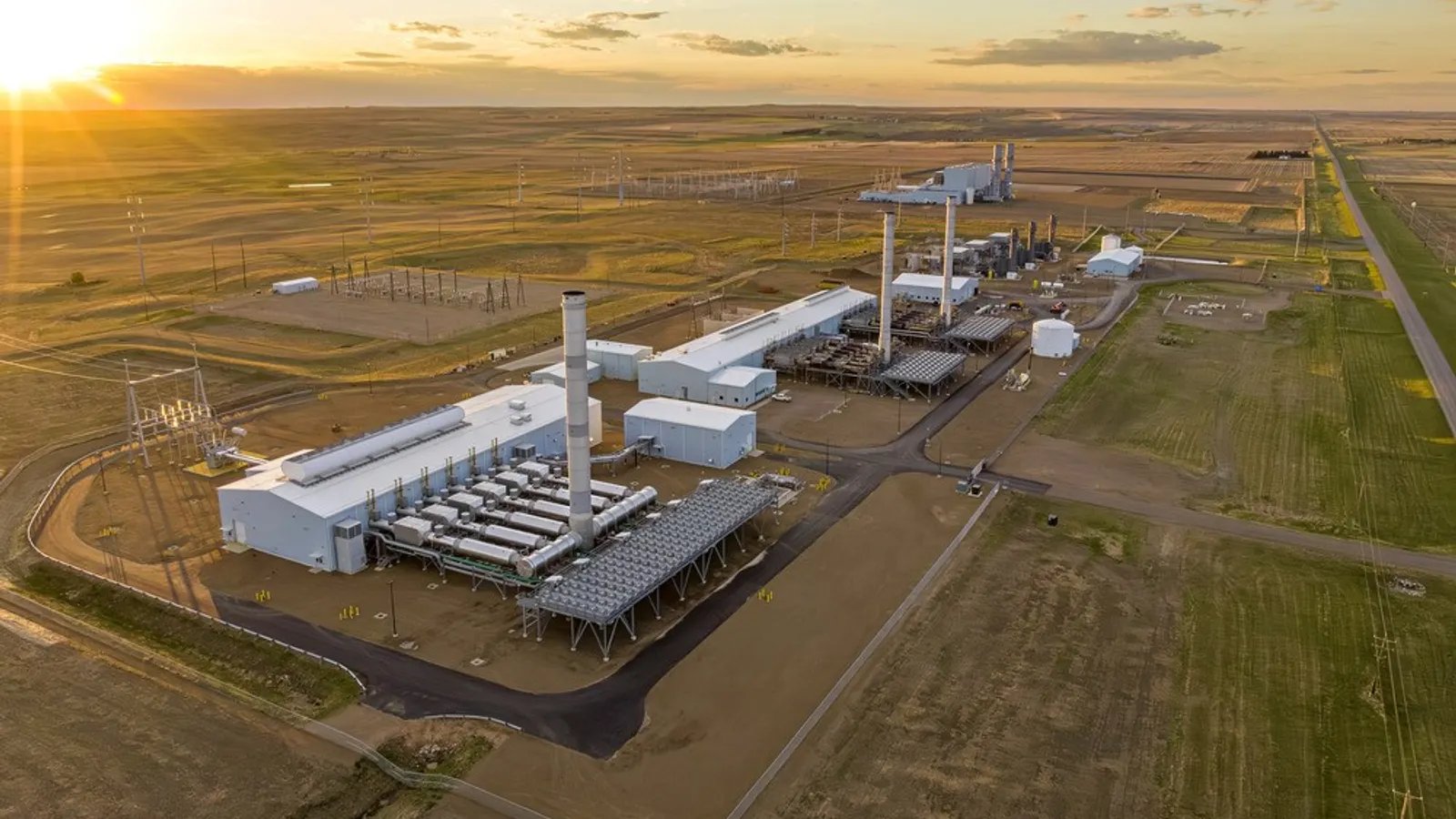
Nobody hauls a wind turbine blade to a wind farm on a county road that was built for grain trucks. Utility and power owners know this better than anyone, and it is why the first thing they ask an industrial contractor is not about concrete or steel but about access: how wide the turn at the section line, how thick the stone on the haul route, where the crane pad goes and how the road gets rebuilt afterward. Oklahoma has more of these projects than most states, so the question comes up often.
The state produces about 61 percent more energy than it consumes, renewables generate roughly 47 percent of its electricity, and the Traverse Wind Energy Center alone is rated at 998 MW. In Woodward County, federal energy data lists wind farms of 148.4 MW and 198.6 MW, and farther south a 123 MW project near Elk City has 82 turbines. Those numbers describe a utility market where generation, transmission, water and wastewater work all compete for the same civil crews and the same heavy equipment.
We work for the owners behind that infrastructure: investor-owned and cooperative utilities, municipal authorities, independent developers and the industrial customers who need power or water on site. Our role is the civil, foundation and site package that surrounds the specialty equipment.
Starting at the road, not the turbine
On a generation or substation project the earliest works are rarely glamorous. Haul roads, laydown yards and crane pads must exist before anything can be delivered, and their design determines whether the main equipment arrives on time. Our heavy-haul access roads are built with engineered base sections, wide turning radii and drainage that survives spring rains, and we document pre-construction conditions so county roads can be restored to their original state.
Laydown comes next. Wind blades, transformers, switchgear and structural steel arrive in volume and need storage that does not turn to mud. A stabilized laydown yard with geotextile, aggregate and dust control keeps materials accessible and the equipment safe, and it lets the owner's crews work in wet weather without bogging down. We size the yard from the delivery schedule, not from a rule of thumb, and we lay out separate lanes for oversize loads, personnel parking and the owner's receiving staff so a late transformer does not block everyone else.
Electrical code, bidding rules and local review
The state-adopted National Electrical Code applies, and the state has adopted the International Codes. A utility's own standards often exceed code, and a power plant or substation may sit outside municipal building jurisdiction entirely, but buildings on the site, such as control houses, maintenance shops and offices, are permitted in the usual way. We confirm the jurisdiction first because it determines who reviews drawings and who inspects.
Public owners follow a different path. A municipal authority or public utility generally buys construction above $100,000 through sealed competitive bids, awarded to the lowest responsible bidder, with 5 percent bid security. The Oklahoma Water Resources Board highlights both the state's water planning and a statewide infrastructure need it puts at $24 billion, and it reports loans such as a $4.25 million wastewater loan to a Shawnee authority. We help owners prepare bid documents and compare bids on a like-for-like basis.
Foundations, pads and the underground
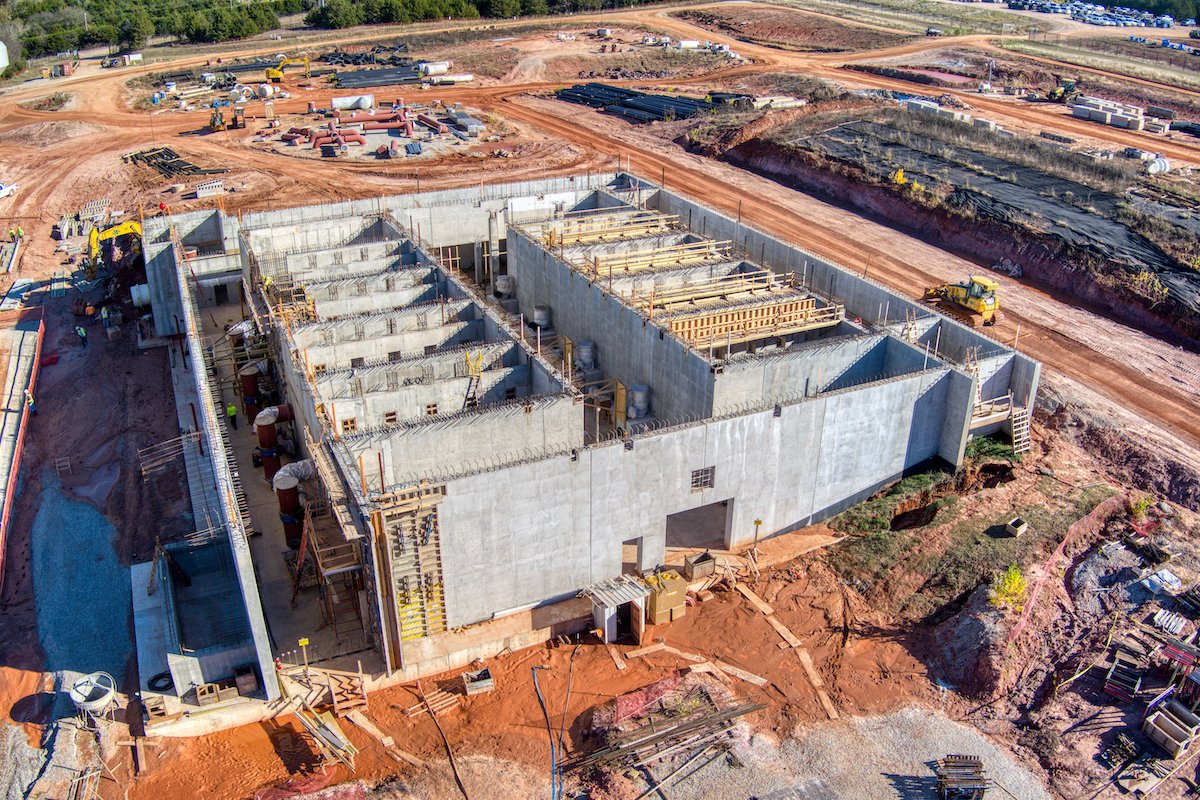
Specialty crews set the machines; we build what they sit on. For a substation that means grading, a stone-surfaced yard, equipment pads for transformers and breakers, grounding grid trenches, cable trenches and oil containment. For a wind project it means turbine foundations, whether gravity bases or drilled pier foundations, plus collection-system trenching and an operations building. For a water plant it means basins, pump station structures and yard piping.
The common thread is precision in the underground. Duct banks, grounding conductors and process piping are installed before backfill and pavement, and mistakes are expensive. Our work on site utilities packages uses survey control, tracer wire and recorded as-builts so the owner's maintenance staff can find what is buried years later.
Working near energized equipment
Few jobs punish a lapse in discipline faster than one beside energized equipment. We work to the owner's clearance rules, hold a documented switching and lockout process, and keep crews and equipment outside the minimum approach distances for overhead lines. Crane work near transmission is planned with spotters, ground-mat controls and a designated person who has authority to stop the lift.
Weather hazards add another layer. Open prairie sites in a state with an average of about 59 tornadoes per year need clear shelter plans, lightning protocols and wind limits on crane operation. Where fire water or hydrants are part of the plant, our fire water loops and hydrant systems are tested and flushed under witness before commissioning.
Cost drivers on utility and energy work
Costs on these projects concentrate in earthwork volumes, rock, long-lead equipment foundations and the road work to reach the site. Wind and solar owners compare per-megawatt costs, and civil work can be a large piece of it, so we provide unit pricing for roads, pads, trenching and foundations that owners can use in their own models. Where soil is poor or groundwater high, we say so early because it changes foundation design.
Industrial customers build on-site power for resilience and cost. A data campus or process plant with a large electrical load may justify a dedicated substation, which we discuss under data centers, while heavy process users such as foundries and mills, covered under metals and heavy industry, may need large service upgrades. Wherever the power goes, we start by confirming the interconnection timeline.
Planning a generation or utility site?
Tell us the location, the equipment delivery dates and who your permitting authorities are. We will return a civil and foundation scope with unit pricing for roads, pads and trenching.
Common Questions
Can you build the haul road and restore county roads afterward?
Yes. We document road conditions before mobilization, build the haul route to the delivery loads and restore the public road to the agreed condition after. Agreements with county officials define the standard, and photographs and surveys are part of the record.
Do wind projects need special foundations?
Turbine foundations are designed by the turbine manufacturer's engineer and the owner's geotechnical report, and may be spread footings or drilled piers. We build them with controlled concrete placement, embedded anchor bolt assemblies and testing records.
What does a public utility need to know about bidding?
Contracts over $100,000 generally go to the lowest responsible bidder after sealed bidding, with 5 percent bid security, while smaller contracts use written quotes. The statute has been amended recently, so we advise owners to confirm the current version with counsel.
How do you coordinate with the owner's electrical contractor?
We agree on turnover points in writing: when each pad is ready for equipment, when each trench is ready for cable and when each yard section is ready for stone. The electrical contractor inspects and signs off before we move on, so nobody is surprised by a cold joint or a misplaced conduit stub.
How do you handle tornado season on an open site?
We monitor forecasts, secure loose materials, brace unfinished structures and designate shelter locations. Because May is the peak tornado month, we plan crane and large pour work with the forecast in mind.
Can you build for a water or wastewater authority?
Yes. We build pump station structures, basins and yard piping packages, and we work with the engineer of record. Public funding often brings reporting, wage and procurement requirements that we plan for.