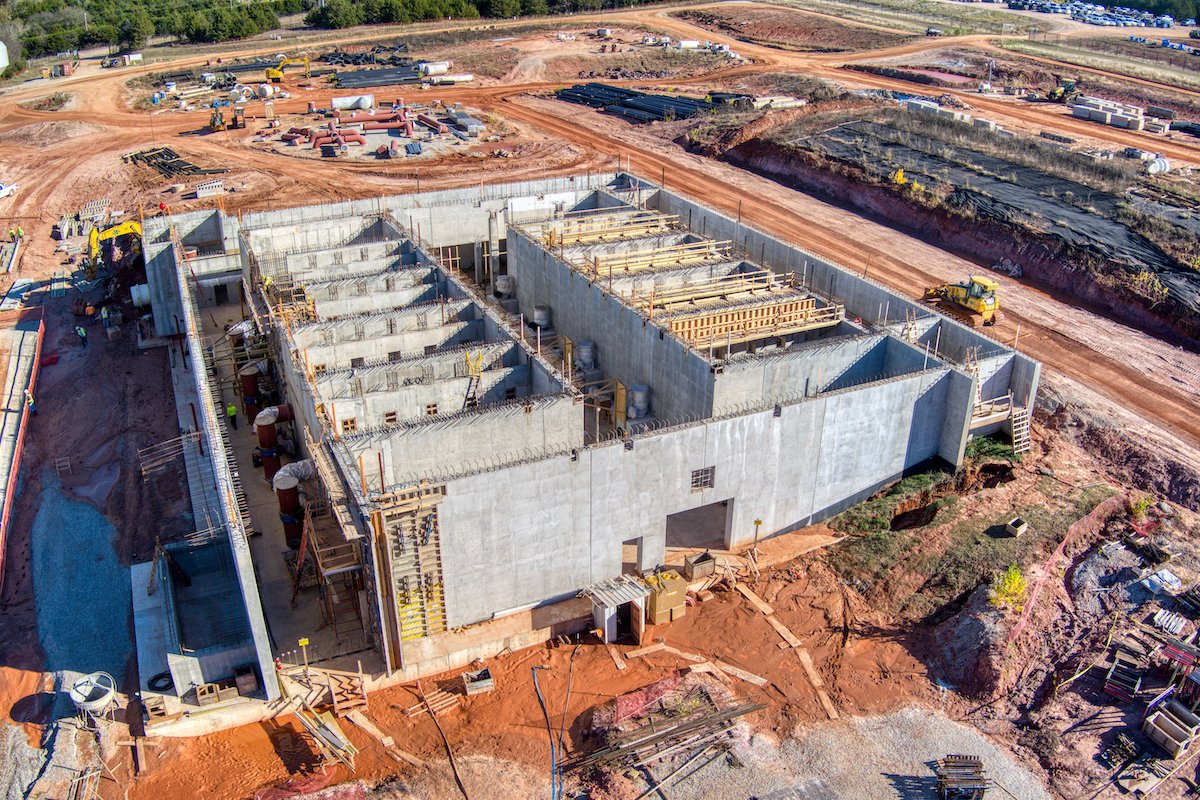
Data Center Construction Support in Oklahoma
Industrial contractor for Oklahoma data center campuses: mass grading, duct banks, fire water, pads and shells sequenced around the utility power date.
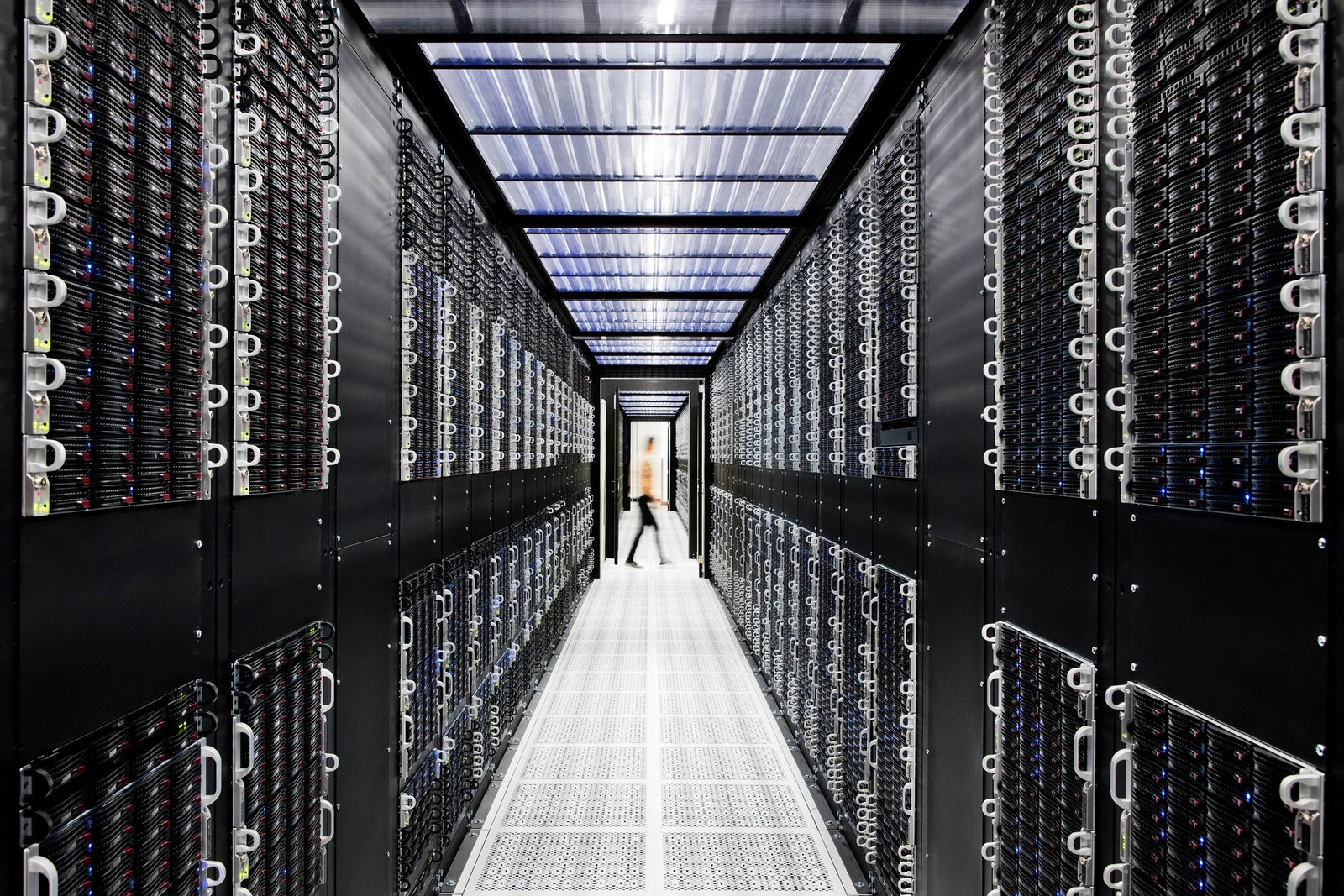
A data center buyer measures a contractor in megawatts and months, and the two are linked. Every month of delay on a campus that is already leased in its mind is revenue the operator does not collect, while every shortcut in the electrical yard shows up later as a derate. Oklahoma has become a serious place to ask those questions: a $1 billion, 2-million-square-foot campus was announced for the Fair Oaks park in east Tulsa in April 2026, another multi-phase campus has been described north of the city, and local reports describe projects of several hundred acres to the west of Owasso and north of Sand Springs.
The owners behind those campuses, whether hyperscale operators, colocation developers or enterprise users, buy land, power and speed before they buy a building. Our role is to make the first three real. We handle the mass grading, the stormwater and fire water systems, the underground electrical duct banks, the access roads that heavy electrical gear needs and the concrete under generators and chillers, and then we coordinate the shell so the specialty trades can start their work on a dry, clean building.
Below is how we think about procurement, funding certainty, schedule and compliance for this buyer, and where our civil and industrial work meets the mission-critical trades.
What the Oklahoma pipeline actually looks like
Announcements are not contracts, and a careful owner treats them that way. A developer's proposal for four campuses in Enid with a stated investment of up to $35 billion, for instance, was filed for rezoning on two sites in September 2026 without city approval, which is a reminder that entitlement and power agreements come first. The projects with firmer footing are those with annexation, a development agreement or a groundbreaking behind them. We read the same public record you do and plan staffing against the stage a project has reached, not the headline.
Power is the strongest argument for the state. Oklahoma produces about 61 percent more energy than it consumes, and renewables supply nearly half of its electricity, with a single wind center rated at 998 MW. For an operator pursuing clean-energy commitments and stable pricing, that supply picture is part of why campuses are arriving, and it is why we spend so much preconstruction time on the interconnection and the on-site electrical yard.
The civil and industrial scope around the white space
A hyperscale campus is mostly site. Before any building rises there are hundreds of acres of earthwork to balance, detention and drainage to design for a heavy-rain state, and a network of roads, utilities and security perimeter. The clearing and mass grading crews we coordinate are sized for that volume, and our stormwater detention work is planned with the local review process in mind because the large impervious area of a campus triggers it.
The next layer is the underground. Medium-voltage duct banks, fiber paths, domestic water, sanitary and fire water loops must be placed before pavement and before the equipment pads that sit on top of them. We build electrical duct bank systems with concrete encasement, spare conduits and tested mandrels, and we document locations so later electrical contractors can trust the drawings. Generator and chiller pads follow, formed and reinforced to the manufacturer's loads and vibration limits.
Sequence that protects the power date
A data center schedule is controlled by power, and our approach is to build everything that touches power first. The utility interconnect, the substation pad, the duct banks and the equipment slabs sit at the front of the critical path, and we release them to the electrical contractor in segments so that long-lead switchgear can be set as it arrives rather than waiting for a full-site handover. While the electrical yard progresses, the shell goes up on its own path.
The shell itself is often tilt-up or steel with precast panels, and we price both. A large data hall wants a clear, flat roof deck, a floor slab with tight tolerance under the racks and a roof system the owner will not have to patch above live equipment. Our data center building experience emphasizes dry-in speed, sealed penetrations and a clean-down at turnover so the commissioning agent does not inherit construction dust in the white space.
Safety, security and the shared site
Mission-critical sites run a mix of trades that most contractors never see together: electricians energizing medium-voltage equipment while crews pour a slab fifty yards away. We keep an exclusion boundary, a lockout plan and a daily coordination meeting so the person next to a live line knows exactly what we are doing nearby. Hot work permits and crane lifts are scheduled with the owner's site safety representative, and our superintendent walks the energized perimeter before anyone else starts.
Operators also set security rules that begin on day one: badging, escorted deliveries, camera coverage on the perimeter fence and restrictions on photographs. We are comfortable working inside those rules, and our fencing and security integration work includes gates, bollards, loop detectors and conduit rough-in, installed to the security consultant's drawings.
Codes that matter on a campus permit set
The statewide electrical code is the National Electrical Code, which the state has adopted, and the state has also adopted the International Codes, though cities adopt their own editions. For a campus with several buildings and several permit packages, the edition that applies to each submission can differ, so we track filing dates and ask the building official which edition governs before design releases.
On the site side, fire flow, hydrant spacing and detention volumes are reviewed by the local authority, and a large user may also need a water permit when cooling relies on local supply. The state water board lists pending water use permits, and it describes a $24 billion statewide water infrastructure need, so owners should expect scrutiny of cooling strategy. We help clients compare water-cooled and air-cooled approaches early because the choice affects utilities, pad sizes and the permitting path.
Where our other services fit
Owners of data centers often need more than the campus itself. Backup generation fuel storage, laydown for the owner's contractor equipment and a long perimeter road all sit within our scope, and so do the support buildings (security, loading and maintenance) that complement the data halls. Our data center support buildings work covers these.
The campuses also create demand in adjacent industries. Electrical equipment makers, generator suppliers and cooling manufacturers establish plants and warehouses nearby, which brings in utilities and power projects and growth in advanced manufacturing. We plan sites with that second-wave demand in mind.
Evaluating a site for a campus?
Share the parcel, the target megawatts and the date you need power. We will return a site civil scope, a sequence built around the interconnect and a list of the permits that will govern your schedule.
Common Questions
How should an owner phase a campus on a power-limited site?
Build the infrastructure for the full campus and the shells in phases tied to power milestones. Duct banks, fire water and stormwater are cheaper to install once, so we usually put the backbone in during phase one and add buildings as capacity is released. That avoids trenching through finished pavement and keeps early energization dates intact.
Can you build on a site with a long utility interconnection timeline?
Yes, but the schedule is defined by the interconnect, not by us. We use the waiting period to complete grading, drainage, roads and the shell, so that when power arrives the owner can move equipment in quickly. We also advise on temporary power for construction, which many sites need long before the permanent service is energized.
What about Oklahoma weather during construction?
Severe storms are a real planning item. The National Weather Service has recorded more than 4,500 tornadoes in the state from 1950 to the present, with May the peak month, so we secure materials, monitor forecasts and keep a shelter and evacuation plan on every large site. Concrete placements are scheduled with forecast windows, and open steel is braced and tied down at the end of every shift.
Do you handle both tilt-up and steel data hall shells?
We price each on its merits for the project. Tilt-up can provide a durable, secure envelope at a good cost per square foot, while steel with insulated panels may be faster on some sites. The decision depends on column grid, roof loads, security requirements and the supply situation for panels and steel, and we provide a comparison during preconstruction.
How do you protect the owner from cost surprises on a large site?
We bid the earthwork and utilities against geotechnical data, state the assumptions in writing and carry an allowance for unknown conditions. Quantities are tracked during the work, and we report variances weekly. If rock, groundwater or poor subgrade shows up, the owner sees the evidence and the options at once.