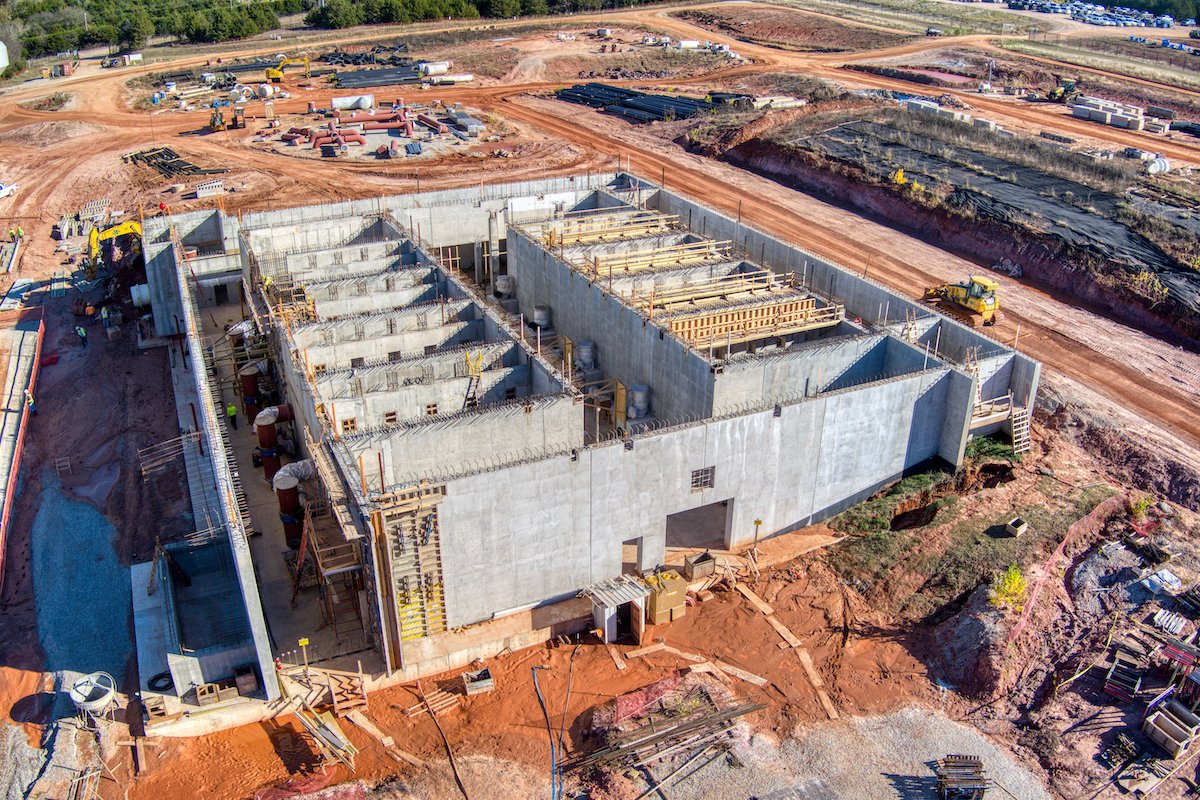
Deep Foundations and Piers for Oklahoma Industrial Buildings
Driven piles, helical piers, auger-cast piles and drilled piers for Oklahoma plants and warehouses, selected from the soil report and the load, not habit.
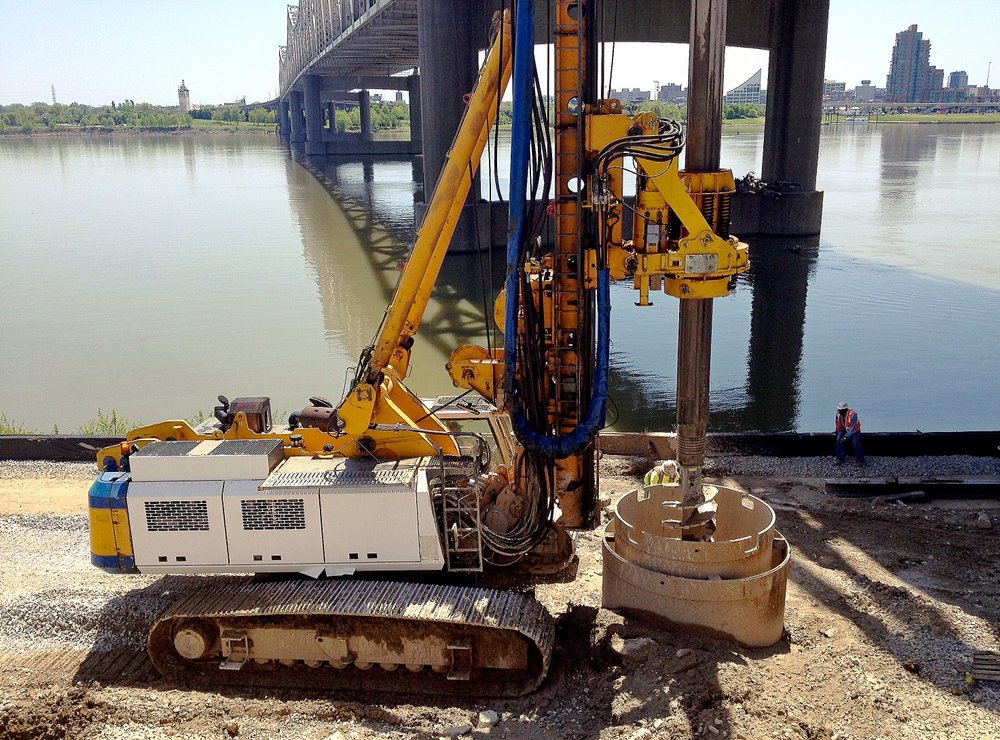
Nobody sees a foundation after the backfill, which is why the soil report matters so much. When the ground near the surface is firm and dry, a spread footing does the job and a deep foundation is wasted money. When it is soft, wet, layered or prone to movement, a footing can settle, tilt or crack the slab, and the repair is far more expensive than the right foundation would have been.
We install and coordinate deep foundations for industrial owners who need loads carried below weak or variable soil: driven piles, helical piers, auger-cast piles, micropiles and drilled piers. The choice comes from the geotechnical report, the column loads, the uplift and lateral demands, the site access and the schedule. We bring those factors to the owner and the engineer early, because the cheapest system on a per-pier basis is not always the cheapest for the project.
This page explains the family of systems and when each one fits. Our separate page on drilled pier foundations goes into that single method in depth, and the two are often priced together.
Ground conditions that change the answer
Oklahoma soils vary with geography. Logan County lies in the Red Bed Plains physiographic area, drained by the Cimarron River and smaller creeks, which is a reminder that red clays and shales near Guthrie are a different problem from river alluvium along the state main waterways. Near Bartlesville, the Caney River flooded in October 1986, splitting the city in half for several days, and flooded again in June 2007, cresting five feet below the 1986 level. Sites near streams like that can have high groundwater and soft layers, which drive foundation choices.
Large new buildings bring large loads. A data center announced for the Fair Oaks innovation park in east Tulsa is described at 2 million square feet, a size that multiplies every foundation decision across hundreds of columns and equipment pads. Owners in data centers and other heavy users want certainty on settlement, and we help them get it through test programs and pile load tests.
Choosing among the systems
Driven piles, whether steel pipe, H-pile or precast, suit sites where bearing layers are deep and access is good, and their capacity can be verified by driving records. Helical piers work well for light to moderate loads, such as a pre-engineered metal building on a poor site, for retrofit and for areas where noise and vibration must be limited. Auger-cast piles are installed by drilling and pumping grout, and they do well in soils where drilled holes would collapse. Micropiles reach tight spaces and rock, and they carry heavy loads in a small diameter.
Each system has limits. Driving causes vibration that can affect neighbors or existing equipment. Drilled shafts need stable holes or casing. Augered methods can be slower in hard layers. The geotechnical engineer sets the capacity, the structural engineer sets the demand, and we advise on constructability: access, equipment size, spoil handling, groundwater and the sequence that gets the crew out of the way of the next trade.
How we run a deep foundation job
We begin with a pre-construction review of the soil borings, the pile layout and the load schedule. Test piles, or a load test program, come early when the design calls for them, because they confirm capacity before production begins. The pile or pier layout is surveyed carefully, and each location is checked before the rig moves in.
During production we keep daily logs: depth, drive or drill effort, grout volume, any obstruction and the final elevation. Those records go to the engineer and the owner, and deviations are reviewed immediately rather than at the end. After the piles are in, we cut off, cap and tie them into grade beams or pile caps, and coordinate with the crews who follow, whether that is a tilt-wall industrial building contractor or a steel erector.
What drives the cost
The number and length of piles are the largest items, followed by the cost of mobilizing the rig. A small job with a few piles can be dominated by the rig move, while a large job benefits from production efficiency. Obstructions, groundwater, hard layers and difficult access all add cost, as do load tests, inspection and special materials such as steel casing.
Deep foundations sometimes save money elsewhere. They can allow lighter slabs, smaller equipment pads or better control of settlement, and they can shorten the schedule by letting construction proceed over poor soil without a long preload. When we price, we show the owner the effect on the rest of the budget, not just the line for piles, and we compare alternatives such as ground improvement or a thicker mat when they are practical.
Design and review requirements
Foundations are designed under the building code adopted for the site. Oklahoma has statewide minimum codes, with the International Building Code, and cities adopt their own editions and amendments, so the plan reviewer in each jurisdiction decides which edition governs a given permit. Deep foundations may require special inspection, load testing and engineer review of installation records.
Environmental and utility checks come first on many sites. Pile driving or drilling near underground utilities, tanks or old foundations needs a clear picture of what is below, and we coordinate locating, potholing and, where needed, hand-digging. We also review noise and vibration limits with the owner and neighbors, particularly near occupied buildings or sensitive equipment.
Rigs, spoil and open holes
Foundation rigs are heavy and tall, and they work in the same place as other trades. We plan rig paths, set up exclusion zones, work with ground stability checks and keep power line clearances in view. Open holes are covered or barricaded at all times, and spoil is stockpiled away from the edge. Drilled and augered work generates cuttings and slurry that need containment, and we handle them according to the site plan and applicable rules.
On a plant with live processes, we also coordinate with operations on vibration, noise and fluids. If a site has an existing unit nearby, we may use low-vibration methods and monitoring, and we agree on stop-work triggers with the owner before the first pile is driven.
Start with the soil report
Send us the geotechnical report and the column loads. We will compare foundation systems, price them and tell you what we would choose and why.
Common Questions
How do I know if my building needs deep foundations?
The geotechnical report answers it. If the soil near the surface can carry the loads without excessive settlement, spread footings are usually cheaper. If the report finds soft, loose or variable layers, high groundwater or movement potential, deep foundations become a strong candidate. We encourage owners to commission the borings before design is final, so the decision is not made after the budget is set.
What is the difference between piles and piers?
The terms overlap. Piles are often driven or installed by displacement and carry load by end bearing, side friction or both. Piers are often drilled and cast in place, with larger diameters. In practice the names depend on the method and the region, and what matters is the capacity, depth and testing the engineer specifies.
Do load tests add much time?
A load test can add days or weeks depending on the method and the size of the test. It usually pays for itself, because verified capacity lets the engineer use more efficient designs and avoid surprises during production. We plan the testing early, build it into the schedule and coordinate with the testing agency.
Can deep foundations be installed in an existing building?
Yes, with compact rigs and methods suited to low headroom, such as helical piers and micropiles. They are common in plant expansions and retrofits where new equipment is added on weak ground. We plan access, dust, noise and spoil handling around operations, and we coordinate any utility locates before drilling.
What happens if we hit an obstruction?
We stop, record the depth and conditions, and notify the engineer. Options include pre-drilling, using a heavier tool, moving the pile within tolerance or redesigning the group. The contract should state how obstructions are handled and priced, and we raise that point before work begins.