Equipment Pads and Foundations for Oklahoma Process and Manufacturing Plants
Concrete pads, pump and compressor foundations, tank rings and skid supports for Oklahoma plants, built to vendor tolerances with anchor bolts set true.
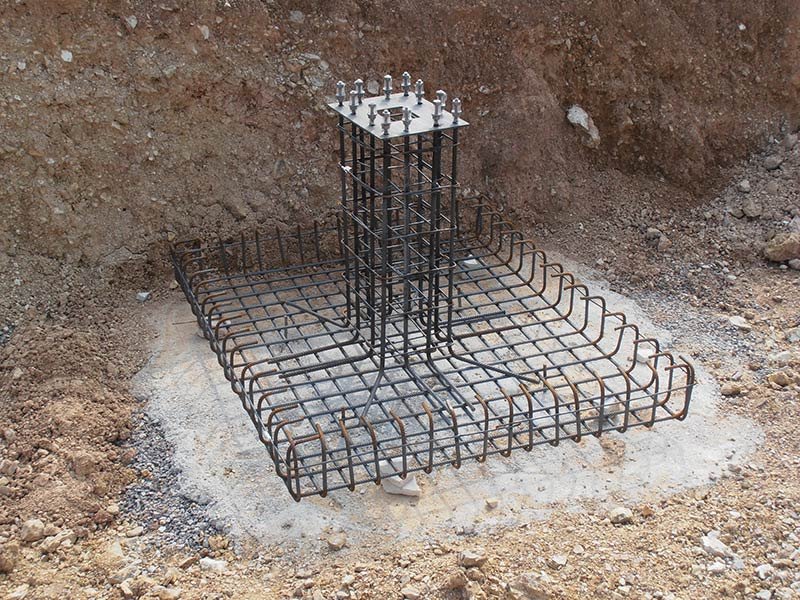
Vibration is what a pump foundation really has to defeat. A compressor, a press or a rotating dryer sends energy into the concrete with every cycle, and a foundation that is too light, too soft or poorly isolated passes that energy into the machine, the piping and the neighboring floor. Most equipment problems blamed on the machine start on the pad, because misalignment, settlement and cracked grout all begin there.
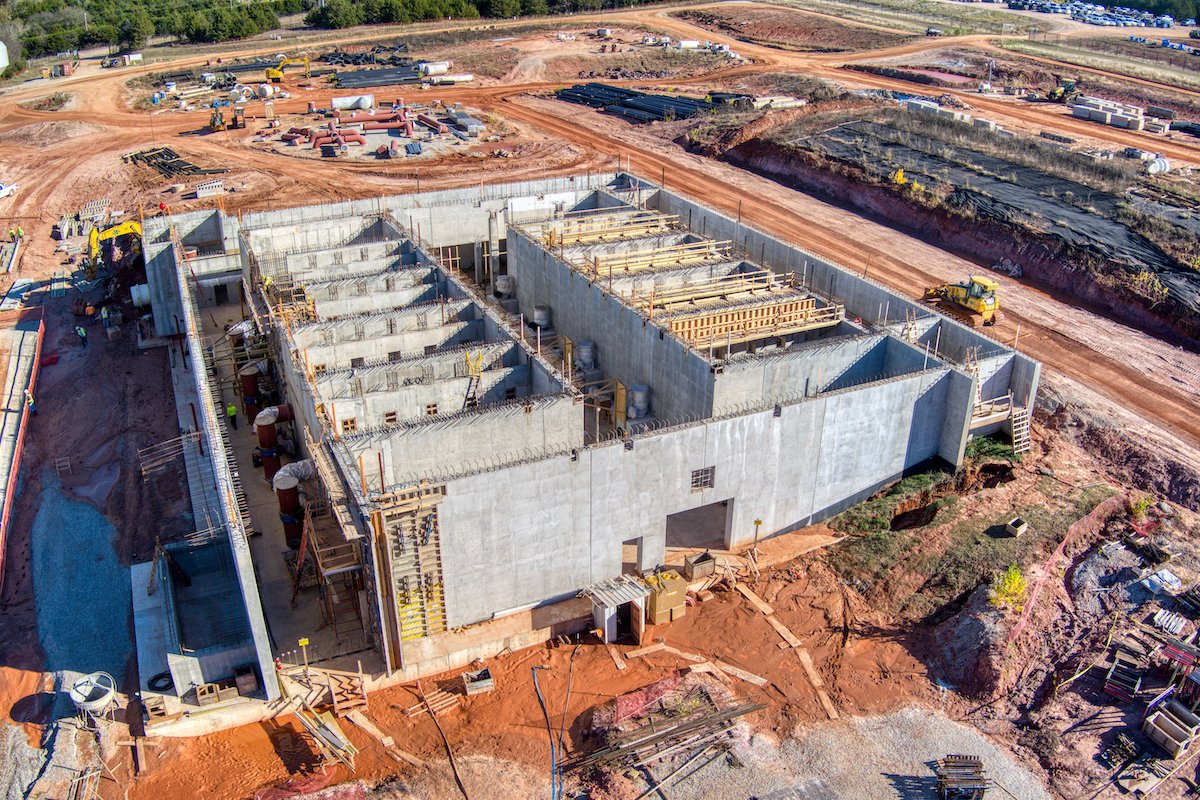
We build equipment pads and foundations for process units, manufacturing lines, utility rooms and outdoor yards. The scope covers excavation, compaction, forming, reinforcing, embedded plates, anchor bolt placement, concrete, curing and the grout that joins steel to concrete. We work from vendor drawings and the structural design, and we resolve the questions that always arise between them before the first form is set.
The people who set equipment on our pads are usually on a tight clock. A crane has been booked, a vendor representative has flown in and a shutdown window is counting down. We build to tolerances that let the setting crew work without shims, chipping or rework, and we hand over a pad that has been surveyed rather than one that merely looks right.
What a pad package includes
The simple pad is a thick slab with bolts. The real package is wider: spread footings and piers under steel supports, ring walls and slabs under tanks, curb and containment around pumps and chemical storage, trench and sump work for drains, transformer and generator pads, chiller and cooling-tower basins and the housekeeping pads that keep equipment bases out of standing water.
For each item we coordinate embedded materials: anchor bolts and sleeves, base plates, conduit, grounding and drain lines. Anchor bolts are set with templates, held rigidly during the pour and surveyed afterward, because a bolt a half inch off can stop an installation. Where equipment will be grouted, we leave the surface prepared and the dimensions correct for the grout thickness the vendor calls for. Heavier loads sometimes require deep foundations and piers beneath the pad, and we coordinate that work with the geotechnical engineer.
Design inputs and approvals
Foundation design draws on several sources: the equipment vendor drawings and loads, the structural engineer design, the geotechnical report and the code in force for the site. The state has adopted the International Building Code, while some cities still list the editions, so the governing edition must be confirmed with the local building department. Industrial owners also rely on process safety standards, insurer requirements and internal engineering practice.
We review the drawings for conflicts. A pad that does not leave room for a maintenance clearance, a drain that lands under a bolt or a vendor change that moves the nozzle locations can all be found and corrected on paper at much lower cost than in the field. When a vendor revises loads late, we help the engineer decide whether the pad design still works and how to adjust it with the least schedule effect.
Heavy and sensitive equipment across the state
Oklahoma has plenty of heavy equipment on the way. An announced lithium refinery in Muskogee with a stated $1 billion investment and about 300 jobs is the kind of process project whose success depends on the quality of its foundations, from reactors to storage. A heat exchanger manufacturer at the Tulsa Port of Catoosa announced a $6 million investment and up to 160 jobs, and a plant of that type has its own test pits, presses and welding bays that all stand on carefully built slabs, which is typical of any manufacturing plant. Our Muskogee work includes planning for that type of load.
Ground motion is also real here. The September 2016 Pawnee earthquake registered magnitude 5.8 and the 2011 Prague earthquake 5.7, the two largest instrumental events in the state list we reference, and recorded shaking near Edmond in January 2024 included two events above magnitude 4. We do not make seismic design decisions, but we build to engineered designs with the reinforcing, embedment and anchor bolt details the engineer requires, and we document them.
Crews that set forms and steel to tolerance
We schedule and supervise excavation, base, forms, rebar, embeds, concrete placement and finishing, and curing. Managing the work closely gives us control of sequence and quality, which matters when a pad has hundreds of embeds and a tight deadline. We use survey control for every bolt group, record elevations before and after the pour and share the results with the equipment installer.
Mass pours need special care. A thick foundation generates heat as it cures, and a poorly managed pour can crack from temperature differences. We plan mix design, placement lifts, cooling or insulation and curing to keep temperature differences under control. For slabs that feed into industrial concrete floors, we coordinate the joint between the pad and the slab so the two move properly rather than cracking at the connection.
Matching pours to the equipment date
The equipment date drives everything. Concrete needs time to gain strength, grout needs time to set and surveying needs a day, so the schedule works backward from the date the crane arrives. We list those steps in the schedule and allow float for weather and test results. On shutdown work, pads are often poured in advance, and the tie-in to existing systems happens during the outage window.
Equipment on turnaround schedules gets a different approach. We pre-build as much as possible away from the live unit, hold materials in a staging area and place embeds ahead of time, so the work in the unit is limited to the unavoidable. After the pads are done, we support the structural steel erection that follows. Survey records go into the closeout package for the commissioning and turnover team. The owners in metals and heavy industry who run this kind of plan most often tell us it is the checked detail that saves the outage.
Send the vendor drawings
Share the equipment list, the loads and the date you need it set. We will review the drawings, flag anything that will cause trouble and price pads that are ready for the crane.
Common Questions
How accurate does the anchor bolt placement need to be?
It depends on the equipment, but many vendors specify tight tolerances, often a fraction of an inch for bolt location and elevation. Rotating equipment is especially sensitive. We set bolts with rigid templates, secure them against movement during the pour and survey each group afterward so any problem can be corrected before the equipment arrives.
Should the pad be isolated from the building slab?
Often yes, particularly for heavy or vibrating equipment. An isolation joint lets the pad move independently of the slab, which reduces cracking and limits vibration transfer. The structural engineer decides the details, and we build joints, sleeves and fill materials to the drawings and confirm them with the vendor.
How long before equipment can be set on a new pad?
Concrete must reach its design strength, which commonly takes a week or more depending on the mix and weather, and grout needs its own curing time. Vendors may specify minimum strength before loading. We test cylinders and share results, and we build the schedule so the pad is ready before the crane is booked.
Can you pour pads inside a running plant?
Yes. We plan access, concrete delivery, pumping and washout around operations, use hand-dig methods near utilities and coordinate hot work and lockout with the plant. Pours inside buildings may require small pump trucks or wheelbarrows, and we adjust the pour plan to fit the space.
What if the equipment changes after the pad is designed?
It happens often. We ask the vendor and the engineer for the latest drawings, compare changes against the design and flag conflicts early. If the pad is already poured, we look at options such as new anchor bolts or sleeves, epoxy grout, additional plates or a topping that adjusts elevation, and we explain the cost and the effect on schedule.