Industrial and Commercial-Support Construction in Jenks
Light industrial buildings, service yards and site packages in Jenks, planned around the floodplain, levee, US-75 bridge work and Elm Street.
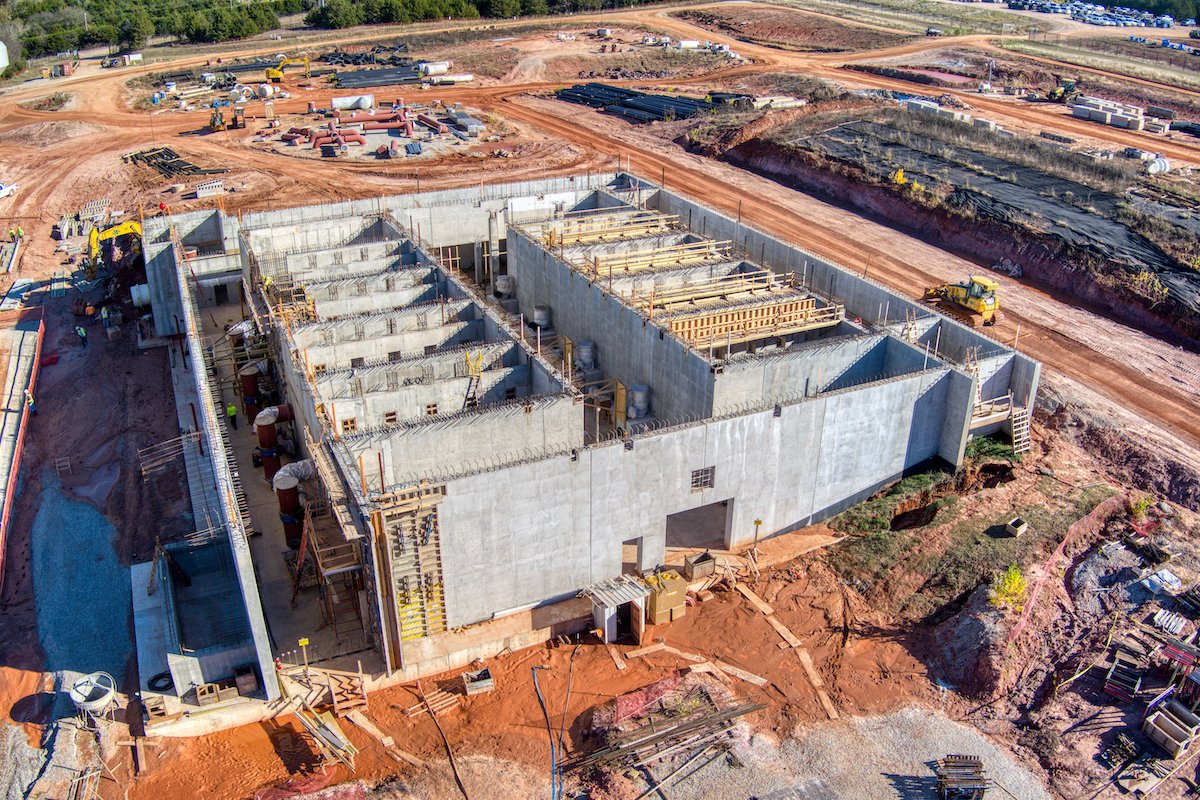
Riverside parcels near levees can be good industrial and commercial ground if the builder knows how to set elevations, manage drainage and keep deliveries moving, and that is the planning we bring to Jenks. We build light industrial and commercial-support buildings, service yards and site packages near the river and along the US-75 and Creek Turnpike corridors. The first job on any such site is to understand where the water goes.
Jenks has had a Corps-built levee dating to 1948, and in 1986 the Corps released up to 300,000 cubic feet per second from Keystone Dam, leading to a mandatory evacuation order in the city, according to Wikipedia. We treat that as background that explains why floodplain review is serious here, not as a measure of present risk. For any parcel, we ask the city and the floodplain administrator for the current maps and the finished-floor requirements.
With those answers, we can price the work honestly and, if the lot is a poor fit, say so before the owner buys it. A site study of a few weeks is worth far more than a discount on the land, and we would rather lose a job at the study stage than win one that cannot be built to budget.
Floodplain, fill and drainage
On a parcel near the river, the typical decisions are finished floor elevation, how much fill to import and where the stormwater goes. Fill is expensive, and compaction testing adds time, so we look for ways to meet the floor elevation with the least material, such as raised building pads with sloped yards. We also check that fill does not push water onto neighboring land.
Detention basins near a levee need care, since a basin that is full when the river is high can fail to drain. We design outfalls with the civil engineer so that the system works under realistic conditions and passes the city's review. Our stormwater detention and drainage experience is directly relevant.
Soil is the other half of the story. Alluvial ground near a river can be soft, wet and variable, so we recommend a geotechnical investigation with enough borings to reveal changes across the lot. The report tells us whether footings can bear on native soil, whether the slab needs a treated subgrade and how deep we should dewater during utility work. It is a small cost compared to a settling floor.
What we build in Jenks
Typical projects include contractor and equipment shops, small warehouses, distribution space for retail and outlet users, and the yards and paving that serve them. Tulsa Premium Outlets, south of the Creek Turnpike near the Oklahoma Aquarium and the river, was reported in July 2023 to have resumed construction with nearly 100 shops planned, which shows the kind of retail activity that creates demand for service and storage space nearby. We have no role in that project.
For these owners we offer flex light industrial buildings and stabilized parking lots sized for delivery vehicles. Retail-adjacent users often need loading areas that do not conflict with customer parking, and we design the circulation to keep them apart. We also pay attention to the building's appearance from the road, since parcels close to a visitor attraction or a retail center may face design review, landscaping requirements and sign limits that a plain industrial site would not.
Working through bridge and road projects
The Oklahoma Department of Transportation's Tulsa advisory as of early November 2026 lists a US-75 bridge rehabilitation in Jenks, northbound and southbound between SH-364 (Creek Turnpike) and 96th Street, with one lane per direction through fall 2026. The Creek Turnpike has a modified cloverleaf interchange with US-75 in Jenks, which makes it a natural route for trucks that must avoid downtown Tulsa.
The city also reports that its Elm Street widening from 111th to 131st Street, three lanes to five, costs $16 million under the 2020 bond, with Phase I beginning in January 2025 and completion anticipated in February 2027 as of an October 14, 2026 update. Parcels along that stretch will see construction traffic and later improved capacity. We plan delivery routes and entrance timing with these dates in mind and confirm them with the city before mobilizing.
Fewer surprises on a constrained lot
Our approach on a tight, regulated site is to resolve the constraints on paper first. We assemble the floodplain, utility, zoning and access findings into a short memo, review it with the owner and then price. If one finding changes the deal, the owner learns it in weeks, not months.
The same memo lists the permits and approvals the project will need, who issues each one and how long it usually takes. Floodplain development permits, driveway approvals, utility connections and fire review can run in parallel if they are filed in the right order, and a one-page tracker keeps the owner and the design team looking at the same list.
During construction, we protect the river by keeping silt controls in place, covering stockpiles and washing down trucks. A weekly inspection log documents the controls, and we fix problems the same day. These practices are standard for us everywhere, and near the river they matter even more.
Neighboring work
Jenks projects share crews with Bixby to the south and Tulsa to the north, and owners with a larger program can read about our utilities and power work for service companies that serve the energy sector. When an owner wants an industrial office attached to a shop, our industrial office buildouts bring the finish work under the same schedule as the shell.
Check the flood line and the road before you buy
Send us the parcel and the use. We will review the floodplain, the levee relationship, the road work around it and the utilities, and tell you what the site will take to build.
Common Questions
Can I build in the floodplain?
Sometimes, with elevated finished floors and compliant fill and drainage. The floodplain administrator decides what the parcel requires, and we obtain the current maps and requirements before design.
How will the US-75 and Elm Street work affect my project?
They can change lanes, entrances and truck routes during the work. We check the schedule with ODOT and the city and plan deliveries accordingly.
Do I need a levee analysis?
Not always, but parcels near a levee deserve a careful review of grading and drainage. We work with the civil engineer to see that the plan meets the city's requirements and does not worsen flow for neighbors.
What is a realistic budget for fill?
It varies with how far the natural grade sits below the required elevation and with the cost of material. We estimate quantities from a survey and soil data, so the number reflects the lot, not a guess.