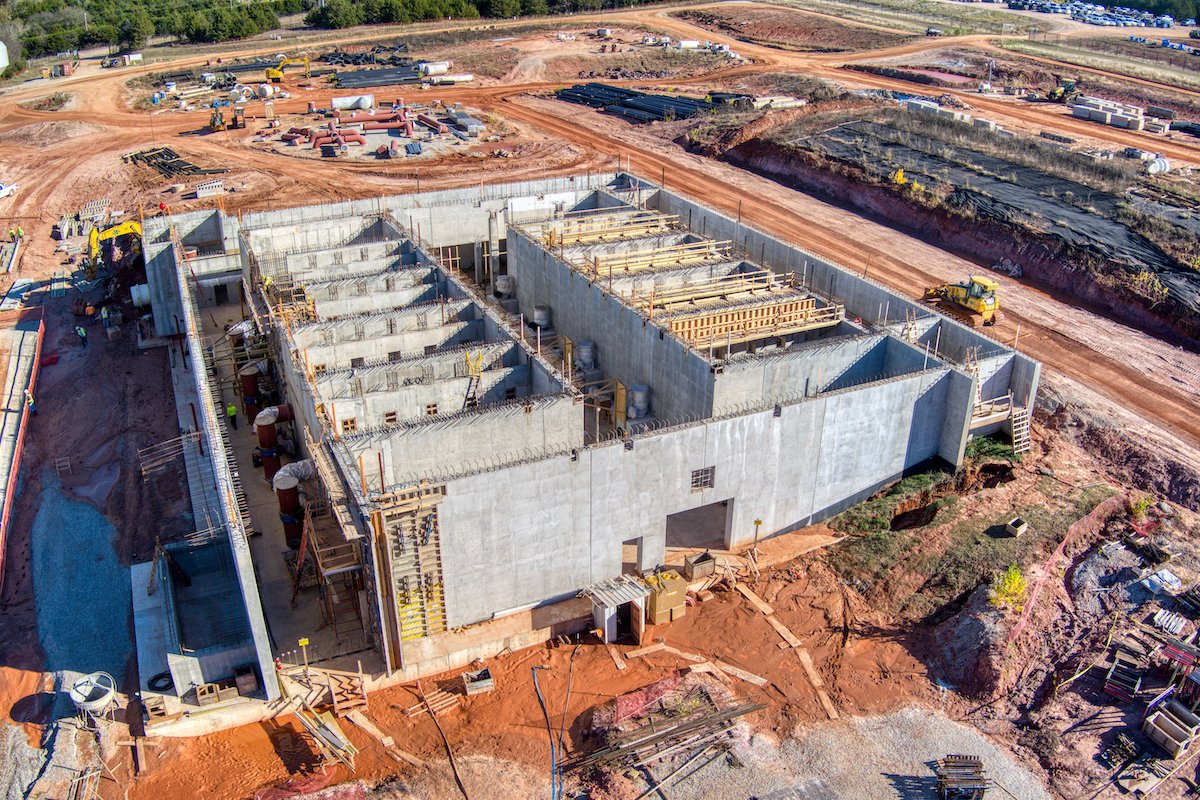
Truck Courts and Trailer Yards for Oklahoma Plants and Warehouses
Concrete truck courts and trailer parking yards in Oklahoma: turning radii, pavement thickness, drainage and gate flow designed around the trucks that use them.
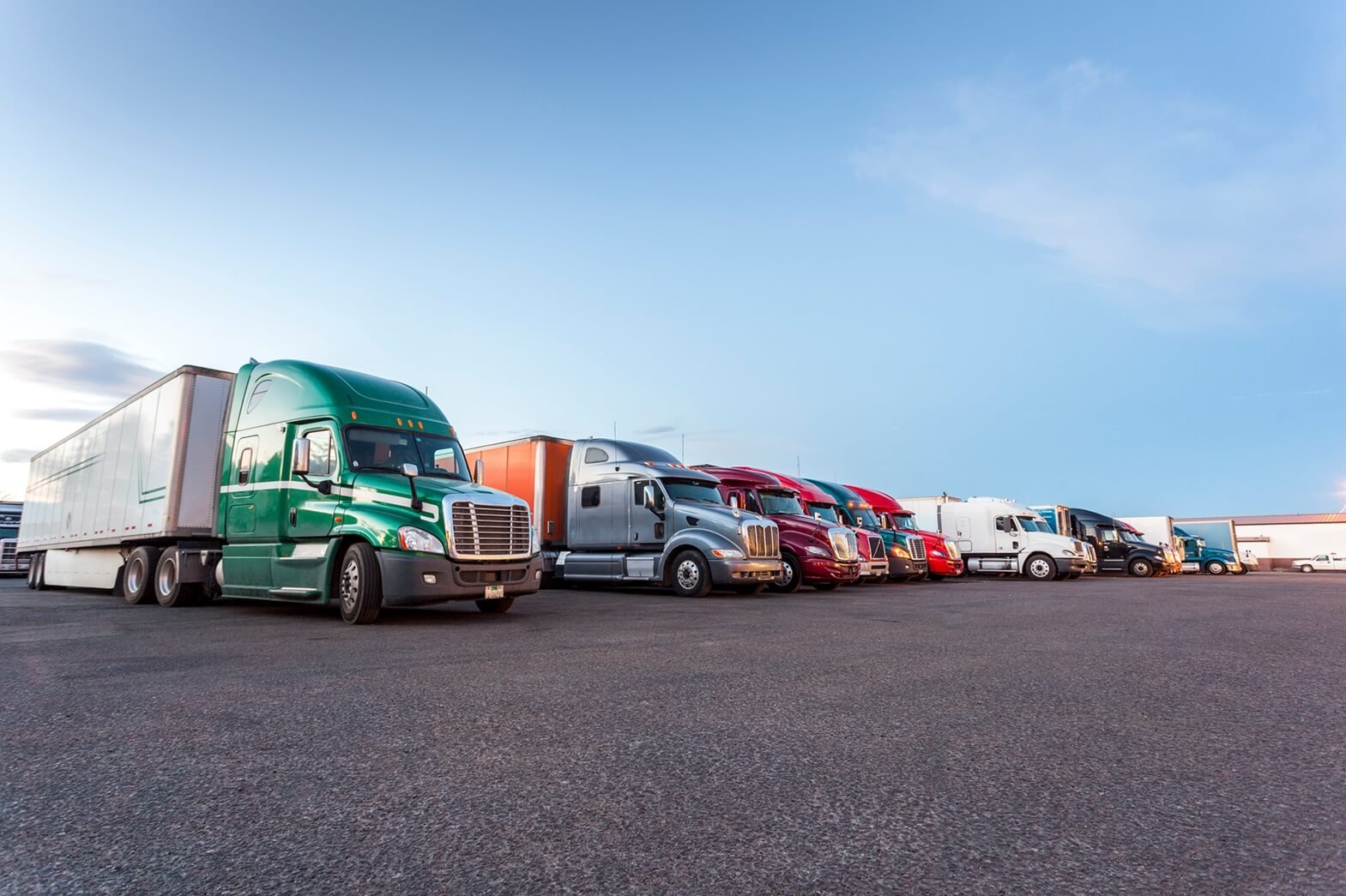
Trucks decide the size of a distribution site before the building does. A 300,000-square-foot distribution center announced for OKC Logistics Park in Oklahoma City, with about $40 million in capital investment, needs a court deep enough for a tractor and a 53-foot trailer to swing in and out of every door, plus a queue and a staging yard for trailers waiting their turn. The building may take a year to finish. The court has to survive the trucks for much longer.
We build truck courts and trailer yards as engineered pavements: concrete in the dock areas where trailers drop and brake, heavy-duty concrete or asphalt in drive lanes, and compacted aggregate or concrete for trailer storage depending on use and budget. We design with the owner's civil engineer around the details that decide whether the yard works: turning radii, slopes, joint layout, drainage and the flow of trucks from the gate to the dock and back out.
A yard that takes heavy truck traffic day after day for the life of a building needs a subgrade, a slab and a drainage plan that match the loads. We build all three, and we say so when a budget proposes less.
What a truck court project includes
The scope begins with subgrade preparation, proof rolling and stabilization where soils require it, followed by aggregate base, reinforced concrete pavement with doweled joints, curbs, drainage structures, striping, bollards and signs. We also place trailer landing pads, a thicker concrete section under the spot where a trailer's landing gear sits when it is dropped, because a standard slab fails there first.
Beyond the pavement, we build gate pads, guard shelter foundations, scale pits for weigh stations where needed, and conduit for lighting and security. Where the site calls for trailer parking away from the dock, we design the yard for the loads it will really carry and prepare it with a durable surface that can be re-striped as the operation changes.
Design details that matter to operators
Turning radii come first. A tractor with a 53-foot trailer needs more space than the drawings often show, and a court that is five feet too shallow causes damage to doors, trailers and curbs for years. We review the layout with truck templates and raise concerns before the pavement is placed, and we suggest widening an inside radius or flaring a gate where it solves a problem cheaply.
Slope and drainage come second. Docks need flat pavement near the doors and positive drainage away from them. Ponding in front of a door is a hazard in freezing weather and a wear problem all year. We set grades with a laser, check them before the pour and adjust inlets and trench drains to the real finished surface, not only to the plan.
Freight corridors that shape yard design
Oklahoma sites are chosen for their freight access, and the yard has to match it. MidAmerica Industrial Park, near the junction of U.S. 69 and U.S. 412, reports being served by more than 70 trucking companies, with I-44 about 20 miles to the north. Such sites handle high volumes of trucks and benefit from yards that can absorb peaks without gridlock at the gate. We design the gate queue length from the owner's expected arrival pattern, so trucks waiting to check in stay on the site and off the public road, and we leave room for a second inbound lane if volume grows.
Public road work also affects how trucks reach a site. An interchange improvement at I-44 and US-75 in Tulsa has ramp and street closures planned through summer 2028, which means detour routes and varying access for the near term. We help the owner think through haul routes for construction and operations, and we confirm that entrances, turn lanes and sight lines meet the road authority's requirements.
Cost levers on a yard
Pavement thickness and the extent of concrete are the biggest drivers. A thicker slab costs more per square foot but can outlast thinner ones by a large margin where trucks brake and turn. We recommend where concrete belongs, where asphalt can serve and where stabilized aggregate is enough, based on traffic and on the owner's maintenance plans.
Subgrade is the other item. Weak clay under a yard can require lime or cement treatment, thicker base or undercut and replace. We price it from the geotechnical report and show the cost of each option. Other costs include drainage structures, lighting conduit and fencing, which we list separately so the owner can see what the yard actually costs. If a yard must be built in phases to match a lease or a funding schedule, we plan the first phase so that later pours match joints, grades and drainage already in place.
Who uses these yards
Logistics and distribution operators are the most frequent users, followed by ecommerce fulfillment centers, which put heavy pressure on dock count and trailer staging. Manufacturers with outbound product, food processors and building suppliers also need yards that handle regular truck traffic.
Each has a different pattern. A fulfillment center may see sharp seasonal peaks, a plant may have a handful of scheduled loads and a cross-dock may rotate trailers constantly. We ask for the expected truck counts and schedules, because they determine the pavement design and the layout.
Design the yard around the trucks
Send us the site plan, the expected truck counts and the geotechnical report. We will review the turning paths, recommend pavement types and price the work. For a project that needs a new building too, we can combine this with warehouse shell construction into one schedule.
Common Questions
How thick should the concrete be?
The thickness depends on the truck loads, the number of trips, the subgrade and the design life. The engineer sets it, and we build to the specification. We recommend asking for a pavement design based on the actual traffic, not a minimum.
Should we use concrete or asphalt?
Concrete resists the rutting caused by heavy, slow, turning loads and by trailer landing gear, which is why it is common at docks and aprons. Asphalt can serve in lighter drive lanes and costs less at the start. We help the owner decide using the lifetime cost.
How do you control cracking?
With proper subgrade, joint layout, dowels, curing and timing of saw cuts. Some random cracking can occur in any concrete, and we note what is normal and what is not before the pour, so expectations are clear.
Can you add trailer parking later?
Yes, if the site has room and the drainage plan allows. We recommend leaving space and utilities in the initial design for future stabilized parking lots or yard expansions.
How do you keep the yard open during construction?
With phased pours, temporary access and staged work. On an operating site, we plan around deliveries so that trucks can still reach the docks. See our dock apron and loading zone work for that detail.