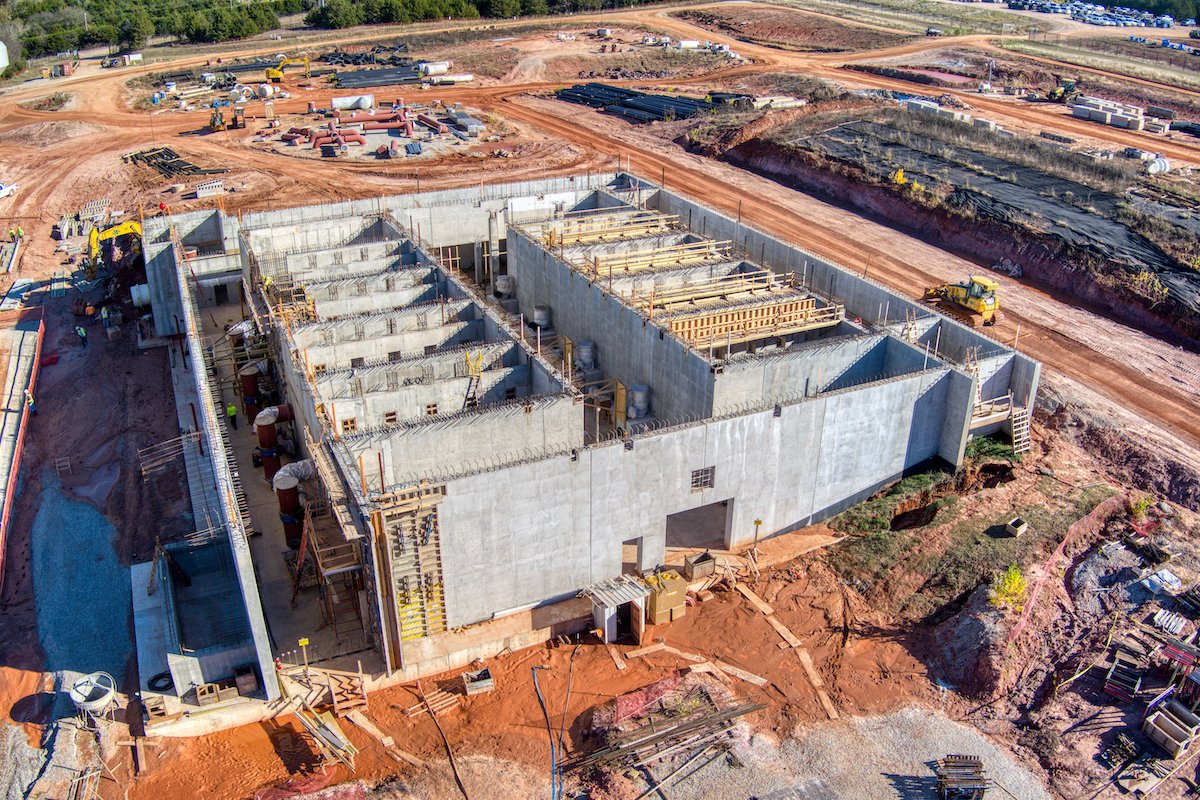
Dock Aprons and Loading Zones for Industrial Buildings
Reinforced concrete dock aprons, approach slabs, dock pits and loading zones for Oklahoma industrial buildings, built flat, drained and ready for trailers.
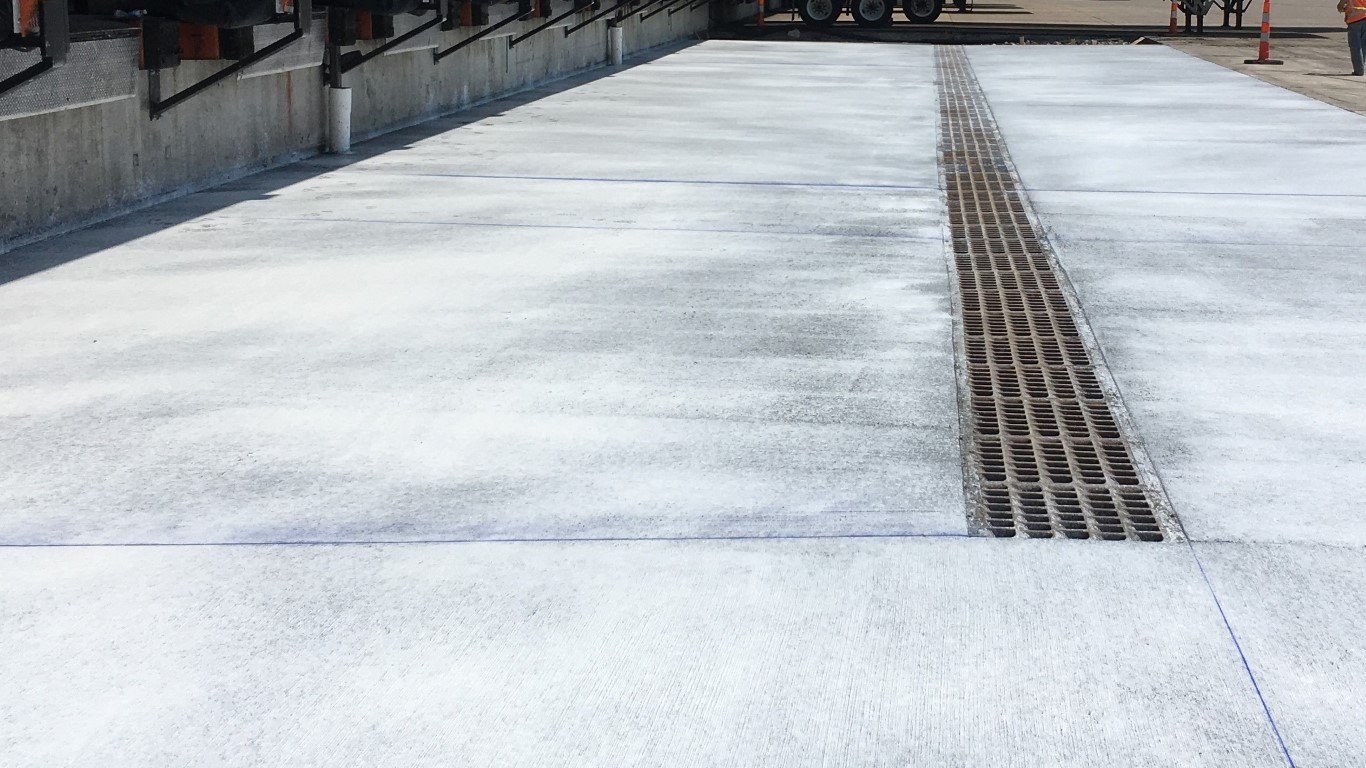
A dock door is only as good as the apron in front of it. Every time a trailer backs in, brakes, drops its landing gear and pulls out, the pavement takes a pounding that an ordinary parking slab was never designed for. When the apron cracks, settles or ponds water, the door stops sealing, the leveler binds and drivers start hitting the building. We build aprons to take that daily punishment and keep the doors working.
Our dock work covers the whole loading zone: reinforced concrete aprons with doweled joints, approach slabs where trucks line up, depressed dock pits and ramps, truck wells for grade-level doors, leveler pits, bumpers and guard posts, trench drains and the striping that tells drivers where to stop. We coordinate with the building crew so the apron meets the slab at the right elevation and the dock equipment lands where it should.
Owners who add up the cost of a failed apron, which includes repairs, downtime, damaged trailers and safety incidents, usually conclude that the apron is the last place to economize.
Building flat and keeping it flat
The first priority is the subgrade. We proof-roll, remove any soft areas and compact the base in lifts, and where the soils call for it we treat them with lime or cement. A dock apron on poorly prepared clay will move with the weather and open joints, and no amount of concrete thickness will fix.
The second is accuracy. Dock heights are tight, usually measured in fractions of an inch relative to the equipment. We set the apron grade from the building's finished floor and the dock equipment submittals, check it with a level and laser before the pour and verify after. Slopes away from the building are kept to the minimum that drains water while keeping trailers level enough for loading.
Components of a loading zone
A standard loading zone includes the dock apron, concrete approach slabs, a trailer landing area with thickened concrete, drainage inlets and trench drains, curbs, bollards, wheel guides and dock bumpers fastened with proper embedment. Dock leveler pits and vertical storing levelers are formed in the slab, and reinforcement is placed to carry the heavy point loads from the equipment.
For buildings with dock doors at grade, we form truck wells and ramps with the right slope and drainage. We also coordinate dock lighting, conduit for equipment power and the joints where the apron meets the building slab and the main truck court. Details such as expansion joints, sealants and edge protection are called out on our submittals.
Where the money goes
Concrete thickness, reinforcement and subgrade preparation are the main costs, followed by the number of dock positions and the amount of formwork for pits and wells. Owners often ask whether they can cut cost by thinning the apron. The honest answer is that a thinner slab saves little and risks a great deal, because most of the cost is in labor, forms and subgrade, not in extra concrete.
We help owners separate what must be built now from what can wait. Extra dock positions can be rough-formed for future doors, and conduit can be placed for future equipment. This lets a distribution or cold storage owner open with a lower first cost while leaving room to grow.
Fitting the apron into the building schedule
The apron follows the building shell and the site utilities, and it has to be finished before dock equipment is installed and before the plant can ship. Concrete needs cure time before heavy loads, so the apron cannot be rushed at the end. We schedule it with the equipment installer and the paving crew so that cure time, joint cutting and sealant work all happen in sequence.
Weather is a factor. We avoid pouring in extreme heat without hot-weather methods, protect fresh concrete from rain and keep a plan for early morning starts. In cold weather, we protect from freezing and track the strength before releasing the apron to trucks. A pour that needs to be rescheduled costs a day, but a rushed one can cost years.
Buildings that need heavy aprons
We build aprons for distribution centers, cold storage facilities, truck terminals, manufacturing plants and food processors. The numbers vary widely. A reported 1.3-million-square-foot distribution center in Cherokee Industrial Park on the north side of Tulsa is a very different dock problem than a 33,000-square-foot cold storage expansion in Ardmore, though both depend on apron quality.
Cold buildings add detail: insulated docks, heated slabs in some cases, dock seals and a need to keep water from freezing near doors. Air cargo and logistics tenants at Lariat Landing near Will Rogers World Airport, a site of more than 400 acres directly east of the airport, face different loading patterns again. In each case, we start with how the owner will actually move freight.
Related site work
Dock aprons connect directly to truck courts and trailer yards, where the pavement design continues into the drive lanes and trailer storage. They also depend on stormwater and drainage work, since a good apron is worthless if water cannot leave it.
Where a building is being expanded, we also handle distribution center expansions and the connection between new and existing aprons, which requires careful matching of grades and joints.
Build the apron to last the lease
Send us the dock layout, the equipment submittals and the site plan. We will review the apron design, price the zone and fit it into your schedule. For owners in food and beverage and other temperature-controlled businesses, we will also check the details for insulated docks and washdown.
Common Questions
How thick should a dock apron be?
The engineer determines thickness from the truck loads, the subgrade and the design life. Aprons are usually thicker and more heavily reinforced than regular paving because of the braking and landing-gear loads. We build to the design and flag any proposal that looks light.
Do we need a separate pad for trailer landing gear?
In many cases yes. When a trailer is dropped, its landing gear concentrates the load on a small area, which can punch through ordinary concrete. A thickened pad or a section of reinforced slab under the parking spots prevents it.
How do you keep dock pits from leaking?
Careful forming, waterstops at joints, a sloped floor with a drain and proper waterproofing where the design requires it. We also coordinate with the dock equipment supplier on the details that affect how pits drain.
Can an existing dock apron be repaired without replacing it?
Sometimes. Cracks can be routed and sealed, small settlements can be raised by lifting methods and localized panels can be replaced. When the subgrade has failed or the pavement is widely broken, replacement is usually the better value. See demolition and slab replacement for that work.