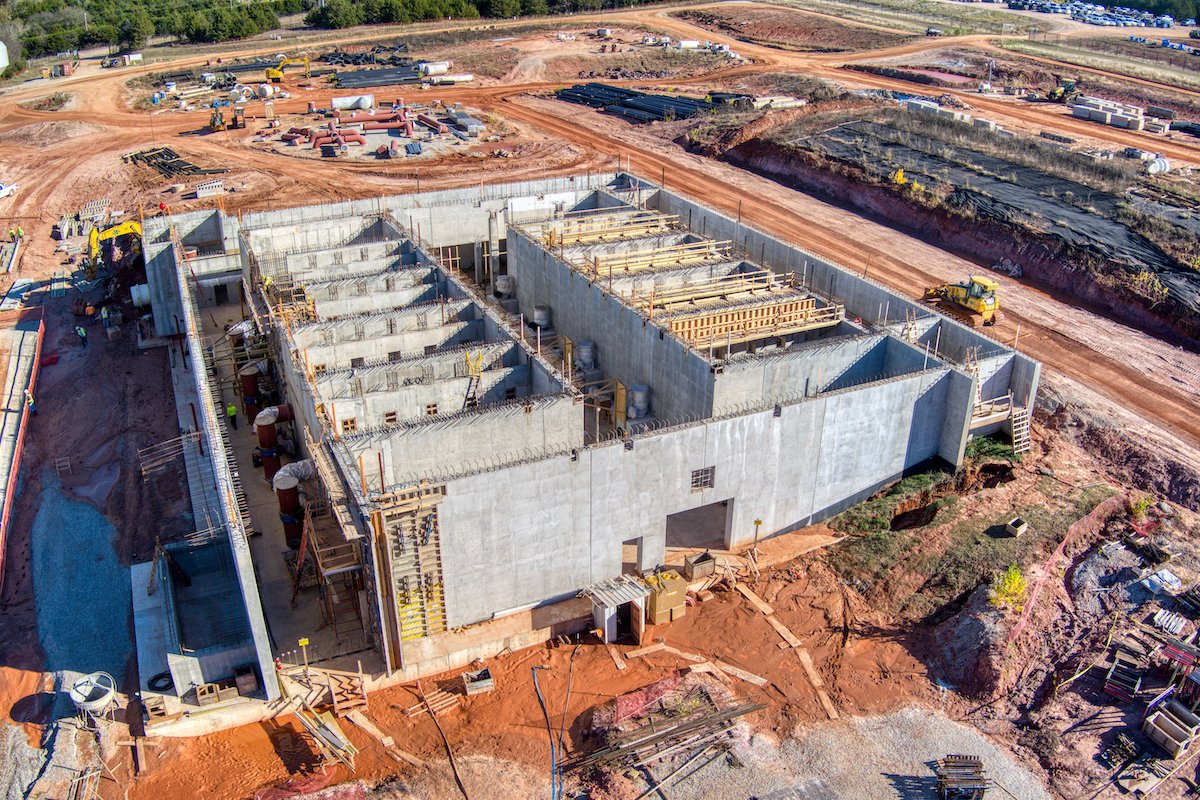
Hangars and Industrial Buildings Near Will Rogers Airport and Tinker
Maintenance hangars, component shops and supplier buildings around Will Rogers World Airport and Tinker, planned for airfield rules, security and crane work.
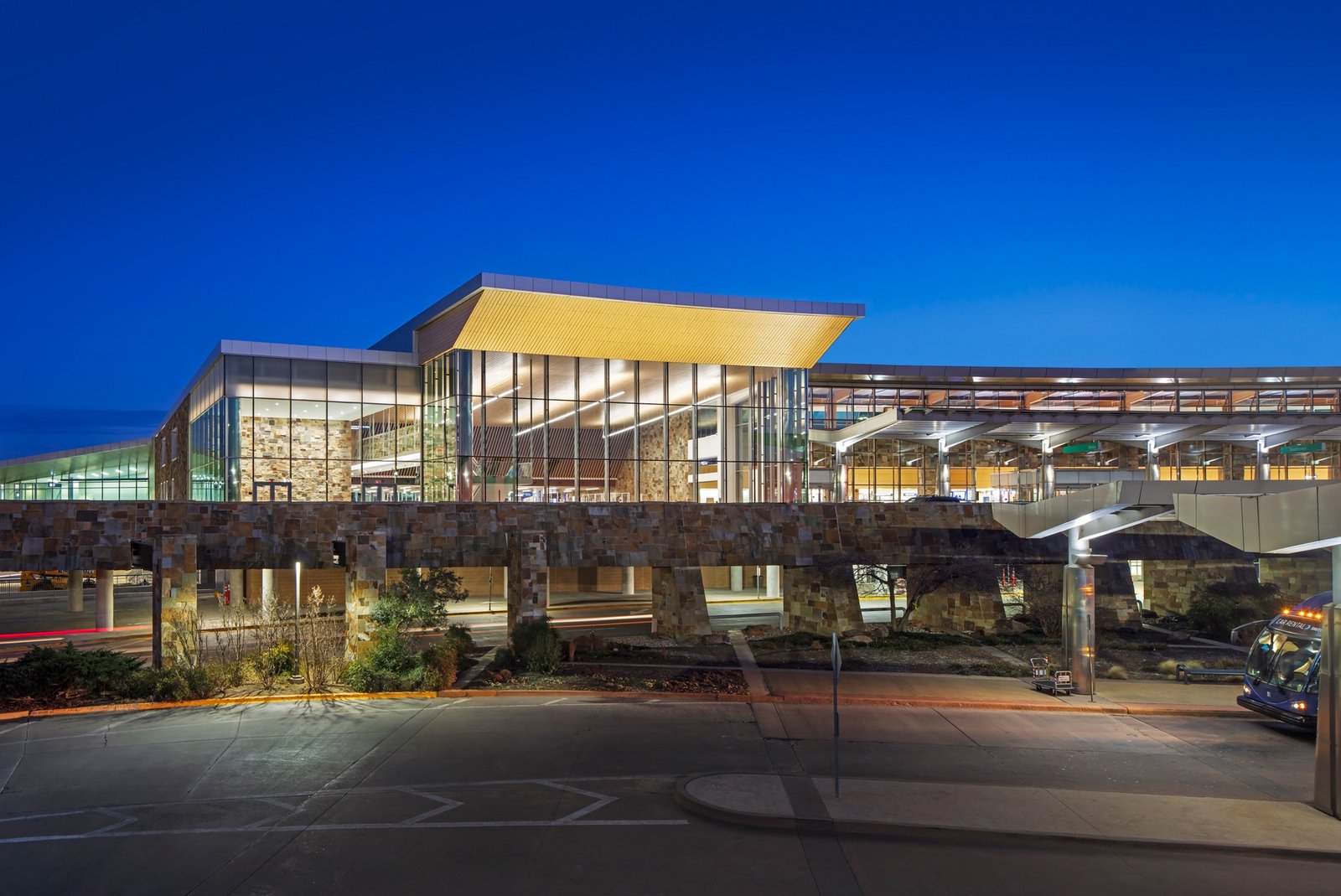
Hangar floors, door tracks and bridge crane runways have to be right the first time, and that is the work we bring to the Will Rogers World Airport and Tinker Air Force Base area. We build maintenance hangars, component shops, parts warehouses and the aprons that serve them, for operators and suppliers in the aviation and defense supply chain around south Oklahoma City. We do not suggest we have built for the airport or the base; we describe what we can build for a private owner who works in their orbit.
The scale of the area explains why so many suppliers cluster here. Tinker has more than 26,000 military and civilian workers, an annual payroll of $1.8 billion and is the largest single-site employer in Oklahoma, according to a Greater Oklahoma City Chamber article from October 2020. The Department of Commerce reported in August 2025 that the base has an annual economic impact of $7.5 billion on the state. Companies that support the work, from engine shops to coating contractors, need nearby buildings that match its standards.
That is a demanding client base, and we meet it with careful planning, tight tolerances and clear documentation, the same discipline we bring to advanced manufacturing and to industrial renovations and modernization of older shops that need new power and new floors.
Concrete, steel and the long clear span
Aviation buildings are structural problems first. A hangar needs a clear span wide enough for aircraft wings, a door that can open the full width and a floor that carries loaded tugs, jacks and fuel trucks. We schedule the erection of long-span steel and tilt-up structures, supervise the slab pour and finish and coordinate the door manufacturer so the track, header and foundation fit together.
Floors in an aircraft maintenance bay are typically thick, reinforced and sloped to trench drains, with care taken that fuel and wash water goes where the owner intends. Our aircraft hangar and high-bay, crane-ready building work follows the same technical approach, with long clear spans and heavy slabs.
What the region is building
The market around the base has seen heavy investment. The Air Force acquired 158 acres of former rail yard on Tinker's west side for KC-46A maintenance, announced March 1, 2015, with $8 million from the Air Force, $23.5 million from the City of Oklahoma City and $12.5 million from Oklahoma County. The KC-46A depot campus includes a $120 million, 130,000-square-foot two-bay hangar, 14 hangar bays in total, and construction costs expected to exceed $600 million, according to a January 2020 Army article.
At the airport, AAR broke ground on April 6, 2024 on an expansion of its maintenance, repair and overhaul facility at Will Rogers World Airport, adding more than 80,000 square feet of hangar and warehouse space and 200 full-time positions. Lariat Landing, directly east of the airport along I-44, covers more than 400 acres and lists tenants including Amazon, FedEx and SkyWest Airlines. These are other parties' projects, and we mention them as evidence of demand for private-sector space nearby.
Airfield rules and approach surfaces
Will Rogers World Airport covers 8,081 acres about six miles southwest of downtown Oklahoma City, and its longest runway, 17L/35R, is 9,802 feet of concrete. A site near an airport of that size sits under height restrictions, may require FAA review of cranes and structures and may be limited in lighting. We check those constraints at the start so a building is not designed above a surface it cannot penetrate.
Security is another factor. Operators near an airfield or a military installation may need controlled gates, badge procedures and screening for construction deliveries. We build those into the site logistics plan and give the crews we coordinate and suppliers advance notice of the rules. Missed badge steps cost days.
Long-lead items and flight schedules
Hangar doors, overhead cranes and high-capacity electrical gear are the usual long-lead items. We order them as soon as the design is frozen, and we ask the vendor for shop drawings early so foundations and embeds are placed to match. Where cranes are involved, we bring the crane vendor into design review before the steel is released.
Work near an active airfield may be limited to certain windows, and crane use may need coordination with air traffic. We schedule picks accordingly and plan alternates for days when winds or notices restrict them. For tenants that cannot afford downtime, we phase work so one bay stays operational while another is renovated.
Storm and debris planning near the flight line
The National Weather Service lists a May 8, 2003 F4 tornado about 17 miles long and 700 yards wide that crossed I-240 at Sooner Road, crossed Tinker Air Force Base and crossed I-40 into southeast Midwest City, with 45 injuries and no deaths. Aviation facilities are sensitive to debris as well as damage, so we pay attention to loose materials, staging and securing equipment.
Foreign object debris is a particular concern near aircraft. We keep sites swept, secure fasteners and offcuts and control what leaves the work area. The crews we coordinate are briefed on these rules before mobilization.
Connected services and nearby cities
Owners in this area often combine a hangar with a parts warehouse and an industrial office buildout. We also serve nearby Midwest City and the broader Oklahoma City market from the same crews.
Bring us the aircraft, the doors and the date
Send us the largest aircraft or component you handle, the access and security conditions that apply and the date the space has to be in service. We will return a structure, a slab approach and a sequence that works around the airfield and your operation.
Common Questions
Can you build a hangar for a private operator near the airport?
Yes. We build hangars and maintenance buildings for private owners, and we review height, lighting and access constraints with the owner and the airport before design is final. We make no claim of work for the airport or the base.
What floor does a maintenance hangar need?
A thick, reinforced slab with sloped trench drains, designed for aircraft, tugs and jacks. The exact section depends on the heaviest equipment and the soils. We supervise the pour and finish and coordinate drains and door tracks with the other trades.
Do cranes need approval near an airfield?
They may. Structures and cranes near an airport can require FAA review, so we check early and schedule lifts with any restrictions in mind.
How do you manage security and badging for a project?
We build it into the logistics plan: advance notice to crews and suppliers, designated entrances and delivery windows. We also keep a roster of badged personnel so work does not stop for a missing credential.
How big can a hangar door be?
It depends on the structure and the door system. Wide bi-fold and hydraulic doors are common for large aircraft. We coordinate with the manufacturer on headers, tracks and foundations so the door and the building are designed together.