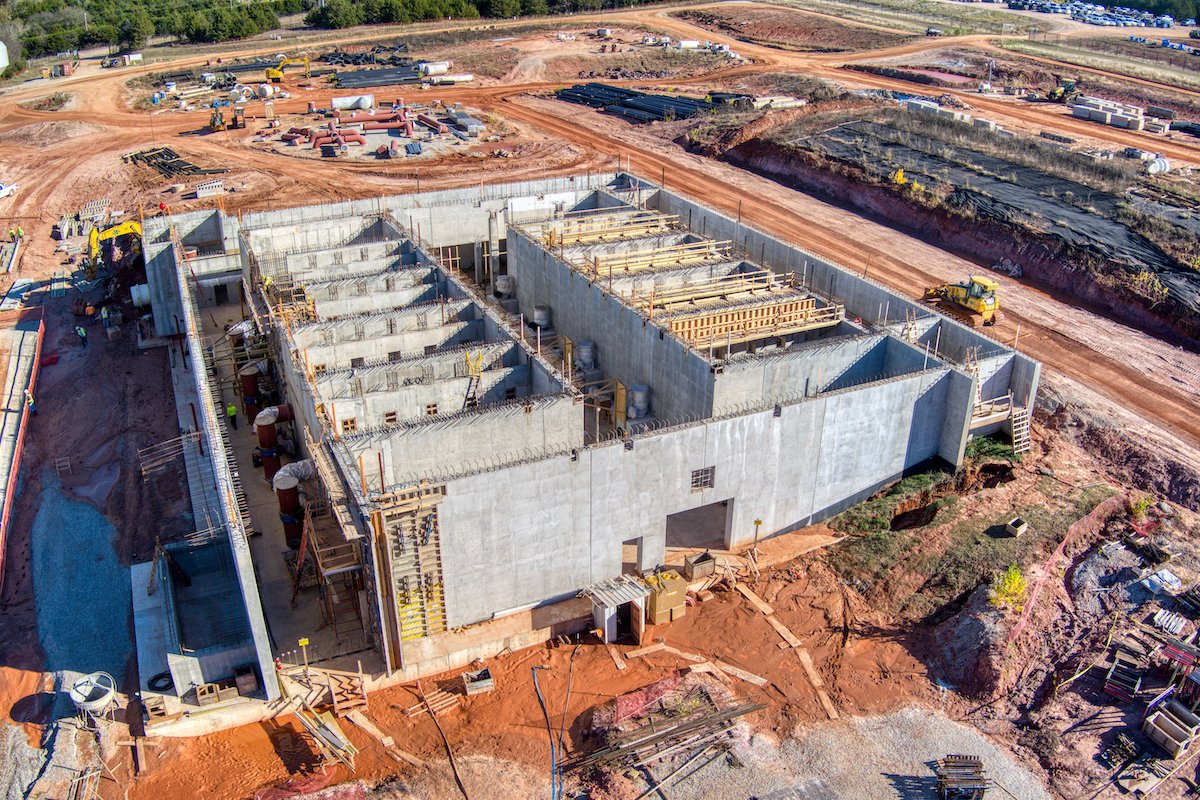
Plant Additions and Packaging Facilities in Weatherford
Plant additions, packaging space and light industrial buildings in Weatherford, planned around I-40, the university and the local airport.
Adding a production line to an older plant is harder than building a new one, because the old structure has opinions: floor thickness, column spacing, roof height and utilities all limit what can be done. We take on that work in Weatherford and elsewhere in western Oklahoma. Wikipedia reports that Kodak's roughly 50-year-old Weatherford plant received a $15 million expansion in 2017 for flexographic packaging plates. We were not involved, but it is a good example of the kind of upgrade a local plant makes.
Our process for a plant addition is investigative. We study existing drawings, measure the building, look at slab condition, check electrical and mechanical capacity and talk to the operators about where deliveries and products move. Many surprises hide in older plants, and we want to find them before they appear on a change order.
Weatherford's industrial work is not limited to one plant. The city's position on I-40, its university and its small airport support a range of businesses that need warehouses, shops and light manufacturing space. We build those, with the same attention to details that matter to the people working inside.
Packaging, education-linked and energy businesses
Packaging and printing plants need clean, climate-conscious space and good control of dust and chemicals. Education-linked businesses need flexible space and attractive grounds. Energy businesses need shops and yards. Wikipedia reports that Southwestern Oklahoma State University reached more than 4,200 undergraduates and post graduates by 2015, making it the largest institution of higher education in Western Oklahoma, and its presence shapes the local economy.
We keep our experience in advanced manufacturing and utilities and power available to local owners. These industries ask different things of a building, and we adjust floors, power, ventilation and security to fit.
Most local owners also want to know who performs each part of the work. We manage earthwork, concrete, underground utilities and steel erection, and we bring in electrical, mechanical and specialty trades under our management. The owner has one point of contact, one schedule and one contract for all of it.
I-40, wind turbines and the local airport
Wikipedia reports that I-40 was completed east and west of Weatherford in 1960 and that a southern bypass around the city opened in July 1970. The highway has been a freight artery for a long time, and it shapes land values and truck traffic. We study exits, frontage roads and bypass connections when we place driveways and truck courts.
TravelOK describes the Weatherford Wind Energy Park as planned to reach as many as 98 wind turbines of 1.5 megawatts each, covering more than 5,000 acres in Custer County, with turbines visible from I-40. Wikipedia reports that Thomas P. Stafford Airport has a 5100' x 75' paved runway. Both facts suggest an area comfortable with energy and aviation infrastructure, and with the distances, winds and long hauls that go with them.
Building additions that work with the old plant
A typical addition starts with a new foundation tied to the old one, a new steel frame and a wall opening that must be cut after the new structure can weather the old. We stage the cut so the plant does not lose protection. Utilities are extended from existing capacity or new service, and we map each connection.
For equipment installation, we pour pads, set embeds and build pits to the vendor's drawings. See equipment pads and foundations for details, and industrial office buildouts for the offices and control rooms that go with them.
Before any wall is opened, we walk the proposed route of every new utility with the plant engineer. Overhead lines, buried conduit and old floor drains are marked, and we agree on how each will be protected or moved. That walk costs an hour and prevents the kind of damage that stops a production line for a day.
Services that often go together
Plant owners rarely need one thing. A new line may require a new dock, a stormwater upgrade, more parking and an electrical service increase. We combine these into one program, using dock aprons and loading zones and stormwater detention and drainage as needed.
Combining services reduces coordination errors. The dock, the line and the drainage affect each other, and a single schedule keeps them in order. It also avoids the problem of a drainage fix that cannot be built because a building went up in the way.
Storm records and operations planning
The National Weather Service Norman tornado list for Weatherford records an F3 tornado on May 25, 1962 from south of Weatherford to southeast Weatherford, with 4 injuries. The Custer County list records an F4 tornado on June 10, 1967 with 4 deaths and 1 injury. These records are old, but they are part of the area's weather story, and the plan for a plant should reflect.
We talk to owners about shelter, communications, emergency shutdown and recovery. We also design for wind-borne debris at doors and glazing. See Clinton and Elk City for neighboring-market discussions.
Keeping a plant producing during the work
Most plant additions must happen while production continues. We schedule noisy and dusty work for off-shifts where possible, create dust barriers and keep forklifts and pedestrians separated from construction traffic. Tie-ins are planned for scheduled downtime with materials staged beforehand.
We provide the owner a two-week look-ahead every week, listing what will occur, which areas are affected and who needs to approve. When the plan changes, we tell the plant manager immediately.
Cleanliness is part of the schedule too. Packaging and printing plants cannot tolerate dust on product, so we plan temporary walls, negative air where needed and daily cleaning of shared aisles. We agree on those controls with the quality manager before the first wall is cut, and we inspect them together each week.
Tell us about your Weatherford plant or site
Share what you want to add, the building as it stands today and the dates you need. We will respond with a scope, schedule and price for your Weatherford project.
Common Questions
Can you add to a plant that is running?
Yes. We separate the work area, schedule tie-ins for planned downtime and keep dust and noise under control. The plant manager approves each interruption in advance, and we keep a log of every change.
How do you find hidden problems in an older plant?
We review drawings, measure the building, test the slab, inspect electrical and mechanical systems and talk to operators. We also open selected areas early when it is safe. This reduces surprises and change orders.
Does I-40 affect where I place my building?
It affects truck routes, visibility and noise. We study exits, frontage roads and local streets before locating driveways. For some businesses, visibility from the highway is an asset; for others, a quieter location is better.
What about wind and storms?
We design and build with wind in mind, and we plan temporary protection during construction. The area has recorded significant tornadoes, so we discuss shelter and emergency procedures with every owner.
Can you build small buildings as well as plant additions?
Yes. We build shops, warehouses and flex buildings, and we scale our approach to the size of the project. Small projects still get a clear scope, schedule and price.