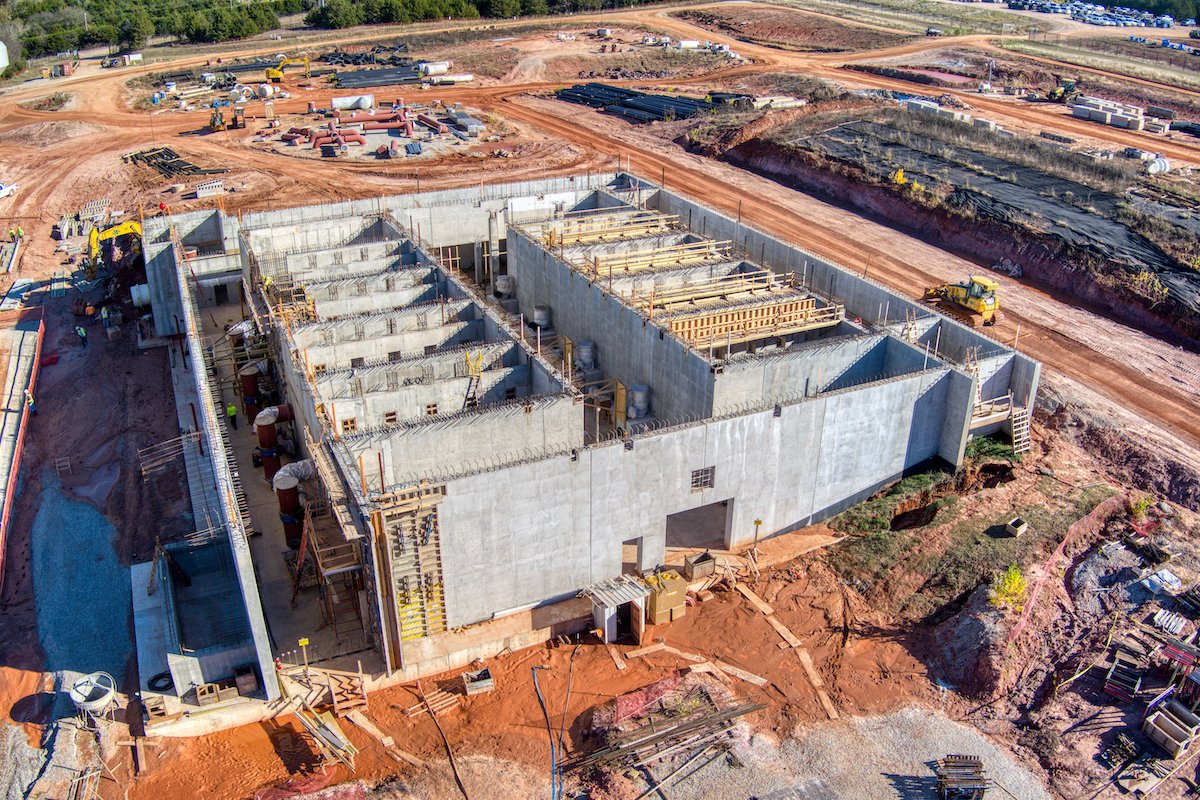
Industrial Shop, Yard and Site Construction in Duncan
Industrial buildings, truck yards and utility-ready pads in Duncan, planned around the city industrial parks, US 81, Halliburton Field and storm shelter needs.
A fabrication shop, equipment yard or service-company expansion going into one of Duncan's industrial parks needs a builder who starts with the truck, the slab and the storm plan, and that is how we approach the work here. Duncan has three named parks, Eastland, Northland and South, and an October 4, 2022 report said they share $1.4 million in federal ARPA funds and $1 million in state PREP money. Public money for streets and utilities tends to open parcels that have sat idle, and the first question a buyer should ask is what the ground needs before a building can stand on it.
We answer that question with a site walk and a short list of unknowns: where water and sewer actually end, how much of the lot drains toward a neighbor, whether the soil under the proposed slab has been tested and what a loaded truck will do to the entrance apron. From there we price the clearing and grading, the utility package and the building together, so an owner sees one number and one schedule instead of three contractors pointing at each other.
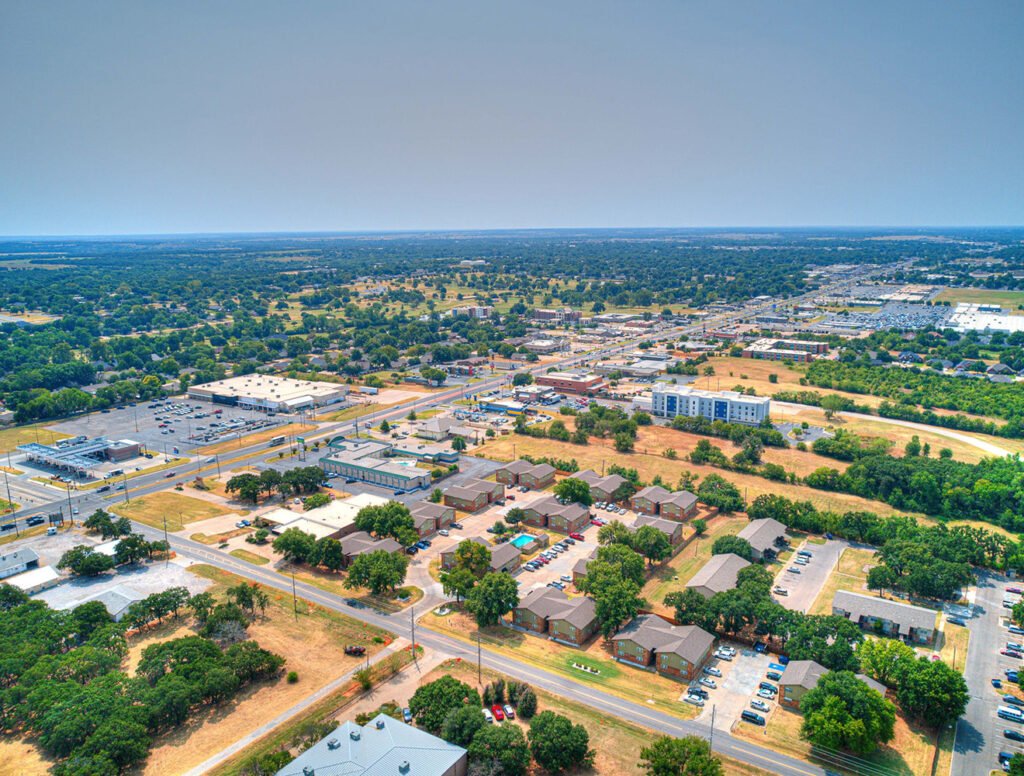
Duncan sits on U.S. Route 81 and State Highway 7, and Halliburton Field, two miles south of town, gives the area a concrete runway for owners who fly in parts or people. We do not pretend to have built for any company in town. What we bring is a plain method for industrial buildings in southwest Oklahoma: confirm the loads, confirm the utilities, build the pad and the yard to carry the equipment, and keep the owner informed when a permit or a delivery slips.
Buildings, pads and yards we build for Duncan owners
Most industrial buyers in a city of this size need a working building first and a showpiece never. A typical Duncan scope is a steel-framed shop or warehouse with a few overhead doors, a heavy floor, an office corner and a stabilized yard. We deliver that as a single contract through pre-engineered metal buildings when the span and clear height allow it, and with structural steel when a crane or a mezzanine pushes past what a catalog frame can do.
Around the building we build the part that wears out fastest, which is the ground. Truck courts and trailer yards take the same abuse day after day, so we design the base, the drainage and the joint layout for turning wheels instead of parked cars. Equipment that vibrates or hangs from a gantry gets its own foundation, covered under equipment pads and foundations, so it never depends on a thin general-purpose slab.
What we manage on a Duncan job
We schedule and supervise the dirt, the concrete and much of the underground work because those trades set the schedule on every industrial site. Our trade partners strip topsoil, build the pad, cut trenches for water, sewer and electrical, and place the slab and aprons. Managing that work under one plan means one foreman owns the sequence from the first pass of the blade to the last saw cut.
That matters in a town with limited rental yards and a small local pool of specialty subcontractors. When a pour is set for a morning, the compaction tests, the base and the forms are already done because the same company did them. Where we need outside specialists, such as a driller for deep foundations, a steel erector or a fire-sprinkler contractor, we name them in the proposal and manage their dates against ours.
Eastland, Northland, South and the public money behind them
The 2022 report on ARPA and PREP funds is useful to a buyer for what it signals rather than for what it promises. Money aimed at the Eastland, Northland and South parks suggests infrastructure work is planned or under way, and infrastructure work changes what a lot costs to develop. Before you buy or lease ground, ask the city what has been extended, what is only planned and who pays for the rest. We help owners get those answers during preconstruction, before a purchase turns into a surprise.
The local economy has deep roots in oilfield service. The Encyclopedia of Oklahoma History and Culture says Halliburton employed 1,750 people in Duncan in the mid-1950s, equal to 25 percent of the city's working population at that time. That is history, not a forecast, but it explains why the town has a long supply of people who know how to run heavy equipment and why service yards, shops and fabrication space remain a natural fit. Owners in metals and heavy industry will recognize the pattern of big equipment, big slabs and open yards.
Tornado history and shelter planning
The National Weather Service Norman office lists an EF3 tornado on November 3, 2024 that ran from 5 S Comanche to 7 NW Velma in Stephens County and injured 6 people. A list entry like that is not a prediction, but it is a fair reason to put storm planning in the first meeting instead of the last. For a new shop or plant, we discuss where employees go, how roof and wall connections are detailed, which doors need to stay shut and whether the owner wants a tested shelter space.
Safety also means the ordinary hazards of a construction site beside a running business. We lay out haul routes so delivery trucks do not cross the employee entrance, fence the work zone, hold daily huddles on lifts and trenching and keep a written plan for hot work. If you are adding to an existing operation, our approach to phased construction on occupied sites explains how we separate your people from the crews we coordinate.
What moves a Duncan industrial budget
Three items usually decide the number. The first is the site: a pad that needs fill, a lot with no storm outlet or a long run of new water line can outweigh the cost of the building shell. The second is the floor, because thickness, reinforcement and flatness all follow from the equipment and the traffic. The third is the yard, which owners often cut and then regret when ruts and potholes show up in the first wet season.
We separate these in our estimates so you can see the trade-offs. If a budget is tight, we would rather phase the yard or leave room for a future bay than thin out a slab that will carry loaded forklifts for the life of the building. Our industrial concrete floors page explains the choices that drive floor cost, and our Chickasha and Ardmore pages show how owners nearby approach similar sites.
Send us the lot and the equipment list
Tell us where the parcel is, what you will build on it and what has to move through it. We will walk the ground, check the utilities and give you a straight scope, schedule and price for your Duncan project.
Common Questions
Can you build on a lot in one of the city industrial parks?
Yes. We start by asking the city and the park owner what utilities reach the lot and what the covenants require. Then we price the site work, the building and any needed off-site extensions together, so the total reflects the real cost of making the ground usable.
How does Highway 81 access affect the design?
U.S. Route 81 and State Highway 7 are the main routes, so most trucks will arrive from one of them. We set the driveway width, the turning radius and the queue space based on the largest vehicle you expect, then check the entrance against local requirements before drawings are final.
Do you plan for tornado risk?
We treat it as a design and operations question. The Weather Service list for Stephens County includes an EF3 tornado in November 2024, so we review roof and wall connections, door hardware and shelter options with you. The right level of protection depends on how many people are on site and what you can afford.
Can a small shop and an outdoor yard be built together?
Yes, and it is often the cheapest way. One mobilization covers grading, utilities, building and paving, and one schedule keeps the yard from being finished before the building needs the space for deliveries. We can also stage the yard in phases if your budget requires it.
How long does a metal-framed industrial building take?
It depends on engineering, steel lead time, permits and weather, so we give a schedule after reviewing your drawings and supplier dates. Site work and foundations can often start while the building package is being fabricated. We tell you early which approvals and deliveries control the finish date.