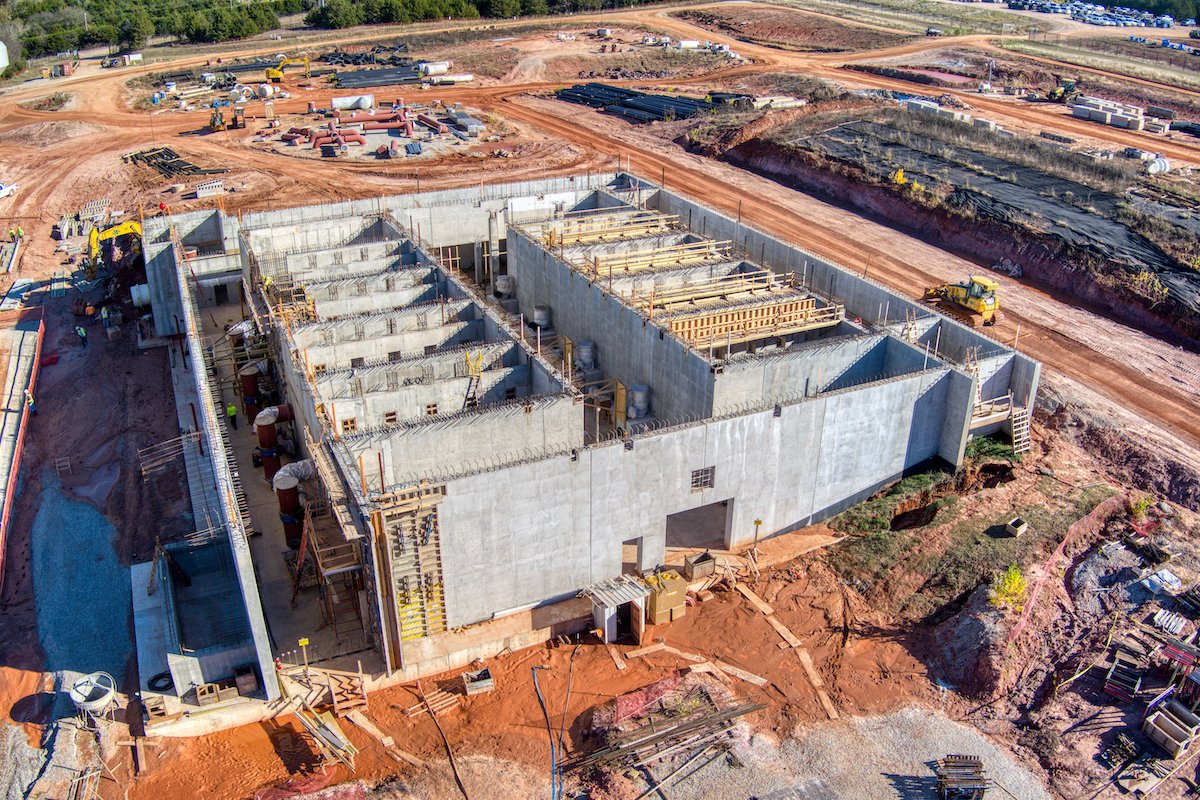
Process and Utility Tie-Ins in Hugo
Hugo plant owners get process and utility tie-ins planned in writing, with prefabrication, isolation and outage sequences agreed before work starts.
A new process line or utility service helps a Hugo plant only once it is connected, so the tie-ins deserve as much planning as the building that houses them. We write the connection sequence at the start of design: what is prefabricated, what is tested off line, which valve or breaker is the isolation point and who in the owner's operations group has to approve each step. The trades are scheduled and supervised by us, and every step is checked by someone who is not performing it.
Stan Stamper Municipal Airport has one runway, 75 feet wide and 4,007 feet in length, and it handles air ambulance operations as well as scheduled cargo flights flown for a parcel carrier. For a builder, that means a working aviation facility with its own height limits and activity, and for a plant owner it means specialists and urgent parts can arrive by air. Anything large still travels by road, and we plan those loads separately.
Hugo is also a place where outage windows matter. Plants that cannot stop for long need prepared work, tested materials and a crew that arrives knowing the plan. That is how we approach every connection to an operating system.
Buildings that house process and utility equipment
Many tie-ins serve a new building: a pump house, a compressor room, an electrical room or a production bay. We design these to give maintenance staff room to work, with clear paths for equipment replacement and ventilation matched to the process.
Near the airport, owners sometimes ask about an aircraft hangar or a service building with a large door and clear span. Those use the same discipline as plant buildings, with the added need to check height and use restrictions near the runway and to coordinate access with airport management.
What a tie-in package contains
A tie-in package includes the drawings, a materials list, a prefabrication plan, a test plan, an isolation and restart procedure and a schedule by the hour. Our underground electrical duct banks are built ahead of time, so new power can be pulled and terminated during the outage rather than trenched then.
We also arrange temporary services where needed, such as bypass piping or generator hookups, so production keeps going. Each item is listed, with its owner, test date and removal date. Where a plant is updating older equipment at the same time, industrial renovations and modernization work can be folded into the same outage plan, so the plant is opened once instead of several times.
Preparing connections before the outage
We believe the work done before a shutdown decides how the shutdown goes. Piping is cut, fitted and pressure tested at a shop or laydown area. Cable is cut to length, labeled and tested. Foundations are set and cured.
When the isolation is proven, the crew takes out the old section, sets the new one and restores it, following a script that has been rehearsed on paper with the operators. After startup, we stay for a verification period and record readings, so the owner has evidence that the system runs as designed. Punch items are closed quickly, and the final package includes redlined drawings, test sheets and a list of spare parts.
Industries that rely on utility and process tie-ins
Processing plants, packaging operations and rail-served manufacturers all depend on stable utilities. Our food and beverage work involves sanitary piping, washdown areas and refrigeration tie-ins, where cleanliness and temperature control add constraints.
Rail-served shippers also benefit from sites with track on the property, and we coordinate the spur work with the railroad so that trackside buildings and utilities fit. Our rail spur site improvements cover grading, drainage and pavement near the track, with crossings and clearances agreed before construction.
Highways, lakes and rail around Hugo
The Indian Nation Turnpike, a four-lane road of 105 miles, starts in Hugo and climbs northwest until it meets Interstate 40 at Henryetta, while US-70 is the city's east-west route. Hugo Lake lies northeast of town on the Kiamichi River, while to the south lies Roebuck Lake, an oxbow left by the Red River. Those water features affect drainage and soil, and we account for them in site design. Low areas near water can limit heavy haul routes after rain, so we keep an alternate route and a weather trigger in the delivery plan.
For nearby projects, see our pages on Durant and McAlester.
Where tie-in budgets go
Prefabrication, testing, temporary services, overtime during the outage and standby labor are the major items. Cost also rises when information about existing systems is poor, since field verification takes time.
The R.L. Howser Industrial Site is a level 117-acre tract with track on the property, which suggests lower site preparation costs for a new plant than a hillside parcel. Even so, a flat site needs drainage, utilities and pavement, and we price them with the process work. A level site also makes it easier to add a second phase, since the first foundations and utilities can be sized for it.
Planning around outage windows
Outage windows may be days or only hours, so every minute of preparation matters. We build a schedule with the owner's planner that shows each task, the people assigned and the dependencies, and we rehearse it in a meeting before the window opens.
Materials arrive early and are inspected. Cranes, lifts and special tools are booked with a backup, and we keep a list of replacement items on hand for the parts most likely to fail. If the window is lost, the restart plan is already written. We also keep a log of every decision made in the outage, with the name of the person who approved it, which helps in the review that follows.
Tell us what needs to connect at your Hugo plant
Send us the system, the outage dates and the people who approve isolation. We will return a tie-in plan, a schedule and a price for your Hugo project.
Common Questions
What is a tie-in?
It is the point where new piping, power or controls connect to an existing system. It is the riskiest part of an addition because the existing system is live or recently live. We plan it first and build around it.
How do you shorten an outage?
By doing as much as possible beforehand: prefabrication, testing, staging materials and rehearsing the sequence. Within the window, we use enough qualified people and keep the schedule visible. We also prepare a restart plan in case something is found.
Can you work while the plant runs?
Often, if the work is outside the isolation boundary. We separate live areas with barriers and permits, and we keep tie-ins for planned windows. The owner decides what can happen during operation.
What information do you need from us?
Existing drawings, valve and breaker lists, outage dates and the names of your operations contacts. We field verify what drawings do not show. The better the starting data, the lower the risk of delay.
Do you handle temporary utilities?
Yes. Bypass lines, generators and temporary power are part of many plans. We price them, install them, test them and remove them, and the owner signs off at each step.