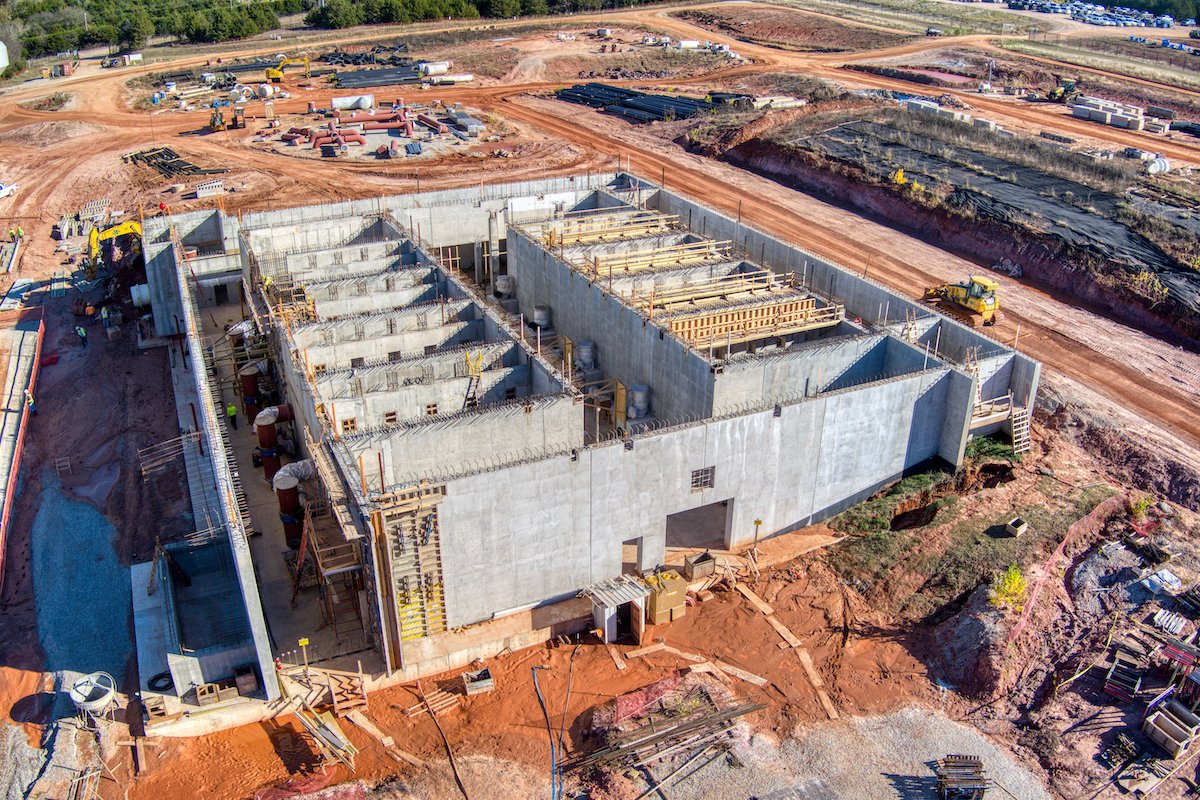
Industrial and Service Building Construction in Durant
Flex buildings, service yards and rail-aware industrial sites in Durant, planned around US 69/75, US 70, two railroads and the regional airport.
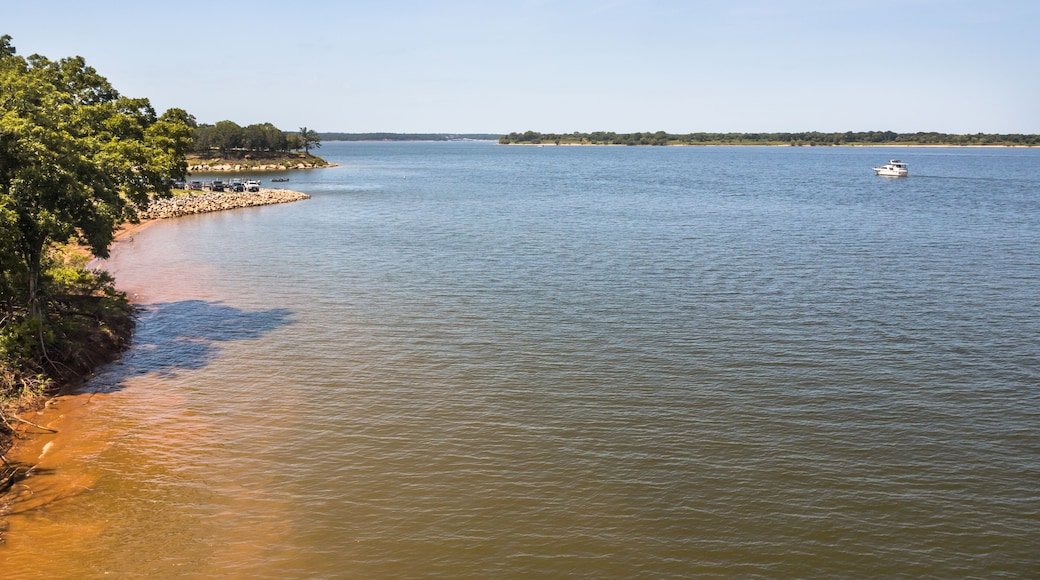
Distribution and service buildings that need both a railroad and a freeway make an unusual choice in Durant, because the city offers both without much compromise. Wikipedia describes Durant as a major railroad center, where the Union Pacific and the Kiamichi Railroad intersect downtown, and U.S. 69/75 runs as a divided freeway through the western and northern parts of town. We build industrial space for owners who want to use that combination, and we start by asking which direction the product will move.
Some buyers need a shipping dock that faces a spur. Others need a service yard with easy truck access to the highway. Still others want a small flex building near customers and workers. Each of these produces a different site plan, so we do not begin with a standard building. We begin with the traffic pattern and the work inside the building, then size the slab, doors, yard and utilities to suit.
Durant is also a place where institutions shape demand. Southeastern Oklahoma State University, on West University Boulevard, reports total enrollment of 5,851 for Fall 2024, and the Choctaw Nation lists its address in Durant and describes more than 12,000 associates across its operations. Suppliers, maintenance companies and service providers who work with such institutions often need a practical building, and we build those without frills.
Highways, railroads and the airport
U.S. 70 enters Durant from the east as Mulberry Street, and U.S. 69/75 passes through the western and northern sides as a divided freeway. Trucks serving a Durant building can usually reach a highway quickly, but the last half mile matters as much as the highway itself. We study the street the trucks will use, the intersection they must turn through and the width of the entrance before we draw a yard.
Durant Regional-Eaker Field has runway 17/35 listed at 6,800 feet long and 100 feet wide with an asphalt surface, and the Oklahoma Aerospace Commission lists its role as Regional. The field can matter to owners who ship small, high-value cargo or bring in visiting specialists. If your building will stand near the field, we check height and lighting rules during permitting and entitlements coordination.
Buildings and yards for service-driven owners
Most Durant industrial work falls into a few categories. A small manufacturer needs a flex or light industrial building with a few overhead doors, an office and room for expansion. A distributor needs a larger warehouse with dock positions. A fleet operator needs a maintenance shop with service bays, a wash area and a secure yard.
We price these with the exterior work included, because in a smaller city the yard and utility costs are not minor extras. They often exceed the cost of paving a parking lot, and they carry more risk if drainage or subgrade are not right. Our estimates break them out so you can see exactly what you are buying.
Who we build for
Industrial owners in southeast Oklahoma come from several sectors. Some serve agriculture and food, which is why our food and beverage experience matters where washdown floors and sanitary details are needed. Others work in logistics and distribution, using the rail and highway network. Still others support tribal enterprises, schools or healthcare facilities with fabrication, repair and storage space.
We do not claim to have built for any named employer in Durant. We build for the next owner who needs a dependable facility, delivered on a schedule that reflects real approvals and real weather.
Before we quote, we ask owners for three things: the heaviest load the floor must carry, the largest vehicle that must turn inside the yard and the date they need to be operating. Those three answers shape more of the price than the color of the walls or the style of the office, and they let us give an honest range at the first meeting instead of a vague promise.
Concrete, earthwork and utilities under close management
A Durant project often has a small number of trades but a high need for coordination. We manage earthwork, utility trenching, foundations, slabs and aprons, which are the activities most likely to hold up everything behind them. Crews that live and work in the region also know how local clay behaves after a hard rain, and they plan the moisture of the subgrade before they pour a slab on it. When one foreman manages those steps, there is less hand-off risk and fewer arguments about who damaged whose work.
Where the soil needs improvement, we coordinate with a geotechnical engineer and adjust the base, the moisture conditioning and the slab design accordingly. If the project needs deeper support, see drilled pier foundations for how we approach those decisions.
Storm seasons and the building calendar
The National Weather Service Norman office lists an F4 tornado on April 2, 1957 through Calera, Durant and north of Durant that killed 3 and injured 3, and an F3 tornado on May 23, 1981 that crossed the west edge of Durant. These are historical records, but spring storms are a reason to schedule roof and wall enclosure before the heaviest part of the season whenever we can.
We put weather allowances into the schedule and discuss them with the owner in plain terms. If the project must open by a specific date, we identify the activities that can slip without harm and the ones that cannot. Owners comparing nearby markets can also read about Ardmore and Ada to see how the planning differs.
Send us your Durant site details
Tell us where the property is, what the building will do and how trucks will reach it. We will provide a clear scope, schedule and price for your Durant project.
Common Questions
Can you build near the railroad in Durant?
Yes, but rail adjacency raises questions about access, drainage and vibration. We confirm the property boundaries and any railroad requirements before design. If you need a spur, the track work itself is governed by the railroad, and we prepare the ground and pavements around it.
What size buildings do you typically build here?
We build everything from small flex buildings to larger warehouses and plant additions. The right size depends on the equipment, the stock and the number of trucks you expect. We often start with a smaller building and plan the site so that an expansion can be added later.
Do you build for institutions and tribal enterprises?
We build industrial and support facilities for any owner who needs them, including fabrication, repair and storage space. Governmental and tribal projects can have their own procurement rules, and we follow them. We do not imply any past work for named organizations.
How does tornado history affect building choices?
The Weather Service records for Durant include significant tornadoes, so we discuss shelter areas, roof connections and door hardware with owners. Cost and risk tolerance vary, and we explain the trade-offs without pushing a particular answer.
How soon can you start after we sign a contract?
Start dates depend on permits, utility locates, material lead times and weather. Site work can usually begin before the building package arrives. We give a written schedule that shows which approvals and deliveries control the opening date.