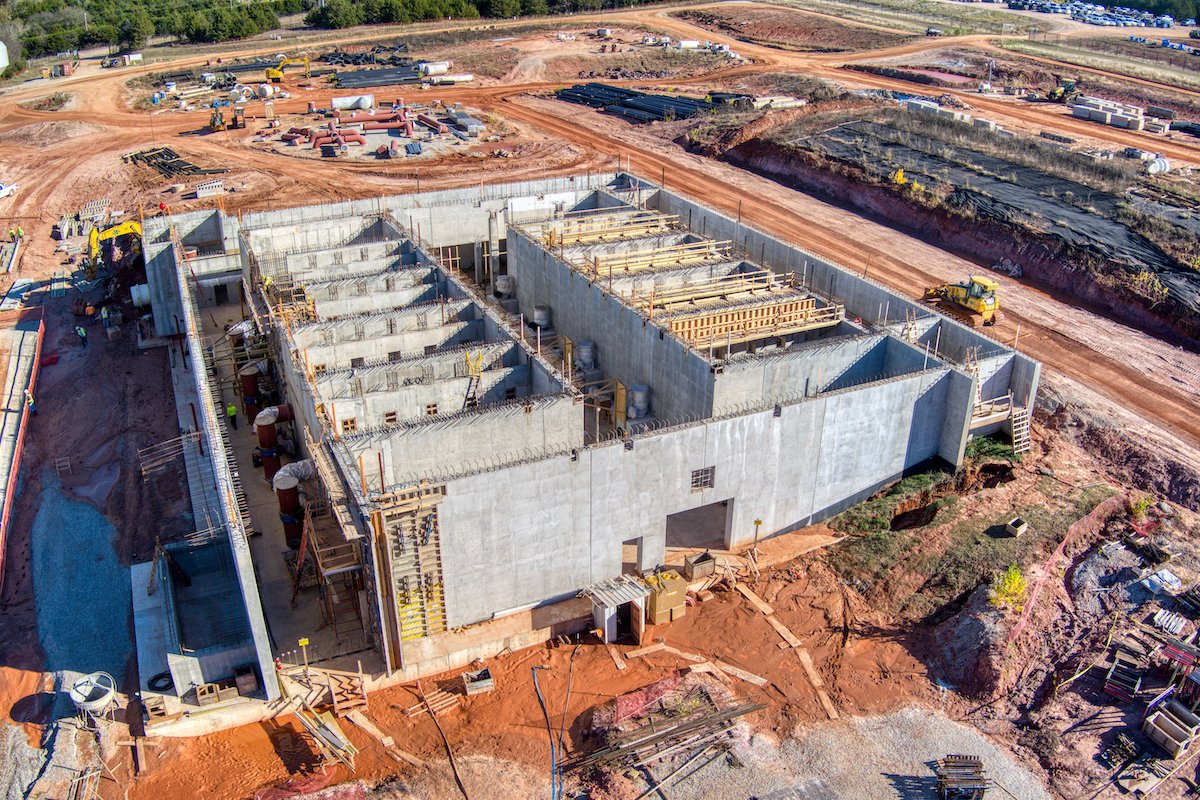
Building at the Tulsa Port of Catoosa: Heavy-Cargo Site Work
Industrial buildings, laydown yards and heavy-haul pavement in and around the Tulsa Port of Catoosa, planned for barge, rail and truck freight.
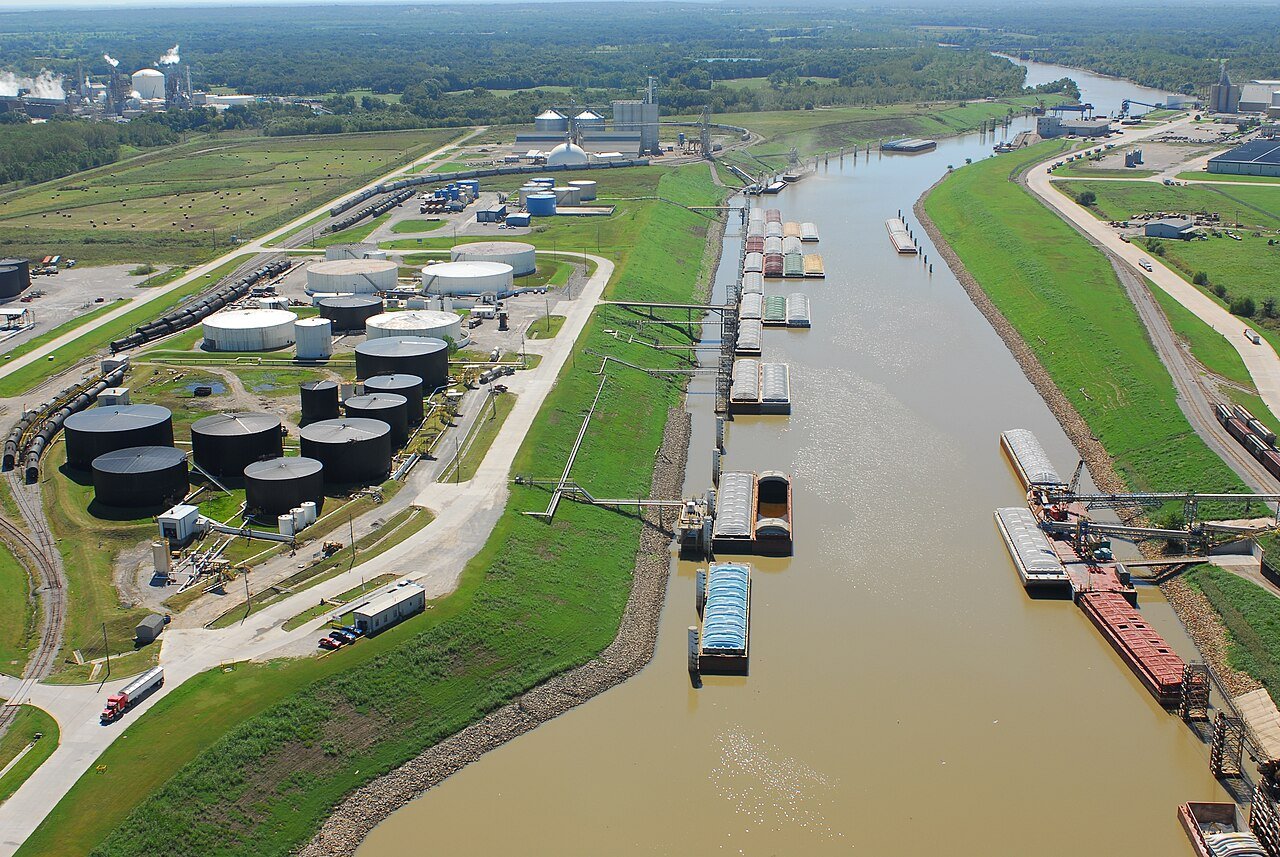
Heavy cargo that arrives by barge needs pavement, pads and buildings that can take it the rest of the way, and that is the work we do in and around the Tulsa Port of Catoosa. The Tulsa Ports website describes a multi-modal shipping complex and 2,000-acre industrial park, and says it sits at the head of navigation for the McClellan-Kerr navigation system in Northeast Oklahoma. A company with steel, pipe, machinery or bulk material to move can put water, rail and road on one site, and the construction challenge is making all three work together.
Port ground behaves differently from a typical business park. Loads are heavier, the turning radii are larger, and the same acre may be asked to handle a crane pick on Monday and a truck convoy on Friday. We design pavements and foundations for the heaviest realistic load, not the average, and we document the assumptions so the port tenant, the lender and the insurer all see the same numbers.
We write about building in and around this area, not for any of the companies there. Nothing on this page implies we have built for a named tenant, and every site starts from the owner's own program, the port's lease or land terms and the current state of the parcel.
Water, rail and road on one site
The Tulsa Ports website reports that over 1,000 barges pass through the port in a normal shipping year, that over 82 million tons of freight have moved through it since it opened in 1971 and that more than 50 companies there collectively employ nearly 3,500 workers. Wikipedia adds that in 2016 the port added a 720-foot dock accommodating a rail line and multiple cranes, and that its industrial railroad uses three port-owned switch engines, with operations moved to a new operator in August 2022.
For a builder, that means rail and cranes are a normal part of the site, not an afterthought. A new warehouse or fabrication building at a port often needs a spur, a loading track, a crane runway or a dock-edge slab. Our rail spur site improvements and heavy-haul access roads are the first items we price on a port parcel, since they set the layout of everything else.
What we build on port-area parcels
Typical scopes include a steel or tilt-up warehouse, a fabrication building with a bridge crane, a covered transfer area, and acres of stabilized yard. Heavy-lift pads for machinery or modular components may be separate from the main building so they can be cast on piers or thickened slabs sized for the reaction loads. For tilt-up and slab work, see our tilt-wall industrial buildings approach.
Laydown is its own design problem. A stabilized yard for steel plate or pipe needs a base that does not rut, drainage that does not carry sediment to the channel and clear aisles for a loader. We build stabilized laydown yards with geotextile, aggregate or concrete as the loads require, and we mark crane pick zones where the base is thickened.
Permits, the river and the port landlord
Building at a port involves more parties than building in a city lot: the port authority as landlord or seller, the county or city for building permits, the state for environmental items and, where the work touches a waterway or a levee, the federal agencies with authority there. We do not guess at which approvals apply. We put them in a matrix during permitting coordination and assign each one an owner and a date.
Stormwater is usually the item with the most weight. Runoff from a heavy-haul yard can carry oil and sediment, so the design includes inlets, detention and, where required, a containment area for fuel or chemical storage. Oklahoma adopted newer International Codes, and the local jurisdiction confirms which edition and amendments apply to your submittal.
Highway work and the I-44 interchange
ODOT's Tulsa traffic advisory as of early November 2026 lists an I-44 and SH-66 interchange improvement in Catoosa, including the westbound I-44 to northbound SH-66 ramp, with work continuing through early 2027. For a plant whose trucks use that ramp, the advisory is a scheduling input. Deliveries of oversize loads, concrete and steel need routes that avoid closures, and we check the advisory before we set pour dates.
The other site factor is weather. Wikipedia reports that an F4 tornado struck Catoosa on April 24, 1993, killing seven people. We bring that into planning for shelter areas, building connections and the way a crew secures a site when a warning is issued, without making predictions about any year.
Who uses a port site
Steel and metal fabricators, wind and energy equipment suppliers, bulk material handlers and manufacturers that need a heavy receiving dock are natural port tenants. The metals and heavy industry and logistics and distribution pages describe our work with those users. The Oklahoma Department of Commerce reported in February 2026 that one international company selected the port for a U.S. headquarters with nearly 300 new jobs and rail, barge and road access, and in 2021 that a heat exchanger manufacturer planned a $6 million investment at its port plant. We cite those announcements as evidence of demand, not as work we performed.
If your operation also needs space near the aerospace cluster, read about the aerospace district at Tulsa International Airport, and for the next city up the road, Claremore.
Sequencing around barge schedules
Materials for a port job often arrive on a rhythm set by the river, the railroad and the crane. We schedule concrete and steel deliveries around those windows, hold weather contingency for pours and keep a log of when each pad is cleared to receive load. On a project that must keep adjacent operations running, we separate the work zone with fencing and keep truck routes open through the day.
Put the heaviest load on the drawing first
Tell us what comes off the barge or rail car and how it leaves. We will size the pavement, pad and building around it, and return a written scope with the permits and parties involved.
Common Questions
Can the port parcel handle crane loads?
Only if the foundation is designed for them. We get the crane type, outrigger or track loads and mat requirements, then design the slab, base and piers to suit. A geotechnical report on the actual parcel is the starting point.
Do you need to deal with the port directly?
Yes, in most cases. The port authority sets lease or land terms and often reviews site plans. We coordinate with the port alongside the city, the utilities and the design team so that approvals do not overlap or contradict each other.
How do I plan around the I-44 and SH-66 work?
Check the current ODOT advisory, which lists the Catoosa interchange improvement through early 2027, and tell us your delivery dates. We plan oversize and concrete deliveries to avoid lane closures and adjust if the state revises its schedule.
What pavement works for heavy cargo?
Heavy concrete pavement is common where loaded trailers turn and where cranes set up, and thick aggregate or asphalt sections are used where loads are lighter. The right choice depends on the load, the subgrade and the budget, and we price the options side by side.
Can you add rail to a building I already own?
Often, if the geometry works. A spur needs a connection to the railroad, grading, ballast area and sometimes a crossing. The railroad has final approval, and we begin that conversation first.