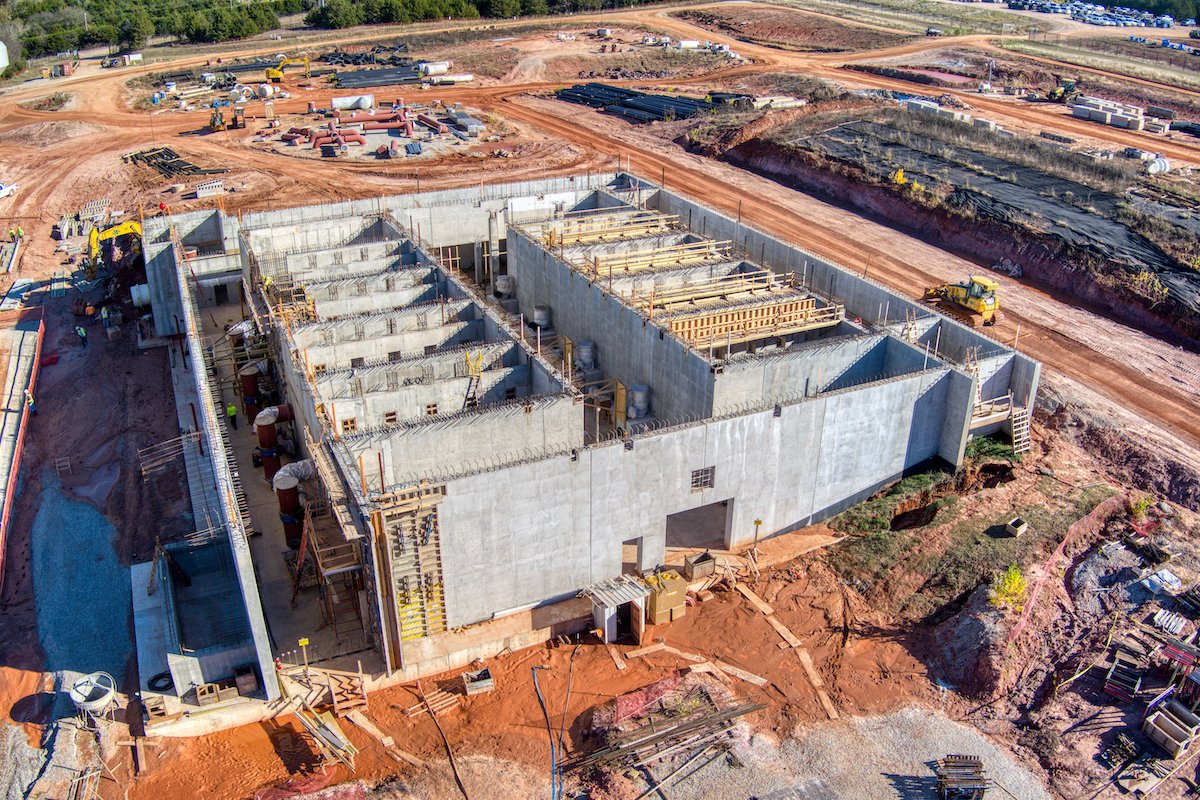
Refinery, Energy and Pipeline-Adjacent Construction in Kingfisher
Shops, yards, pads and utilities for pipeline and energy suppliers in Kingfisher, built around flood review, containment and operator standards.
Kingfisher sits in oil and gas country, and owners who serve pipeline operators, producers and processors here need buildings, yards and pads that meet an operator's rules from the first day. We plan, coordinate and inspect that work: service shops, pipe yards, compressor pads, control buildings and the site utilities behind them, all built to the safety and records standards an energy customer expects.
Two highways give the town its logistics. Highway 3 meets U.S. 81 in the middle of town, and Greater Oklahoma City says U.S. 81 puts the three major interstates within half an hour. The Union Pacific railroad also serves the community, and an industrial park is available for companies that want prepared ground. A telephone cooperative, Pioneer Telephone, is headquartered in the city, which suggests there is fiber and a base of technical employers in town.
Water is the first hazard on any local site plan. On August 19, 2007, Kingfisher Creek and Uncle John Creek overflowed after heavy rain, and about a quarter of the town flooded. We take that event seriously when we discuss pad elevations, containment and the placement of equipment that cannot get wet. An energy owner who stores fuel or chemicals near a creek needs to know where the water goes before the site is graded.
Permits, floodplain review and the operator's rules
A shop or yard in Kingfisher goes through the city's review of the building, electrical and site plan, and the floodplain status of the parcel is checked early. If the site lies near either creek, the finished floor and equipment pads may need to be set above the mapped flood elevation, and drainage must not worsen conditions for neighbors.
The energy customer sets another layer of requirements for welds, coatings, concrete and documentation, and those often exceed what the city asks. Our permitting and entitlements coordination places both sets on one checklist so nothing is missed.
Hot work, containment and spill control
Pipeline and energy facilities handle products that burn, leak or pollute. We plan hot work with permits, gas testing where required and fire watch. Fueling areas, chemical storage and pump skids get containment sized for the volume they hold and graded so spills flow to a collection point, not a creek.
All trade partners complete the orientation the operator requires before they start, and our supervisors verify it daily. When something changes, the permit is revised before work resumes.
Energy and the owners who support it
Energy support work falls closest to utilities and power and metals and heavy industry, and includes suppliers who fabricate, coat or repair equipment for pipelines and producers. They share a need for heavy floors, high doors, crane service and secure yards.
Agricultural processors and small manufacturers have many of the same needs, so a building designed for one can often be adapted for another later. We design with that second owner in mind, using clear spans, generous door sizes and power that can be extended, because resale value and reuse matter when energy markets move.
Services behind a pipeline-adjacent facility
A typical project includes equipment pads and foundations, stabilized laydown yards for pipe and skids, and heavy haul access roads so loaded trucks do not rut the entrance.
When power is needed at a remote corner of a site, we install underground duct banks and yard lighting before paving so that nothing has to be cut later.
How we manage an operator-driven project
One project manager owns the schedule, the budget and the customer's requirements. Our job is to line up, direct and inspect the trade partners, record each step and hold a weekly meeting with the owner and, when invited, the operator's representative. Submittals for concrete mixes, rebar, welding procedures and coatings go through the same log, which makes turnover quick.
When the customer changes scope, we price it and show what it does to the schedule before work starts. That keeps arguments out of the final invoice.
Ground, water and access
Before design, we study drainage paths, soils and the access routes trucks will use. In a town with two creeks, a site that looks dry in summer may be a flow path in spring, and we ask for survey data that shows it. Where grade changes are needed, we design swales and detention so the site handles heavy rain without sending water toward a neighbor.
Truck routes matter too. The Highway 3 and U.S. 81 junction downtown is busy, and we avoid sending oversize loads through it at peak times. Mercy Hospital Kingfisher on Hospital Drive, which staffs 25 beds and reported 3,518 emergency visits in its fiscal 2026 figures, is another reason to keep emergency routes clear.
Scheduling around weather and operators
Spring rains can interrupt earthwork and concrete, so we schedule site grading and paving for drier months and keep stormwater controls in place all year. Concrete placements are watched against the forecast and moved if rain threatens. A pour that gets rained on can mean a rejected slab, so we would rather lose a day than a floor. Material deliveries follow the same logic: we do not stack steel or pipe on soft ground ahead of a storm.
Energy customers also set their own windows, such as avoiding certain operations during product transfers. We request those windows at kickoff and write them into the schedule.
Buildings an energy supplier needs
Common building types include a manufacturing plant or fabrication shop, a pre-engineered metal building for storage and service, and an office wing for engineers and dispatch.
In a prepared industrial park, we also help owners compare sites on rail access, utility capacity and the rules that apply to height, lighting and outdoor storage. Owners also weigh Kingfisher against sites in Guthrie, Yukon and Edmond, and we price the same use in each so the trade-off is clear.
Send us the parcel and the operator spec
If your Kingfisher operation serves an energy customer, send the parcel and the customer's requirements. We will review drainage, permits and records before we price the work.
Common Questions
How do the creeks affect where we can build?
Parcels near Kingfisher Creek or Uncle John Creek may lie in a mapped floodplain or collect runoff. We review flood maps and survey data first and raise floors and pads where needed. Drainage is designed to protect your site and your neighbors.
What does an energy operator expect from a contractor?
Safety orientation, permit to work, tested materials and complete records. We read the operator's specification before pricing and keep documents organized so their auditor can follow every step.
Can rail service help a project here?
It can, for bulk material and heavy equipment. Union Pacific serves the community, and the industrial park may offer ground that can use it. We check rail access, switching arrangements and cost before recommending it.
Should I build in the industrial park or on separate land?
It depends on the use. A prepared park offers utilities and compatible neighbors, while separate land may offer more room or lower price. We compare both on access, cost to build and rules before you decide.
How do you protect against spills on a site near a creek?
We design containment sized for the stored volume, grade the area to a collection point and place storage away from drainage paths. We also review the operator's spill plan and add controls such as berms and covers.