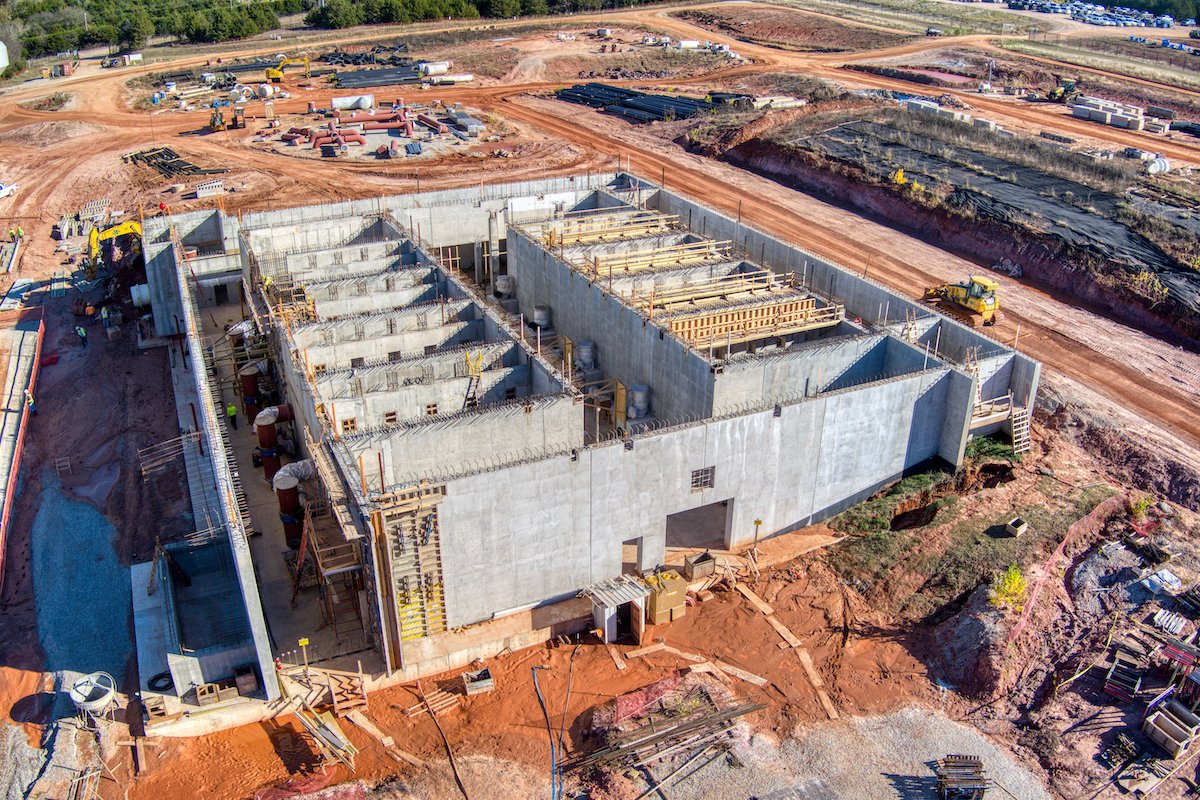
Truck Terminals and Industrial Yards in Yukon
Truck yards, cross-docks and warehouse shells in Yukon, laid out for I-40 and Kilpatrick Turnpike access and built with closely managed paving.
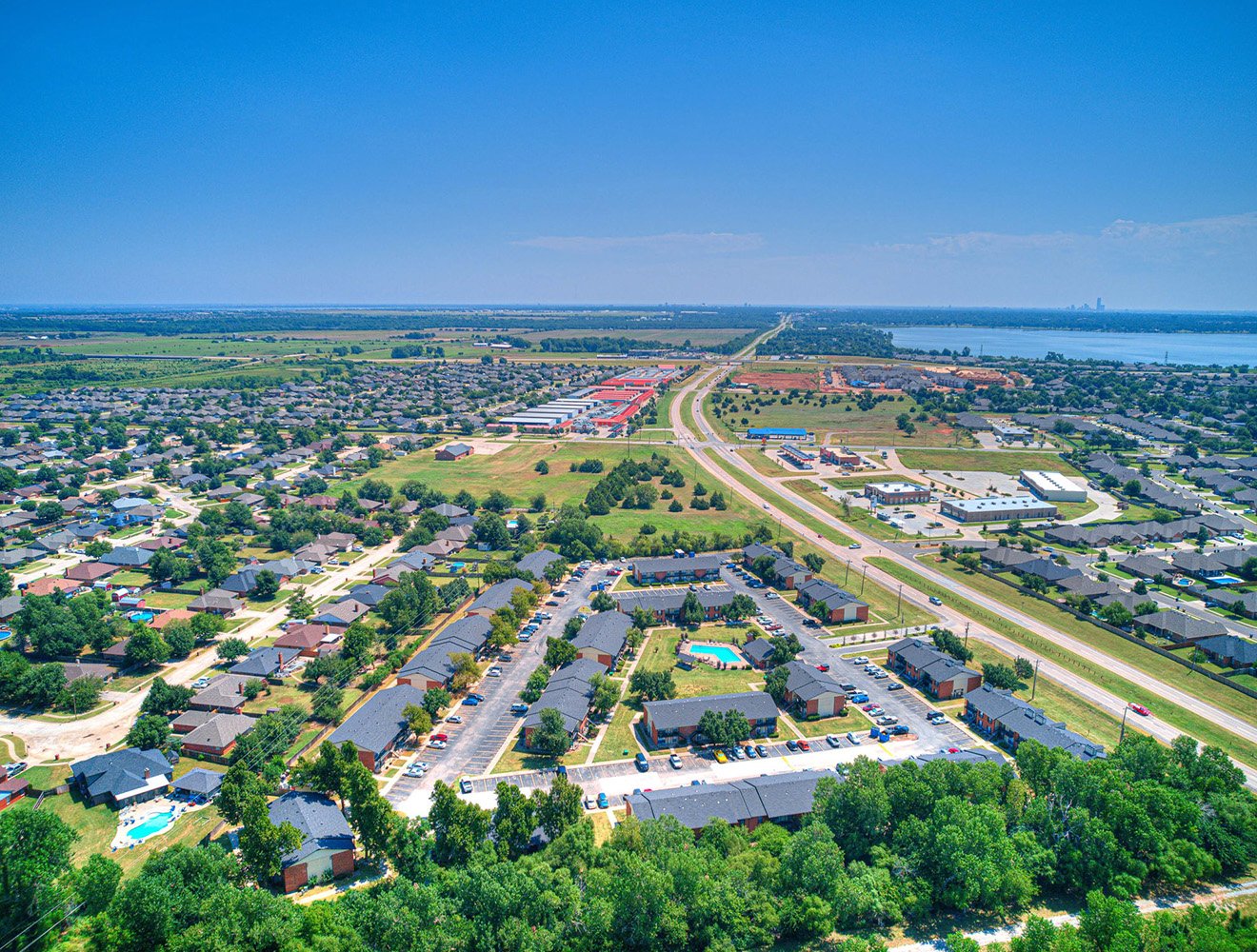
West-side freight users want a yard and a building that can take trailers off the interstate without a long cut through town, and Yukon gives them that. The town lies just north of Interstate 40, and the John Kilpatrick Turnpike passes just east of the city limits, meeting I-40 at a full interchange, with the extension to I-40 completed in 2001. We build truck yards, cross-dock buildings, warehouse shells and service facilities that take advantage of those routes.
The corridor has other roads that matter to site planning. Route 66 runs through downtown, and State Highways 4 and 92 cross the town, so a parcel's access may come from a state route, a section-line road or a frontage road, each with different rules for driveways and turn lanes. We learn those rules before we design a driveway, since a driveway permit that has to be revised can delay a project by weeks.
Our work in Yukon tends to be practical and focused on throughput: how many trucks a day, how long they stay, where they stage and how they leave.
The first thing we ask a new client is how the site will be used on its busiest day, not its average one. A terminal designed for the average day backs trailers into the street on the peak day, and neighbors, police and customers notice. We draw the peak day onto the site plan with turning templates, queue lengths and gate locations, and then decide how large the yard and the building must be.
What the traffic count tells a builder
The Greater Oklahoma City Chamber's community page for Yukon cites a traffic count of 55,200 vehicles per day in the I-40 and Garth Brooks Boulevard trade area and notes that retail sites are available at that interchange. The page is undated, so we treat the number as an indicator, not a measurement for engineering use. Still, it tells an industrial owner that the interchange area carries heavy traffic and that retail, restaurants and services will compete for the same corners.
For industrial users that competition matters. Land at the interchange itself may be priced for retail, while parcels a short distance away can serve a warehouse or terminal more economically. We help owners compare parcels by walking each one for truck access, drainage, utility distance and buffer from neighbors, then summarizing the cost to make each ready. The same corridor logic applies in Mustang and Oklahoma City.
Truck terminals and cross-docks
A truck terminal or cross-dock is a different building from a warehouse. It is long and narrow, with doors on both sides, a heavy-duty apron and a layout that lets freight move straight across with minimal storage. Slabs carry forklift traffic constantly, so joint design and concrete strength matter, and the apron needs thick pavement that will not rut under standing trailers.
We also build parts distribution and regional warehouses for logistics and distribution operators where the I-40 connection helps reach customers in several directions. For those, warehouse shells with 28 to 36 feet of clear height and a mix of dock-high and grade-level doors give the owner flexibility. Where trailers must be stored, we design the yard with proper drainage so that standing water does not undermine the pavement. Lighting and security fencing follow the same logic: lights are placed to cover the dock edge and the gate, and fencing is sized to the risk, using integrated fencing and security systems where the owner needs cameras and access control tied together. Every extra detail we settle early is one fewer change order later.
Concrete and yard work under close management
Most of the cost and risk in a truck-heavy site sits in the pavement. We schedule and supervise subgrade preparation, stabilization, base, reinforced concrete paving and joint sealing, which lets us control the sequence and the quality. Where soil is soft, we test and, if appropriate, stabilize with lime or cement and compact in lifts to a measured density.
Dock aprons and truck courts are where trailer landing gear and fifth wheels do the most damage, so we typically use thicker concrete there than on general parking. Our work on truck courts and trailer yards and dock aprons and loading zones covers the specifications and the details in full.
Keeping a west-side schedule on track
Concrete paving is weather-sensitive, so we schedule it for the months when rain and extreme heat are least likely to interfere, and we phase yard areas so that trucks can begin using one while another is poured. Utilities go in early, before pavement, because cutting into new concrete is costly and leaves a visible repair.
We keep a short list of long-lead items for every building, including dock levelers, overhead doors and electrical gear. Those are ordered as soon as the design is stable, and we confirm delivery dates every week. If a delivery slips, the schedule is adjusted immediately and the owner is told, not surprised.
Serving the western metro
From Yukon we serve the western metro, including Oklahoma City and Mustang, as well as sites along I-40. Crews, equipment and testing partners move among them as projects require, so an owner gets the benefit of a larger team without paying for mobilization from far away.
For owners with several sites, a programmatic multi-site approach lets us repeat a standard terminal or warehouse design across locations.
Bring us the interchange and the truck plan
If your Yukon site depends on the I-40 and Kilpatrick connection, send us the parcel and the trailer count. We will check the approach, price the yard and give you a sequence that gets trucks turning before the building is finished.
Common Questions
Why does the Kilpatrick Turnpike interchange matter for a Yukon site?
The turnpike meets I-40 at a full interchange just east of the city limits, which gives trucks a way to reach the north, west and south sides of the metro without crossing town. We evaluate how a given parcel connects to that interchange and what the driveway approvals will require.
How thick should truck court concrete be?
It depends on the trailer weights, the soil and the traffic pattern. Dock aprons and turning zones usually need heavier sections than general parking. We work from a geotechnical report and a traffic estimate to set thickness and joint spacing for your site.
Can I build on land near the interchange?
Often, but the price per acre may reflect retail demand. We help compare nearby parcels for truck access, drainage and utilities so that the owner can decide whether the premium for interchange land pays off.
How long does paving a large yard take?
A multi-acre yard commonly takes several weeks of paving after subgrade preparation, depending on weather and phasing. We build the schedule around curing time and phase the work so part of the yard can open early.