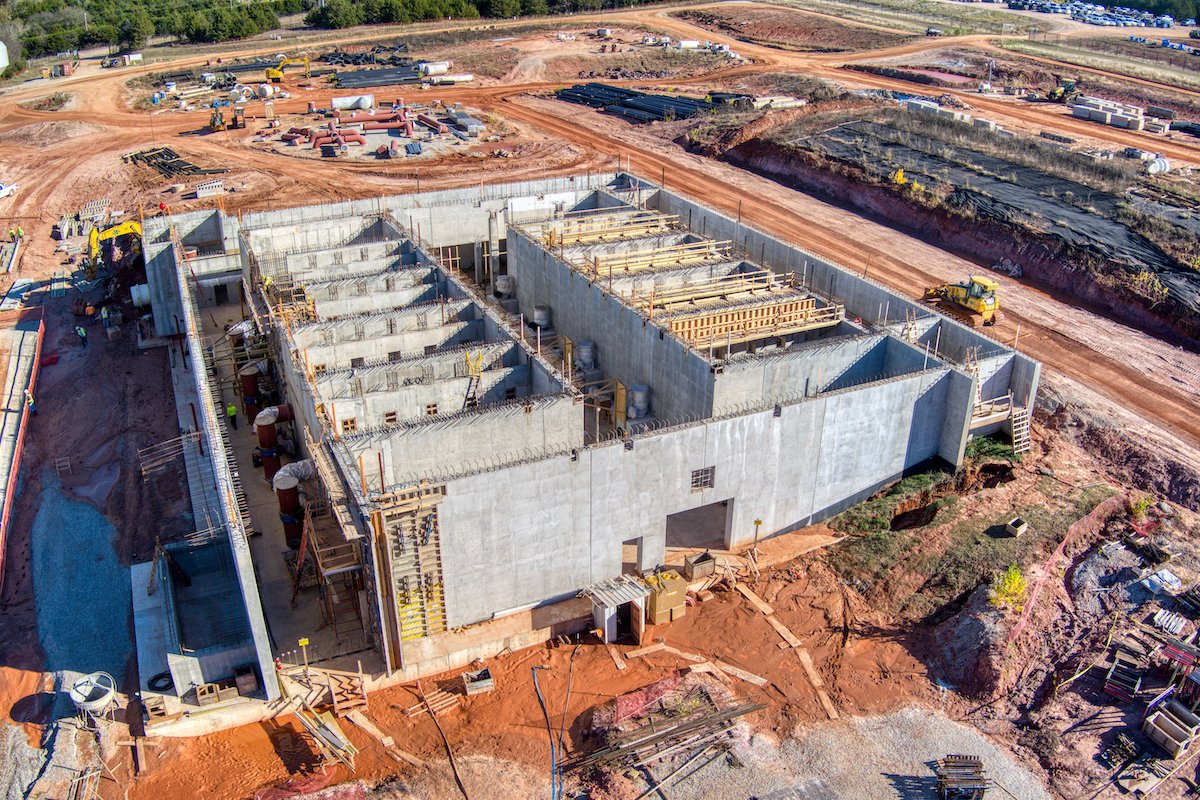
Shutdown and Turnaround Construction in Blanchard
Shutdown, turnaround and outage window construction in Blanchard, planned backward from restart with permits, trades and shift handoffs.
When a unit is shut down on a schedule, every hour counts against a production target, and owners in and around Blanchard expect the contractor to treat the shutdown calendar like a delivery date. We plan turnarounds and outages for process, utility and building systems, and we build the work breakdown backward from the restart: what has to be tested, what has to be inspected and what has to be finished for the equipment to run.
Blanchard lies in the northwest part of McClain County at 1,309 feet, takes in roughly 30.56 square miles and reaches west into Grady County. Highways 62, 277 and 76 all serve it, and downtown Oklahoma City is about 27 miles to the north. For a shutdown crew, that means a trip of under an hour from the metro and a choice of roads for heavy loads, as long as the county line and the load limits are checked.
Many of the projects that shape the area are public, and they illustrate how a fixed date drives a schedule. We do not take on public school or water work in this market, but we watch it because it affects the trades, the inspectors and the roads that an industrial owner depends on, and it influences when we recommend booking a shutdown.
Growth pressure on trades and roads
On August 27, 2024 the school district sent voters a bond of $66.1 million to fund a high school saferoom, added security and ball fields for baseball and softball. When a district of this size finances a program like that, local concrete, steel and electrical firms are asked to bid, and the same firms are the ones an industrial owner would call for a shutdown.
We account for that competition by reserving trade partners early. An owner who commits to a date several months ahead gets better coverage than one who calls two weeks before the outage.
Services that make a short window possible
Shutdown work depends on preparation. Long-lead procurement management brings valves, gear and pipe to the site before the window, phased construction on occupied sites keeps the plant running around the work and commissioning, turnover and closeout carries the restart through to acceptance.
We combine these so the owner has one plan covering the weeks before, during and after the outage, with one point of contact for questions at any hour.
Buildings affected by a turnaround
Not every shutdown is about a process unit. Many involve a manufacturing plant, a food and beverage processing building or a warehouse where a production line, a refrigeration system or a dock must be taken out of service for a few days.
Each building has its own rules for sanitation, fire protection and air quality while work is under way. We write those rules into the plan, so the crew knows what to cover, what to clean and what to test before the area is released.
From the metro to the Grady County line
We reach Blanchard through Moore and Mustang along the corridor from Oklahoma City, and from Chickasha when a project calls for crews from the south and west. Because the city limits straddle a county line, we confirm early which jurisdiction governs a given parcel and which building official reviews its permit.
That detail matters on a short window, since a permit approved by the wrong office can cost days.
Approvals that must be in place before shutdown
A turnaround without permits is a stalled turnaround. We list the approvals required for each task, from mechanical and electrical permits to fire protection impairment notices and owner management-of-change sign-offs. Each has a lead time and a responsible person, and we put them on the schedule as milestones.
The city's growth has also been supported by water and sewer investment. The state water board lent the city's improvement authority $9,200,000 on May 21, 2024, citing growth, for water and sewer line extensions, a booster pump station upgrade and a new storage tank, and owners near those projects should expect work in the right of way that can affect access during a shutdown.
Reading the site before the window opens
We walk the area weeks before the outage with the people who operate it. The walk answers the questions that cost time later: where equipment will be set down, which doors are wide enough, where the cranes can stand, what is hidden above the ceiling and which valves actually close.
We photograph what we find, add it to the drawings and revise the plan. When the unit is opened, the crew starts with fewer surprises, and the schedule has room for the ones that remain.
Owners who plan around outages
Plants in food and beverage, utilities and power and advanced manufacturing all rely on planned shutdowns, though each defines its tolerance differently. A food plant may have a sanitation window each week. A utility may have a limited season. A manufacturer may have a single holiday week.
We shape the plan to that tolerance and review it with the owner's operations group before work begins.
What a typical outage package includes
A package usually combines demolition of old equipment, new foundations or pads, structural modifications, pipe and electrical changes, controls tie-in and testing. We divide it into work that can be done before the shutdown, work that must be done within it and work that follows it. Each piece has an owner, a date and a test, and the list is shared with the plant's operations group.
Within the window, we run two or three shifts as required, hold a handoff meeting at each shift change and update the schedule daily. At the end, we walk the area with the owner, close out the permits and hand over the records.
Give us the restart date
If your Blanchard facility has a shutdown on the calendar, send us the date and the scope. We will build the work breakdown backward from restart and show you what can happen sooner.
Common Questions
How far ahead should we book a turnaround contractor?
Several months is ideal for a significant outage, since planning, procurement and trade availability all take time. For smaller windows, a few weeks may work. Earlier involvement lets us move more of the work out of the shutdown itself.
Do you work multiple shifts during an outage?
Yes. We staff the shifts our trade partners can supply, hold a handoff meeting at each change and keep a single schedule. Shift work is priced up front so the owner knows what the window will cost.
Why does the county line matter?
The city's limits extend into a neighboring county, and permits and inspections depend on which jurisdiction covers the parcel. We confirm this at the start so applications go to the right office.
What can be done before the shutdown starts?
Fabrication, pads, supports, conduit, pre-assembled pipe spools and temporary access can often be completed ahead of time. We aim to leave only isolation, cut-in, connection and test for the window.
Can you work in a food plant during a sanitation window?
Yes, with extra controls. We use covered work areas, clean tools, protected product zones and a clean-down before the area is released. The plan is reviewed with your quality team in advance.