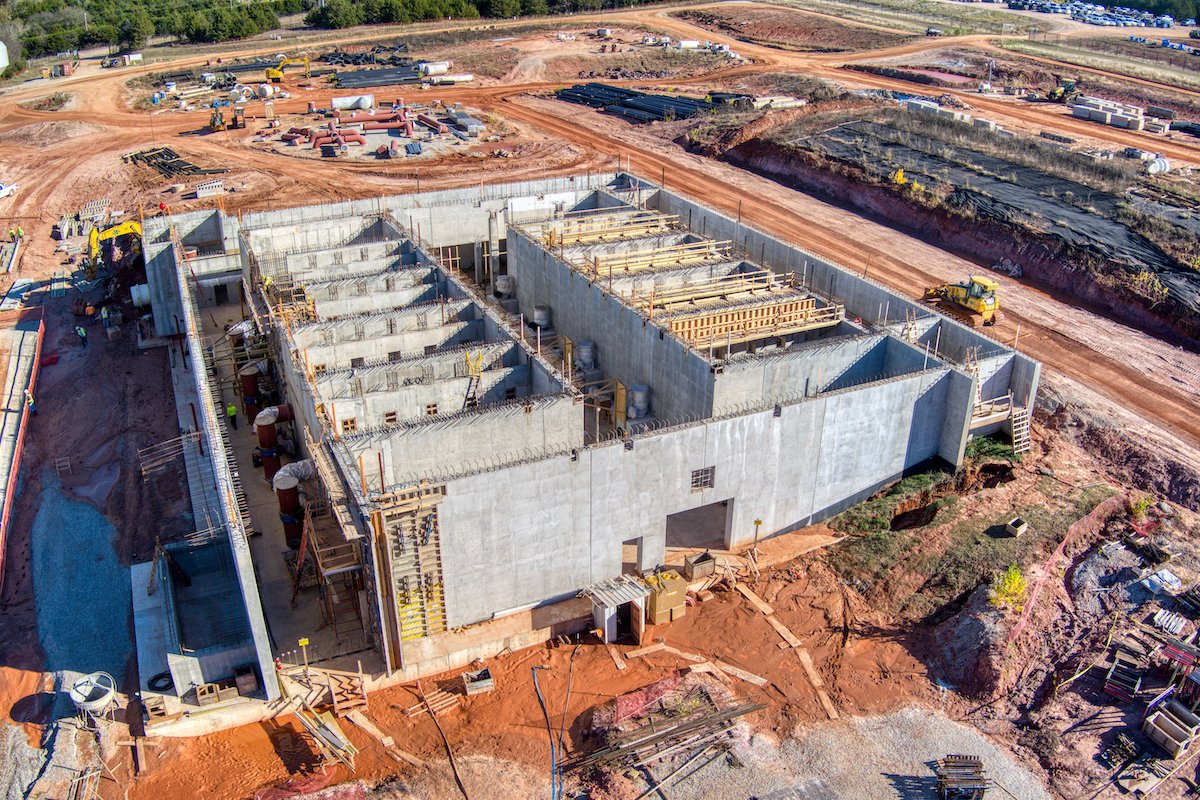
Yard Lighting and Electrical Site Work for Oklahoma Industrial Facilities
Pole lighting, conduit, transformer pads and gate power for Oklahoma plants and yards, built to the adopted electrical code and the serving utility standards.
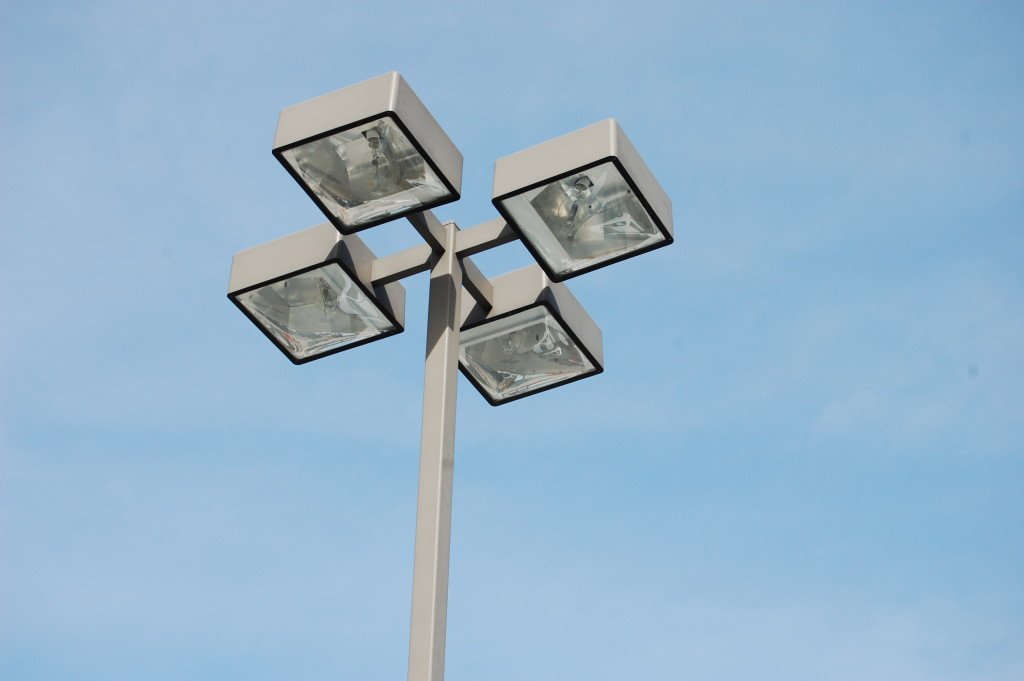
Dark corners are where a yard gets hurt. A forklift driver cannot see a pedestrian at the edge of a dock apron, a trailer driver misjudges a turn at a gate, and a security camera reads nothing at night because the light behind it was never aimed. Lighting and site electrical work is easy to treat as an afterthought on an industrial job, and the cost of that habit shows up in near misses, insurance questions and expensive retrofits.
We build the electrical side of the site: service entrances and transformer pads, duct banks and conduit, pole foundations, pole and building-mounted fixtures, power to gates, cameras and guard shelters, and the controls that switch it all on. A licensed electrical contractor and the civil crews we coordinate work from one set of drawings and one schedule, so the conduit is in the ground before the paving goes on and the poles stand where the photometric plan says they should.
The design may come from the owner engineer, or we can develop a layout with a lighting designer and bring it to the owner for approval. Either way, we stay accountable for how it is built and for how it behaves once the sun goes down.
What the electrical site package covers
The package begins at the utility connection. We coordinate with the serving utility on service location, metering and transformer pads, then build the pad, the conduit and the trench to the utility standard. From the service point, we run feeders to panels, to a lighting control cabinet and to remote loads such as gates, scale houses and cameras. Where long runs are needed, we pull larger conductors to hold voltage within limits, and we place pull boxes where the design calls for them.
On the lighting side, we pour pole bases to the required depth and diameter, set anchor bolts using a template so the pole fits, stand the poles, mount fixtures and aim them using the photometric plan. We install the controls, including photocells, time clocks or networked systems, and we test each circuit before turnover. Our electrical duct bank and underground work covers the larger concrete-encased runs that feed substations or buildings.
The code edition and who enforces it
The Oklahoma Uniform Building Code Commission adopted a newer National Electrical Code, with licensing-exam questions moving to the edition. Cities do not always move at the same pace. Edmond, for instance, lists the National Electric Code among the codes it follows, and other cities list their own editions. We confirm the edition and any local amendments with the building department, because a drawing set that cites the wrong edition can lead to redesign during review.
Electrical trades require state licenses, and we use licensed electrical contractors for the work. Inspections follow the city or the state, depending on the location, and utility inspections are separate. We schedule them in sequence, so conduit and grounding are inspected before backfill and the final panel inspection is not left to the last week. We keep inspection records for the owner file.
Utility service shapes the site
Oklahoma industrial sites buy power in different ways. MidAmerica Industrial Park, near Pryor, describes custom electricity provided by the Grand River Dam Authority, and the park lists about 80 companies and about 4,200 employees across a 9,000-acre campus. A tenant on a campus like that may have to work through the park and the supplier to get service, and the schedule for a new transformer or line extension can set the pace of the whole project.
State figures point the same way. The Oklahoma Department of Commerce says the state produces 61% more energy than it consumes and that energy costs run 17% below the national average, which attracts load-heavy users. Owners in ecommerce fulfillment and similar fields add conveyors, charging and automation, and their yards and docks need far more power than a plain warehouse did a few years ago. We design site conduit with spare capacity so adding load does not mean tearing up pavement.
Light where it is needed and nowhere else
Good yard lighting starts with how the site is used. Dock doors need steady, glare-free light at the apron. Trailer parking, as in our truck courts and trailer yards, needs enough illumination for drivers to see wheel stops and hitch points. Pedestrian paths need uniform lighting so shadows do not hide trip hazards. Guard shelters and gate entrances need brighter, more focused light for identification. We work through each zone, set targets and check the plan against those goals, instead of repeating a standard pole spacing across the site.
Modern LED fixtures use less power, last longer and come with controls that can dim in the late hours or switch zones on motion. They also come with glare shields that limit light spilling onto neighboring property, which can matter at permitting. For owners adding fencing and security integration, we match camera and fixture locations so every camera has the light it needs.
Energized work and underground hazards
Trenching on an industrial site means crossing the unknown. Before we dig, we locate utilities, review the plant as-builts and hand-dig near known lines. We follow lockout and tagout procedures for any work near energized equipment, coordinate shutdowns with the plant and do not work near live circuits without the owner and the electrical contractor agreeing on the plan.
Pole setting adds its own risks: overhead lines, wind and unstable ground. We hold a pre-lift review, keep a safe distance from energized lines, and place poles when conditions allow. In storm season, we plan for the interruption of work when lightning is near, and we protect open trenches and pole holes from rain and people.
Long-lead gear and phased energizing
Transformers, switchgear and some pole fixtures have long lead times, and the date on which the utility can energize a service often decides the schedule more than construction does. We order early, confirm delivery dates in writing and build the pad and conduit while the equipment is on its way. The goal is for the electrical site package to be physically finished well before energizing, so testing and punch work are not squeezed into the final days.
On projects that occupy in phases, we energize each phase separately and leave the rest of the system ready for later additions. A distribution facility may open its first dock group on temporary power while the second phase is still being poured, and our layout makes that easy by placing a clean break between sections. Our distribution center projects use this phasing often.
Light the site you actually operate
Tell us how trucks, people and security move through your yard. We will price the conduit, the poles and the service so the site is safe and ready when your first shift begins.
Common Questions
Who designs the yard lighting, you or the owner engineer?
Either can. If the owner engineer provides a photometric plan, we build to it and flag conflicts we see. If the owner wants us to develop the layout, we work with a lighting designer and present options with energy use and fixture counts. In both cases, we review the plan against how the yard is used, because a plan that looks right on paper can miss a blind corner.
How much conduit should we install for future needs?
It is far cheaper to install extra conduit while the trench is open than to dig again later. We usually recommend spare conduits along main routes and at crossings under paved areas, and stub-outs near docks, gates and likely expansion zones. The right amount depends on how much the operation may grow, and we help owners price the spare capacity as a separate line so they can decide.
Does the adopted electrical code change what we build?
It can. The state adopted the National Electrical Code, but cities may list a different edition for permit review, so grounding, spacing, protection and labeling requirements can vary by location. We confirm the applicable edition with the local building department before drawings are final, and we coordinate with the electrical contractor so the design and the installation match.
Can you work around an operating plant?
Yes. We coordinate trenching and pole setting with plant operations, keep lanes open for traffic, and schedule outages with the owner. Where a feeder must cross an active roadway, we cut and restore in stages, and we use temporary plating or detours when needed. Work near energized equipment follows the plant lockout and tagout rules.
How long does it take to get power to a new site?
The utility sets much of the timeline. After a service request, the utility designs the extension, orders materials and schedules construction, and that can take months at a remote site. We file requests early and keep in touch with the utility planner. Our work on the pad, trench and conduit is timed to be finished when the utility is ready, so the site is not waiting on us.