Equipment Foundations and Heavy Pads in Tecumseh
Equipment foundations, heavy slabs and rural industrial buildings in Tecumseh, designed for storm exposure and delivered by coordinated trade partners.
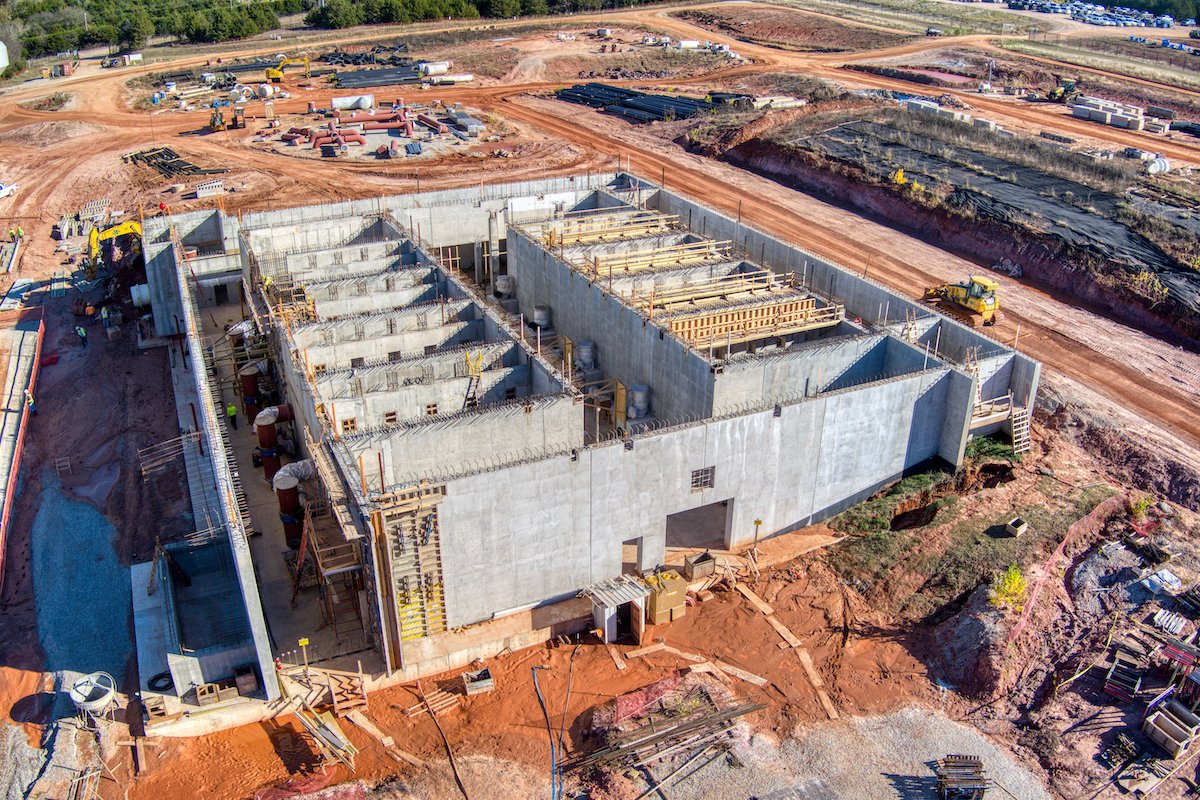
A bagging line, a crusher, a press or a fabrication station needs a foundation designed for its own weight, vibration and dust before anyone talks about the building around it. We plan and manage equipment foundations and heavy pads in Tecumseh for owners who process materials, fabricate parts or run small plants, with licensed trade partners performing the field work under our schedule, coordination, supervision and inspection.
Local industry here is often modest in size and hands-on in character. On May 5, 2026, Pottawatomie County commissioners approved roughly $240,000 in economic development grants, including one for a Tecumseh landscape and rock supplier that plans to add a bagging operation, a sealing system and small-load delivery. Projects of that kind need a concrete pad for the new equipment, a drained work yard and a clean route for trucks, which are things we price and sequence for a small owner as carefully as for a large one.
Weather is part of the design. A tornado rated EF3 hit the town on May 10, 2010, so wind is treated as a design condition for any building here. We coordinate with the engineer on tie-down of equipment, bracing of walls and the protection of electrical and controls rooms, and we plan temporary bracing during erection.
Small processors, suppliers and fabricators
The owners we meet in a town like Tecumseh include aggregate and landscape suppliers, agricultural processors, welding and repair shops, and contractors with equipment yards. Their equipment is heavy, their trucks are large and their budgets are tight. A good foundation plan avoids overbuilding while still preventing cracking, settlement or drainage problems that become expensive later.
We tailor the scope to the owner. A bagging line may need a slab with a trench for conveyors and a dust collection pad. A repair shop may need a floor with drains and a crane rail. Our work for metals and heavy industry and advanced manufacturing owners informs these choices, even when the project is small.
Sequence matters on a small lot. Grading and drainage come first, then utilities and trenches, then the pad, then the building or canopy. Setting equipment before the slab has cured, or digging a trench through a finished floor to add a missed conduit, are the mistakes that cost an owner the most. We hold a short pre-pour meeting with the trade partners and the owner to walk the embedded items against the drawings.
Buildings that go around the equipment
Most small plants use a metal building, a canopy or an open pad with a roof. We plan pre-engineered metal buildings with the foundation, doors, crane clearance and utilities so the building matches the equipment. Where dust or moisture is a concern, we add sealed floors, wash-down drains and ventilation.
A shop or processing hall also needs a place for people: an office, a restroom, a break room and a safe route from parking to the work area. We scope those spaces so they are protected from noise, dust and equipment traffic, and so the owner meets the requirements of the local building department. If the owner expects to add a second line later, we leave a spare conduit, a stub-out for water and a pad extension so growth does not mean tearing out new work. These small provisions are inexpensive during the first build and costly afterward.
Concrete, utilities and the yard
Foundations are only one part of the project. The pad, trenches and embedded items need to be coordinated with industrial concrete floors, with the electrical service and with the yard. We prepare a coordinated package so the trades work in order.
Truck access and drainage often decide whether a small plant works. We plan truck courts and trailer yards with the right pavement thickness and slope, and we add stabilized areas for material storage. The area sits where U.S. Pottawatomie County's U.S. 177, U.S. 270 and Highway 9 all converge at Tecumseh, so trucks have several approaches and we pick the one that bothers neighbors least.
Working around moving machines and open ground
Safety on a rural industrial lot starts with traffic. Trucks, loaders and visitors share a small area, and we separate them with barriers, signs and a simple site plan. Excavations are protected, utilities are located and hot work is controlled by permit.
Storm readiness is part of the plan. We monitor the forecast, secure materials, stop erection when winds rise and keep shelter locations known to all workers. After a severe storm, we inspect the site before work resumes, because temporary bracing, scaffolds and open trenches can change overnight. Dust and noise are also managed, especially when neighbors or livestock are nearby. We water haul roads, limit idling and tell neighbors in advance about heavy deliveries or night pours.
Reaching Tecumseh from the metro
The town is close enough to Shawnee, Norman and Midwest City that trade partners, ready-mix suppliers and inspectors can reach the lot within a reasonable travel time. We use that network to staff projects, and we plan deliveries to avoid peak traffic on the highways.
Rail service reached the area in 1903 through the Atchison, Topeka and Santa Fe Railway, which is why some industrial parcels sit beside old rail corridors. We check easements and rights-of-way on any lot near a line, since they can restrict where a pad or building can be placed.
Bring us the machine and the lot
Send us the equipment data sheet, the site and the date you need production to begin. We will return a foundation scope, a building concept and a price you can use to plan your investment.
Common Questions
How do we know what size foundation a machine needs?
The equipment vendor supplies weights, vibration data and anchor bolt layouts, and an engineer designs the foundation using the soil report. We obtain the vendor's drawings early and coordinate them with the design so the pad is ready when the machine arrives.
Can a small owner afford an engineered foundation?
Usually yes. A well-designed pad often costs less than repairing a cracked or settled slab, and the engineering fee is small compared with the equipment. We offer options at different levels of capability so the owner sees the trade-offs.
How does tornado risk change the design?
It affects bracing, tie-down and the protection of critical rooms and equipment. We work with the engineer and the building department on the requirements, and we plan the erection sequence so partially built structures are braced.
What if the equipment is not yet purchased?
We can carry allowances and design the pad to accept a range of units, but we recommend selecting the equipment before final design. The foundation is usually cheaper and better when it is designed for the real machine.
Who handles dust and noise on a rural site?
We do through planning. Watering, limited work hours, truck routing and advance notice to neighbors reduce complaints, and trade partners are told the rules before they mobilize. The local building department or county can add requirements for particular lots.