Shutdowns and Outage Windows in Henryetta
Henryetta plants get shutdown and outage work defined, scheduled and supervised to recover production hours, with materials staged before the unit stops.
Shutdown and turnaround work in Henryetta starts months before a unit comes off line. For plants that run continuously, the outage is the only time the hardest repairs and upgrades can be done, so the contractor's job is to arrive with the scope defined, the materials on site and a sequence the operators have already approved. We schedule, supervise and inspect the trade partners during that window, and we measure the plan by how many hours of production the owner gets back.
Henryetta sits at the junction of Interstate 40 and US-75, and US-266 and State Highway 124 also reach the town. The Indian Nation Turnpike ends here after running 105 miles northwest from Hugo, adding a four-lane route for southeastern deliveries. For an outage, that road network means cranes, replacement equipment and extra labor can arrive within a short window if the logistics have been settled.
A February 2026 report described Oklahoma Department of Commerce staff touring a glass container plant in town, a facility with almost a century in service and a melting furnace the report describes as among the biggest anywhere. A furnace of that kind shows what continuous process owners are up against: long campaigns, short rebuilds and very little tolerance for schedule loss. The same discipline applies to any plant here, large or small, and it begins with a conversation about which hours of downtime the business can truly afford.
Defining outage scope before the window opens
Scope for a turnaround comes from inspection reports, maintenance records, safety reviews and the owner's wish list. We help sort that list into must-do, should-do and could-do items, then price each group so the owner can choose what fits the window.
Typical outage packages include removal and replacement of piping, structural repairs, equipment foundation work, refractory or lining support, electrical gear and new tie-ins. Each item is tied to a drawing, a material list, an estimate of labor hours and a named trade partner who has seen the drawings, and the whole package is frozen by a set date so late additions do not break the sequence. Anything proposed after the freeze goes on a separate list for the next outage unless it is a safety item, and the owner decides what to do with it.
Structures and areas inside a process facility
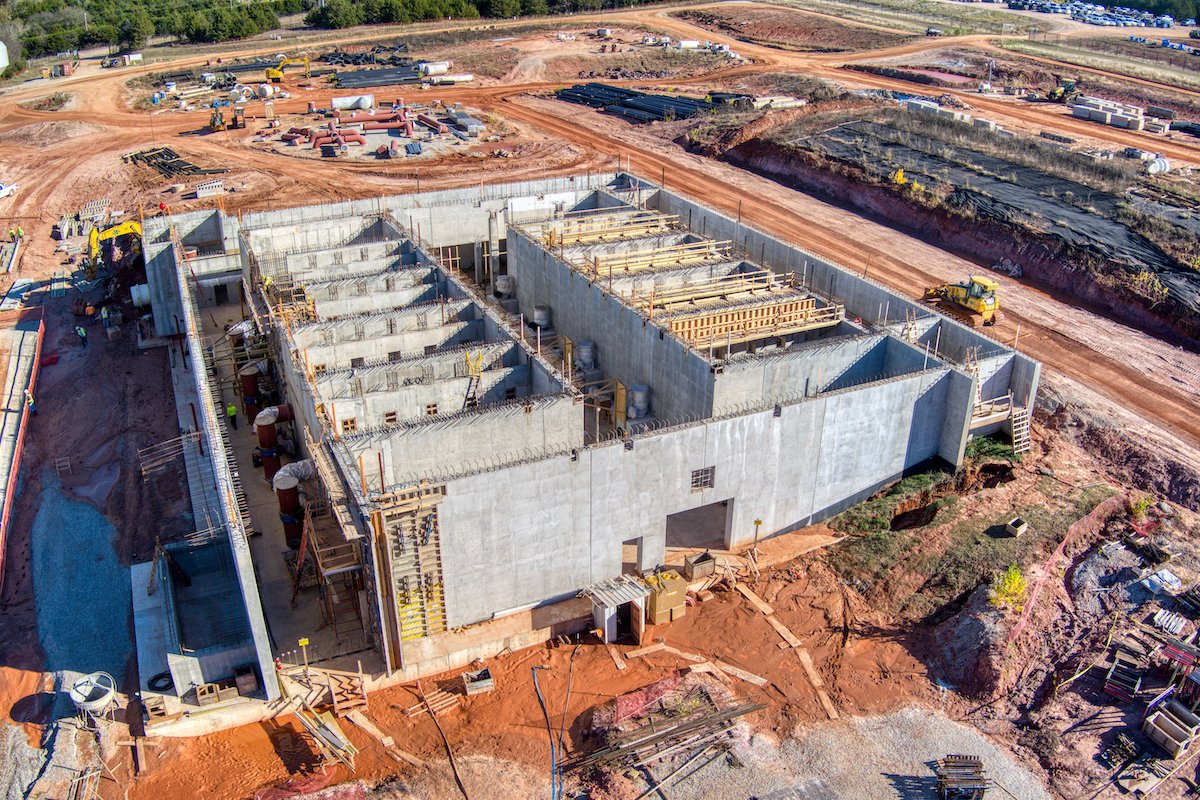
Outage work often takes place inside buildings that were not designed for easy access. Furnace halls, batch houses, pump rooms and packaging lines have tight clearances, limited laydown and heavy loads overhead. We plan rigging paths, temporary platforms and floor protection from field measurements, because drawings of older process buildings rarely show every beam, duct and pipe that was added later. We also confirm floor capacity before a crane or heavy cart enters, and we protect finished surfaces and instruments.
When a project calls for new floor area or equipment enclosures, the same planning supports a manufacturing plant addition built beside the existing structure and joined to it during a planned stop.
How we run a turnaround
We run turnarounds from a detailed schedule that shows each task by hour, with resources, permits and dependencies. A planning meeting walks through it with the owner's maintenance, operations and safety groups, and each leader signs off on the part they own.
During the window, a short briefing opens each shift and a status meeting closes it. We track progress against the schedule, flag any item that threatens the critical path and decide the response with the owner the same day. At the end, we help with the restart checklist and keep a team on call for the first days of operation. A lessons-learned review follows within a few weeks, and the owner receives the final schedule, cost record and punch list for the next outage plan.
Safe work in a crowded outage
An outage brings hundreds of tasks into a small space, and safety depends on separation and communication. We control entry with badging, divide the plant into zones and assign permits so tasks that interfere never overlap.
Hot work, confined space entry, lifting and excavation each have their own permits and checks. For equipment with hot surfaces or stored energy, we verify cooldown and isolation before anyone enters. Supervisors walk the work area throughout the shift and have the authority to stop any task that looks unsafe. Heat, fatigue and long shifts are part of every outage, so we plan breaks, water and rotation, and we watch for signs that people are tired before they make mistakes.
Services that support shutdown work
Outages often reveal damaged concrete, so demolition and slab replacement is ready to follow demolition of failed sections. Owners who plan upgrades alongside the outage can use industrial renovations and modernization to combine the work.
A plant that wants to add capacity while it is running can also use phased construction on occupied sites, which separates new work from live areas until each phase is ready to join. We plan the interface points in advance, including utilities, fire protection and egress, so a new area never reduces safety in the existing one.
Henryetta and the surrounding area
Employers in town include a glass container plant that occupies a former plate glass site, an oilfield-services company and a pallet manufacturer, and metal and heavy industry owners will find the same planning in our metals and heavy industry work. Each has different needs for shutdown planning, from furnace repairs to light structure and dock work, and each shares the town's dependence on the highway network.
Jim Hall Lake, also called Lake Henryetta, supplies drinking water to the town and spreads across 450 acres to the southeast, so any work near its watershed gets extra attention to erosion and spill control. For projects in nearby markets, see our pages on Bixby, Jenks and McAlester.
Tell us when your next Henryetta outage window opens
Send us the unit, the outage window and your scope list. We will return a sequence, a staffing plan and a price for your Henryetta shutdown.
Common Questions
When should we start planning a shutdown?
As early as scope can be defined, often six months or more before the window. Early planning lets us order long-lead items, book specialty labor and rehearse the sequence. Late planning raises cost and risk. We usually begin with a walk-down of the unit while it is running, because operators can point to leaks, vibration and access problems that reports miss.
What causes outages to run long?
Hidden damage found after opening, late materials, unclear scope and poor coordination among trades are the common causes. We reduce each with prior inspection, early procurement, a frozen scope and a visible schedule.
Can you add capacity while keeping the plant running?
Yes, when new work is separated from live areas and connected during a planned stop. We build the addition first, test it and then tie it in during the outage.
How do you control cost during an outage?
With a priced scope, a change process and daily tracking of hours and materials. Owners see the cost against the budget every day, not at the end. Contingency is held for discovery and released only with approval. Overtime is planned and approved in advance, since unplanned overtime is a sign that the sequence is failing.