Equipment Foundations and Heavy Pads in Choctaw
Equipment foundations, heavy pads and fabrication shop slabs in Choctaw, planned from vendor loads, soil conditions and a clean cure schedule.
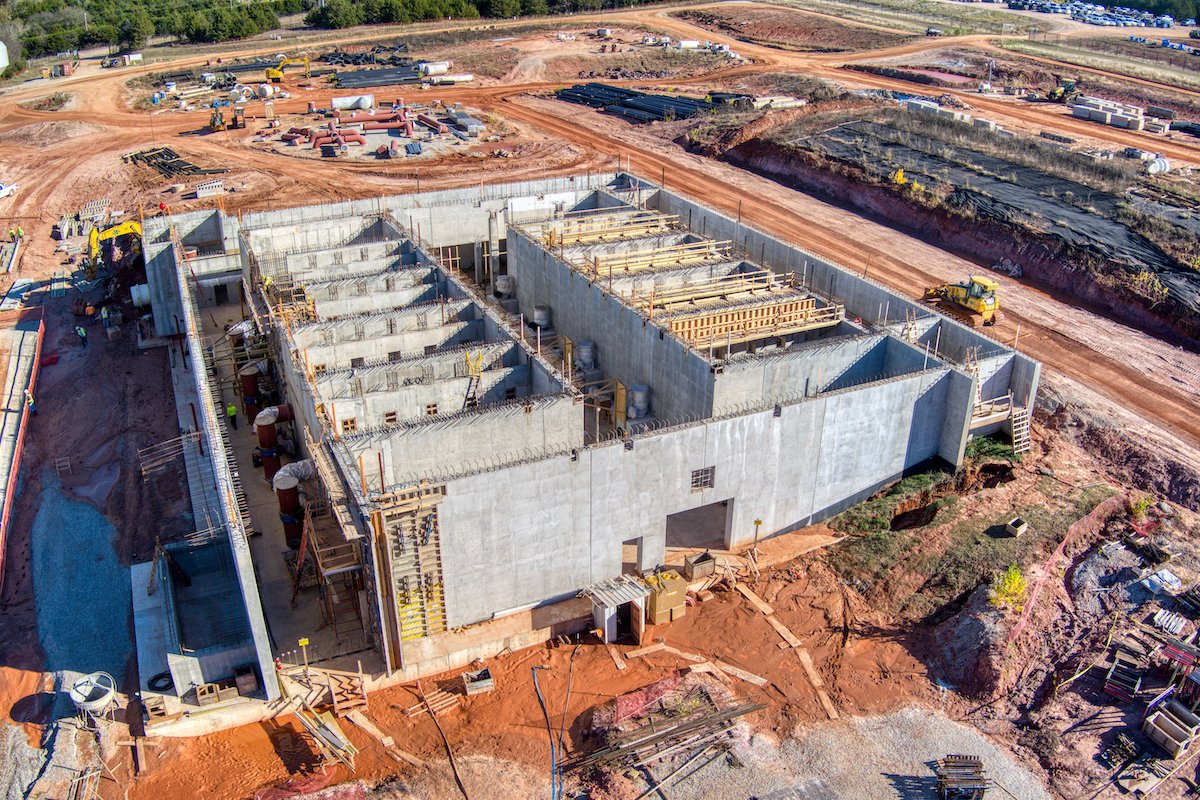
A machine that weighs more than the floor beneath it can carry needs a foundation designed for that machine, and that is where many conversations with Choctaw owners begin: a press, a compressor, a tank, a generator or a fabrication line that is already on a truck before the pad exists. We plan the excavation, reinforcement, anchor bolt layout and cure time, coordinate the concrete and steel trade partners, and inspect the result before equipment is set.
Choctaw is large for a suburb, with about 27 square miles of land at an elevation near 1,155 feet, and it lies roughly ten miles east of Oklahoma City inside the Cross Timbers ecoregion. Land of that kind has rolling ground and mixed soils, which makes a geotechnical report the first document we ask for on any pad. A foundation sized for firm clay and placed on softer ground will settle, and settlement shows up as misaligned equipment, cracked grout and stopped production.
The people side of the market is also relevant. Technical education is close at hand, with the Eastern Oklahoma County Technology Center in town and most residents in the Choctaw-Nicoma Park district, so trained workers for electrical, welding and machining jobs are part of the local picture. Owners of fabrication shops and small plants can use that when they plan staffing for a new line.
Specifications behind a pad and its permit
A heavy pad has two sets of requirements. The equipment manufacturer states the loads, tolerances, bolt pattern and cure time. The city and the building department require engineering, inspections and sometimes a separate permit for the foundation. We collect both before drawings are final and note any conflict, such as a vendor tolerance tighter than normal field practice.
Our permitting and entitlements coordination keeps the engineer, the vendor and the city on the same set of drawings, and the inspector sees the reinforcement and bolts before concrete is placed. Where the foundation supports a tank or a vessel, we also check what the local fire official needs to see about containment and spacing, since those items can change the footprint after the pad is drawn.
What goes into a pad from start to finish
The sequence is simple to describe and unforgiving to rush. We excavate to the depth in the report, correct soft spots, place compacted base, set forms, tie reinforcement, install anchor bolts or embeds on templates, pour, finish and cure. After cure we check elevations and bolt locations, grout the baseplate and release the pad to the millwrights.
Our equipment pads and foundations work extends to drilled piers where the soil near the surface cannot carry the load, and to isolation joints that keep vibration from traveling into the building slab. We schedule, supervise and inspect each trade partner at the points where mistakes become permanent. Two checks matter most: the bolt template before the pour and the elevations after the finish. A pad that is off by half an inch can cost a week of shimming, so we measure instead of trusting the forms.
Road work that changes how trucks arrive
The Oklahoma Department of Transportation has a project under way at the Choctaw Road interchange on I-40, from mile marker 165 to 167, turning a partial cloverleaf into a full diamond. The interstate is being widened to six lanes with auxiliary lanes between the I-240 junction and Peebly Road, and the segment of Choctaw Road between S.E. 78th Street and S.E. 71st Street gets four lanes.
For anyone moving a heavy load, that means changing lane closures and detours while the work continues. We confirm oversize routes and delivery windows with the carrier before a pour or a lift is scheduled, and we give the owner a backup date in case a closure intrudes. The community is large, so a supplier's truck can also face a long run on section-line roads before it reaches the interstate, and we map that last stretch as well as the highway.
Services that sit beside the pad
A pad is seldom a stand-alone item. The same project may need industrial concrete floors around the machine, structural steel erection for a platform or a crane runway, and power from underground electrical duct banks routed before the pour so that no one cuts new concrete.
We also look at buildings for advanced manufacturing from the plant side, with neighbors such as Midwest City and Del City in mind, so that the pad, the roof opening and the utility drops are planned together. A fabrication owner who adds a press or a welding cell next year will want conduit stubs and spare capacity in place now, and that costs very little during the first build.
What changes the price of a heavy pad
The biggest items are thickness, reinforcement and the condition of the ground. A pad on firm soil may need only careful forming and placement. A pad on soft ground may need over-excavation, geogrid, piers or a thicker section. We ask for the report before we quote, and we separate the base price from the allowances for conditions we cannot see.
Other drivers include cure time, the vendor's tolerance for flatness and bolt position, winter or summer concrete requirements and how close the pad is to existing equipment that must keep running. We list each of these in the estimate so the owner knows where the dollars go and where choices exist. For example, an owner may accept a longer cure in exchange for a lower mix cost, or choose to place two pads at once to share mobilization and testing.
Send the vendor drawing
If a machine is on order for your Choctaw facility, send us the foundation drawing and the arrival date. We will review soil, loads and access, then return a pad plan with a price and a schedule.
Common Questions
What do you need from us to price an equipment foundation?
The vendor's foundation drawing or load data, the geotechnical report if one exists, a site plan and the date the machine arrives. If no report exists, we can arrange one. With those items we can quote a pad with clear allowances.
Why does cure time matter so much?
Concrete reaches design strength over days, and most vendors specify a minimum strength before equipment is set and bolted down. Rushing the set date risks cracking, misalignment and warranty problems. We write cure time into the schedule and test cylinders to confirm strength.
Can a pad be built next to equipment that is running?
Yes, with planning. We assess vibration, access and utility conflicts, build barriers and sometimes use isolation joints. The owner's operations group approves the plan, and we check conditions at the start of each shift.
How do ODOT lane closures affect a heavy delivery?
They can limit routes, change detours and add days. We discuss the oversize route with the carrier early, watch published closures and keep a backup delivery date so the pad does not sit finished while the machine waits on a road.
Do you work on fabrication shop floors as well as pads?
Yes. We coordinate floor thickness, reinforcement, joint spacing and flatness for fabrication shops, along with crane runway foundations and trench drains. The pad and the floor around it are planned together so that the transition is clean.