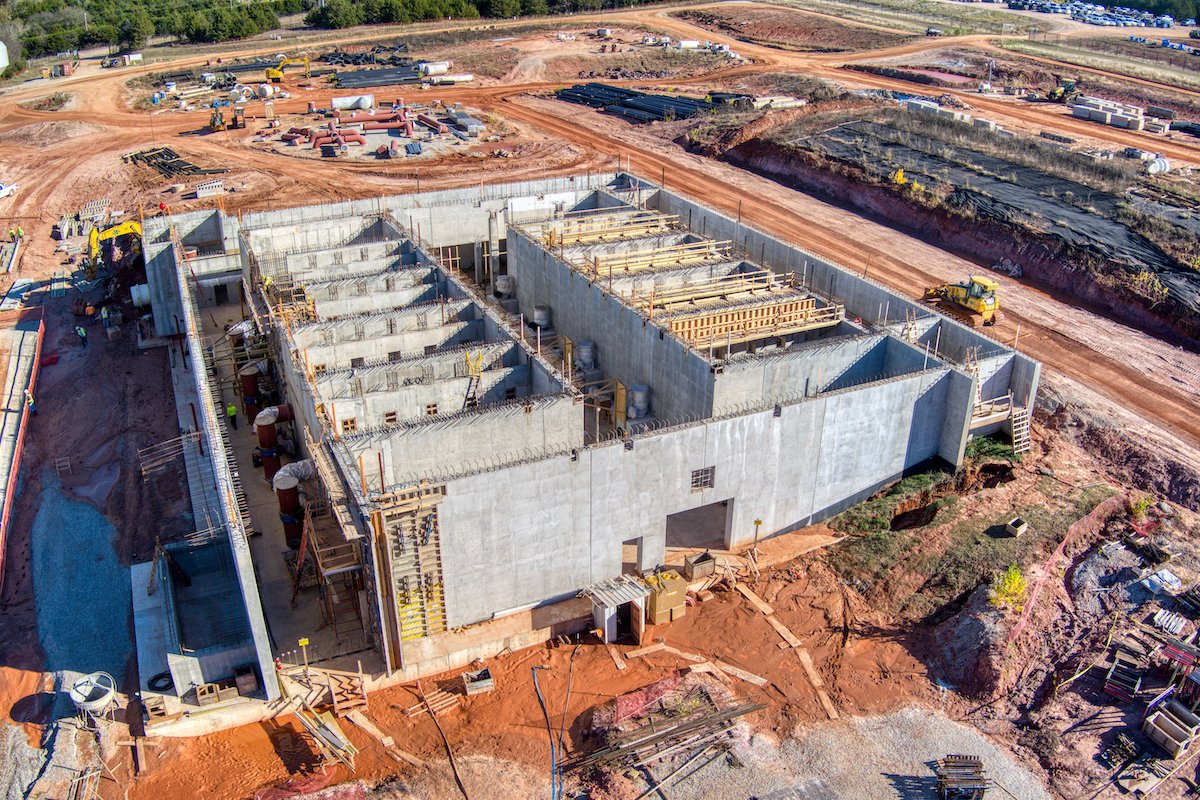
Industrial Support Buildings Around Fort Sill, Oklahoma
Warehouses, vehicle shops and secure yards for private owners near Fort Sill, planned around the I-44 corridor, access control and a large training population.

Building near a military installation means designing for steady demand and strict neighbors, and that is the frame we use for private industrial work around Fort Sill. We write about warehouses, vehicle and equipment shops, fabrication buildings and secure yards for private owners in the surrounding area. Nothing here implies we have built for the Army or any agency; contracts on the installation follow federal procurement, and this page speaks to the commercial side.
Scale explains the demand. A May 2020 community involvement plan describes Fort Sill on approximately 93,828 acres in Comanche County, extending approximately 26 miles east to west with an average width of six miles. The same plan says Interstate 44 intersects the eastern portion of Fort Sill and that the cantonment area, with offices and residences, is adjacent to the city of Lawton. A site that touches I-44 and sits next to a large employer is attractive to suppliers, haulers, equipment dealers and service companies.
The people count adds to it. The Encyclopedia of Oklahoma History and Culture says that in the early twenty-first century Fort Sill housed almost fifteen thousand soldiers and drives the economy of Lawton. That description is dated, and the number changes, so we use it only as an indication of the size of the market. A private owner should expect a steady stream of vehicles, trainees and visiting families, which affects traffic planning and the kind of buildings that make sense.
What the installation does to local demand
The community involvement plan says Fort Sill is home to the U.S. Army Fires Center of Excellence, which combines the Field Artillery Center and School, the Air Defense Artillery Center and School, the Electronic Warfare School and one Army Training Center brigade, and is one of five locations used for Army Basic Combat Training. Training schools of that kind generate demand for vehicle maintenance, parts, storage and logistics space, and for local contractors who can serve them.
A news report dated April 14, 2009 said eleven new buildings costing $210 million were going up for the Air Defense Artillery School campus at Fort Sill after the BRAC Commission ordered the school moved there in 2005, with total BRAC project spending at Fort Sill just over $417 million. That is a historical note about public spending. It shows that large construction waves have passed through the area and that local suppliers and trades know how to serve them. Our long-lead procurement management accounts for the way large public work can tighten supply.
Vehicle shops, warehouses and secure yards
The commercial buildings we plan are steel-framed vehicle and equipment shops, parts warehouses, small-bay space for service companies and fenced yards. A vehicle shop needs overhead doors tall enough for the largest unit, floor drains with oil separators, and slabs strong enough for lifts and heavy tires. See our approach to warehouse construction and to maintenance shops and service bays.
Yards are as important as buildings. Parked trucks, trailers and equipment need pavement that resists point loads, lighting that deters theft and fencing with controlled gates. Our fencing and security integration work covers posts, gates, operators, cameras and lighting, designed as one system.
Jurisdiction, access and approvals
The first question for any parcel near the installation is who has jurisdiction. Land inside the boundary follows federal rules and procurement. Land outside it follows city or county processes. We stay on the private side. For private parcels, the state adopted newer International Codes, and the city or county confirms the edition and amendments in force.
Traffic is the second issue. Gate queues and training schedules can back traffic onto public roads, and a new driveway near the gates may be reviewed closely. We lay out queuing and turning paths on our drawings and, when needed, ask the highway agency for a traffic review early.
Seasonal and cyclical demand
Demand tied to a training installation moves in cycles. New classes, deployments and budget changes can all affect local business. We advise owners to build flexible space that can serve a second use, such as a vehicle shop that can also house a light assembly operation, or a warehouse with docks that fit commercial trucks. We avoid designs that depend on a single customer.
Financing matters here as well. Lenders want to see lease terms and a realistic reuse plan. We help the owner assemble the building description, cost and schedule that a lender expects.
Related markets
Defense supply, vehicle maintenance, logistics and regional distribution are the common users. Read about logistics and distribution and metals and heavy industry for the buildings those groups use. The Lawton page describes the city's manufacturing and airport context, and the McAlester page covers another defense-adjacent market in the southeast.
Delivering a shop while traffic keeps moving
Sites near an installation have heavy and predictable traffic at certain hours. Shift changes, training movements and weekend visitors all fill the roads. We schedule concrete trucks, steel deliveries and crane picks outside those peaks, brief drivers on the approved route and use flaggers when a truck must cross a public road. Delays at a gate or a closed road can strand a concrete load, so we confirm the pour time with the plant the day before.
A typical vehicle shop takes shape in the same order as any steel building: site and utilities, foundations and slab, frame, envelope, doors and finishes. Heavy doors, lifts and oil separators have longer lead times than most owners expect, so we order them early and confirm dimensions before the slab is poured.
What changes the price
On vehicle-oriented buildings, the big costs are the slab, the doors and the yard. A thicker slab with proper reinforcement and joints costs more at first but resists the wear of heavy tires. Taller doors cost more than standard ones, yet an owner who cannot fit the vehicle inside has no shop. The yard may be the largest single item, and we offer a phased approach, with concrete at turning areas and gravel elsewhere until the revenue is steady.
Tell us the use, the gate and the truck count
Share the building use, the vehicle sizes and the parcel. We will review access, security and permits and return a written scope for the private site.
Common Questions
Do you work on the installation?
This page covers private commercial work near Fort Sill. Work on the installation follows federal procurement and is outside the scope of what we describe here.
Why is I-44 important?
The community involvement plan says I-44 intersects the eastern part of Fort Sill. Trucks use that corridor to reach Lawton and the region, so a driveway or yard near it needs careful traffic planning.
What buildings fit the area?
Vehicle shops, parts warehouses, small-bay service space and secure yards are common. We design them to work for a second tenant if the first user leaves.
How do you handle security for a yard?
We combine fencing, gates, lighting and cameras into one design and coordinate with the owner and the insurer. The right level depends on what is stored.