Equipment Foundations and Heavy Pads in Catoosa
Equipment foundations, heavy pads and fabrication shop floors in Catoosa, planned around port logistics, rail and the schedule of an operating plant.
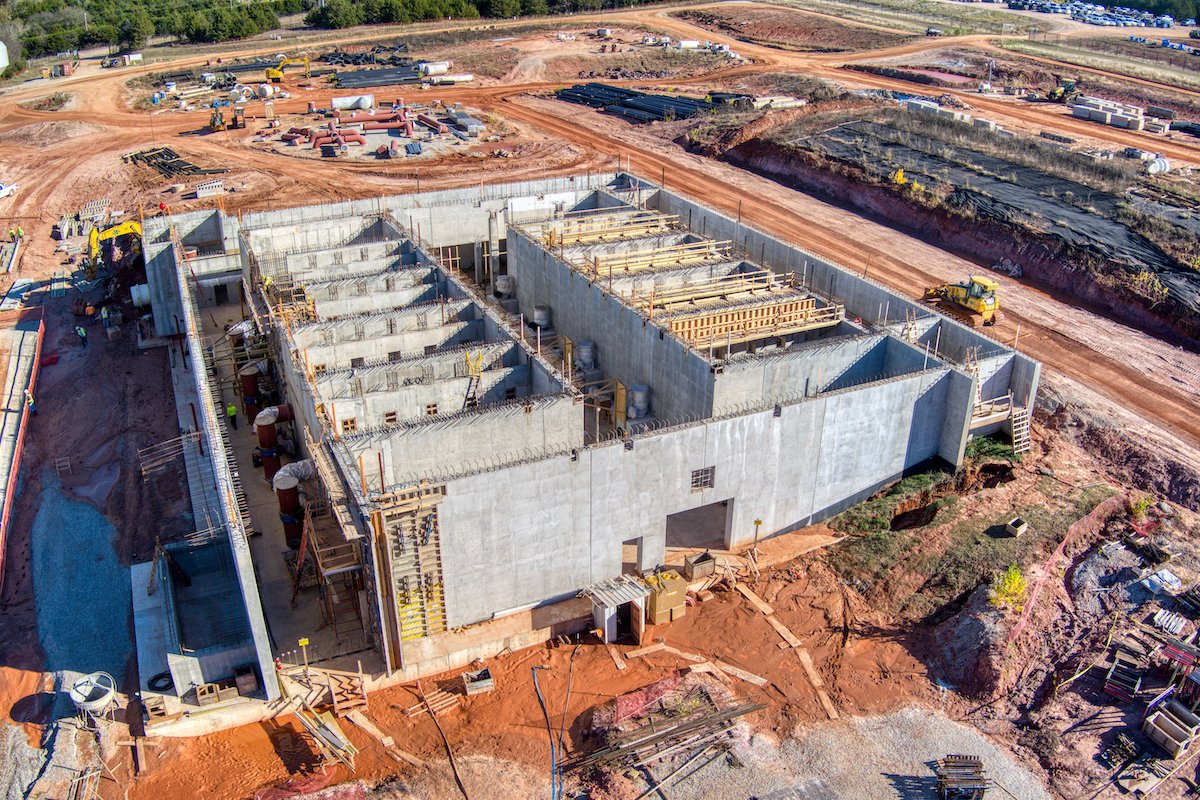
A press, a mixing skid or a crane runway is only as good as the slab it sits on, and in Catoosa that slab usually has to carry load that ordinary warehouse floors never see. We plan and manage equipment foundations and heavy pads for owners who operate near the Tulsa Port of Catoosa, with licensed trade partners doing the concrete, steel and electrical work under our schedule and supervision.
The port gives the area its character. Seventy industrial and transportation tenants shared the port in October 2019, together employing more than 3,200 people. Barge traffic on the McClellan-Kerr waterway goes no farther upstream than this spot. For a plant owner, that concentration means neighbors who ship heavy goods, receive oversized equipment and share the same access roads. A foundation package here has to account for the delivery of the machine as much as the pour that receives it.
That same month, PSO handed the City of Tulsa-Rogers County Port Authority upward of 2,000 acres at Inola, a barge-and-rail parcel set aside for new economic development sites. Owners considering that kind of ground will want a contractor who can price pads, laydown and haul routes before a tenant is named, and who can say plainly what has to be settled before a footing is staked.
Lockout, hot work and the neighbors next door
Work near an operating plant begins with a written plan for who can be where. Before we mobilize on a Catoosa foundation job we agree with the owner on lockout and tagout boundaries, hot work permits, confined space entry and the points where our trade partners cross live process lines or energized conduit. A pour that looks simple on drawings can touch buried electrical, a drain header and a process pipe in the same trench, and each of those has its own owner and its own sign-off.
We supervise the daily safety walk, review the permit board with the superintendents of the trade partners and keep the inspector's findings in front of the owner. When a pad is cast beside equipment that runs around the clock, we set barricades, spotter rules and crane swing limits in writing so a visitor or a night-shift operator can read them at the gate. Phased construction on occupied sites is how we describe that discipline for any owner who cannot shut the plant down for the build.
Soil, drainage and what a heavy pad needs underneath
Equipment foundations are designed from the machine's weight, its vibration and the allowed settlement, not from a standard slab detail. We ask for the equipment vendor's load drawings early and compare them with the geotechnical report so that thickness, reinforcement and subgrade preparation are decided before the formwork goes in. Where the soil is soft or variable, drilled piers or an over-excavation and engineered fill may be the sensible answer, and we price both so the owner sees the difference.
Drainage matters as much as strength. A pad that holds water, oil or wash-down fluid needs slope, curbs and a collection path that meets the owner's containment rules. We lay out trenches, sumps and embedded sleeves with the mechanical and electrical trade partners before the rebar is tied. For deeper loads, our work on equipment pads and foundations shows how these decisions are sequenced.
What moves the price of a heavy foundation
Three items usually drive cost on a Catoosa pad: the volume of concrete and steel, the depth of any deep foundation, and the schedule around the equipment delivery. A pour that must be continuous may require a night or weekend placement, a second pump and a backup batch plant. We show those line items separately so an owner can see where a change in loads will land.
Access and restoration also appear in the budget. Heavy haul routes on port property may need temporary mats or reinforced approaches, and any trench cut through existing paving has to be repaired to the owner's standard. We recommend a clear allowance for unknown buried utilities and for rework when the vendor revises a load.
Who builds heavy pads near the port
Owners in this corner of Rogers County tend to come from metals, fabrication, bulk handling and logistics. A fabricator needs a floor that carries a gantry and a bridge crane without cracking at the column lines. A bulk handler needs a pad and containment for tanks or conveyors. A logistics tenant needs a heavy dock apron and a stabilized yard for trailers. Our work for metals and heavy industry covers the first group, and our approach to truck courts covers the last.
How we run a foundation job from the office
We begin with a short preconstruction review that lists what has to be known before steel is ordered: the loads, the anchor bolt pattern from the vendor, the access for the delivery truck and the utilities in the ground. The review also names the long-lead items, such as embedded plates, specialty grout and special-order reinforcement, so purchasing starts on the right day. Our preconstruction services are built around that single list.
During construction we schedule the trade partners, review each pour before it is released, and confirm the inspector's hold points. The concrete subcontractor builds the work; we check forms, cover, embedded items and elevations against the drawings, and we reject a placement that does not match. After the pour we track curing and test cylinders and release the pad for equipment setting when the owner and vendor agree.
From pad to production floor
A typical scope on this part of the Rogers County line runs from clearing and grading through foundations, slab-on-grade, utilities and the connections the machine needs. Where the equipment sits in a fabrication building, the scope may add crane-ready columns, a shop floor with the right flatness, and power and compressed air drops laid out with the owner's controls group.
Owners also ask about the way in and out. A railroad links Catoosa through Owasso to Tulsa and points north, and the same corridor shapes where plants place docks and spurs. We review rail clearances, truck turning radii and heavy-haul approaches with the owner, and the nearby market pages for Owasso, Tulsa and Broken Arrow show how we handle the same questions in neighboring areas.
Plan the Catoosa pad before the machine arrives
Send us the equipment list, the site and the date the first unit lands. We will review the loads, the access and the permits, and return a sequence and a price that an operating owner can act on. You can also see how we handle industrial concrete floors for the surrounding building.
Common Questions
How early should we involve a contractor when the equipment has not been selected yet?
As early as the budget allows. A contractor can carry allowances for pad size, pier depth and containment while the vendor is still being chosen, and can tell you what questions the vendor must answer. Once the load drawings arrive, the allowance becomes a price, and the schedule for the pour can be set against the delivery date.
Can heavy pads be built while the rest of the plant keeps running?
Yes, with planning. We agree on exclusion zones, work hours, hot work and lockout rules before mobilization, and we place barricades and spotters where traffic and cranes cross. Vibration, dust and noise limits are written down, and monitoring is added when the neighboring equipment is sensitive.
What causes the most delay on a foundation project?
Late vendor drawings, unmarked buried utilities and concrete that cannot be delivered on the day planned. We address each by asking for drawings early, locating utilities before digging and confirming plant capacity and a backup supplier before a major pour.
Does the port location affect how we plan deliveries?
It can. Port roads carry heavy trucks and oversized loads, so we coordinate delivery windows, route approvals and temporary access with the owner and neighboring tenants. We also plan for mats or reinforced approaches where a crane or a long trailer will cross existing paving.
Who performs the concrete and steel work?
Licensed trade partners perform the field work. We plan, schedule, coordinate, supervise and inspect it, and we keep the owner's engineer informed of every hold point and test result.