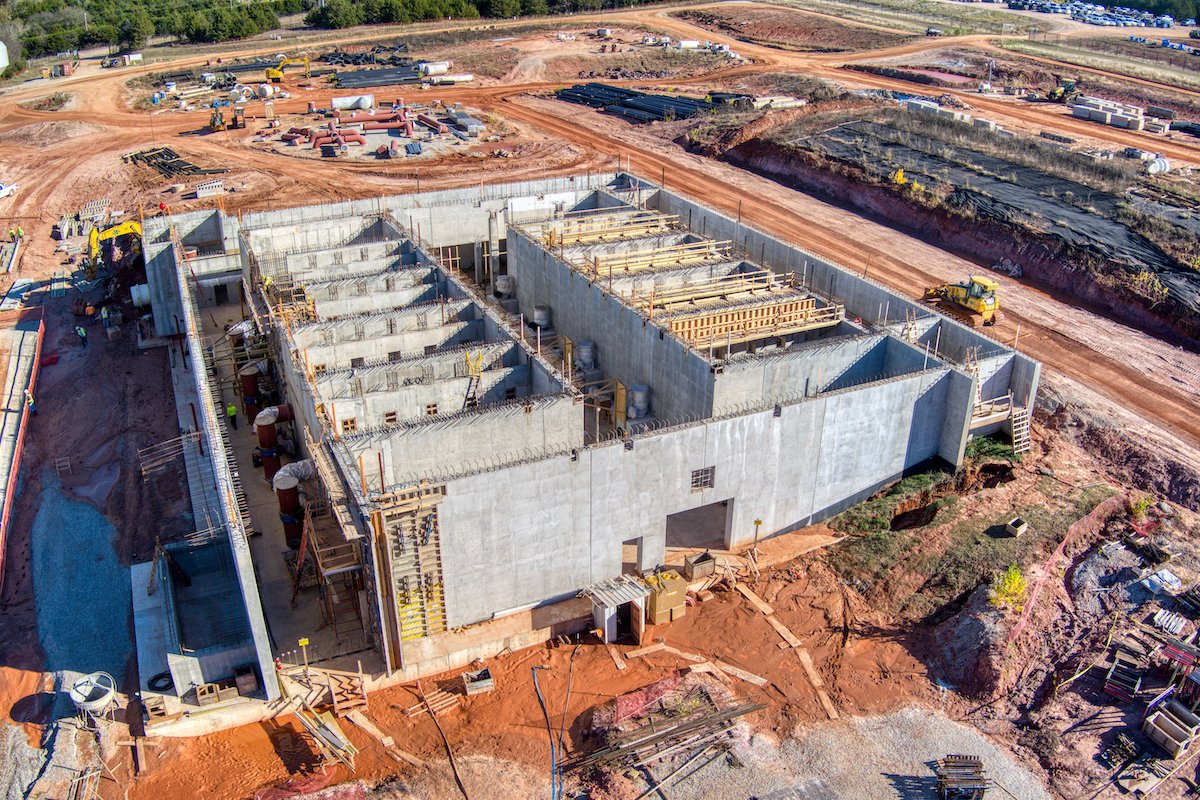
Plant Expansions Beside Live Operations in Pryor Creek
Plant expansions and new process buildings in Pryor Creek, sequenced beside running operations with lockout, hot work and tie-in planning.
Adding a building, a line or a tank pad to a plant that keeps running is a different job from building on open ground. Neighbors operate equipment around the clock, trucks still need the gate and the new work eventually has to connect to the old. We plan and manage plant expansions in Pryor Creek with that fact in view, using licensed trade partners for the field work and our staff to schedule, coordinate, supervise and inspect them.
The area is home to a large industrial park, MidAmerica Industrial Park near Pryor, which covers 9,000 acres and includes the 116-acre Northern Data campus. On September 15, 2018, officials started work on The District, a mixed-use area of 162 acres, and announced two further greenfield sites of 600 and 500 acres backed by $15 million for infrastructure. For an operator in the park, that means roads, utilities and neighbors that change over time, and an expansion must fit around them.
Investment announcements add to the picture: Northern Data announced at least $270 million in March 2022, with 150 jobs planned and a goal of 300 Oklahoma employees. Google announced a $600 million expansion in February 2018 that added a four-story data center to a campus employing more than 400 people, and CBC Global Ammunition announced a $300 million investment in May 2025. We have no role in those projects. They tell an owner that trades and materials in the area are in demand.
Sequencing an expansion around a running plant
We start by mapping what must keep running: the process units, the power feed, the truck routes, the fire lanes and the emergency access. The map shows where the new work can happen without interference and where it needs a window. From there we draft a phased plan with zones, work hours and a short list of events that need the owner's approval.
Phasing also gives the owner something to hold onto: a defined area, a defined date and a defined handback. Each phase has an entry and exit check. Before work starts in a zone, the owner and the trade partner walk it, confirm isolations and sign the permit. Before the zone is handed back, we inspect the work, test the connection and restore fences, signs and pavement. Our page on phased construction on occupied sites explains the method in more detail.
The cost of working beside live equipment
Expansions beside live operations cost more per square foot than open-site buildings, and the premium comes from restrictions rather than materials. Limited work hours, escorts, lockout time, smaller laydown areas and shared access all lengthen the schedule. We price those conditions explicitly and show the owner which ones can be relaxed to save money.
Tie-ins and outages are the other driver. A connection that can be made during a planned shutdown is cheaper than one that requires a bypass, and a lift that can be done at night may avoid a day of lost production. We compare options with the owner's operations group and recommend the least expensive approach that protects output.
What gets added
Typical additions include process buildings, motor control rooms, warehouse and shipping space, maintenance shops and support structures for utilities. A new building may need a slab with embedded conduit, crane-ready steel or a pad for rooftop equipment. We plan manufacturing plant additions together with the equipment foundations beneath them.
Campus owners may also add data center support buildings or electrical enclosures, which place heavy loads on power and cooling. For these, we confirm utility capacity and plan equipment delivery before design is final, since a transformer or chiller can set the schedule.
Access, utilities and neighbors
Access is the first constraint. Trucks, cranes and workers all pass through shared gates, so we coordinate delivery times, crane swings and parking with the park's operators and with neighboring tenants. We keep a construction entrance separate from production traffic where we can, and we use flaggers or temporary signals where we cannot.
Utilities are the second. We locate buried lines before digging, confirm capacity before design and agree on tie-in methods with the owner's maintenance staff. In a large park, electric, water and sewer service come from different providers, and each has its own lead time. Your site utilities package is better designed once than redesigned later.
A park with many projects at once
MidAmerica Industrial Park hosts data, manufacturing, defense-related and logistics users, and the announced projects tell an owner what to expect. Concrete plants will be busy, electricians will be in demand and heavy equipment deliveries will share roads. In this setting, an owner who books resources early is better placed than one who waits for final drawings.
We recommend a procurement plan that identifies long-lead items, names alternate suppliers and sets decision dates. Neighboring markets such as Claremore, Owasso and Broken Arrow supply labor and materials, and we confirm availability with trade partners in each. For owners in data centers, that confirmation is often the deciding factor in schedule.
Permits, lockout and hot work near energy assets
Plants in an industrial park may handle fuels, chemicals or energetic materials, and each hazard brings its own rules. We follow the owner's safety program and add our own pre-task plans, hot work permits, lockout checks and fire watch. Nothing begins until the owner's representative signs the permit.
Where the expansion is adjacent to energy or pipeline assets, we confirm easements, setbacks and permit requirements before design is complete. Excavation near buried lines uses locating and hand digging, and equipment is kept away from overhead lines. We hold weekly safety reviews with the trade partners and the owner, and we record corrective actions. Visitors, delivery drivers and inspectors receive a short site orientation at the gate, so a person who has never been on the lot knows where to park, where to walk and whom to call.
Bring the plant map and the expansion plan
Send us the site plan, the process constraints and the date you need the new capacity. We will return a phased plan, a tie-in outline and a price that shows the cost of working beside live operations.
Common Questions
Can we expand without stopping production?
Often yes. Phasing, barriers and well-planned outages allow most expansions to proceed while the plant runs. The limiting factor is usually the tie-in, which needs a window or a bypass.
How do you keep construction traffic away from production traffic?
We use separate gates when possible, set delivery windows and use spotters or flaggers at shared crossings. The plan is written and reviewed with the owner's security and operations staff.
What is the biggest risk on an expansion project?
Unknown conditions in existing systems, such as unmarked lines or aging equipment. We address them with surveys, potholing and unit prices, and we recommend a contingency for what cannot be seen.
Does the industrial park location change permitting?
The park may have its own design standards and approvals alongside the local building department. We identify them early and include them in the schedule so the review does not hold up the start of work.
How early should we book trade partners?
As soon as the scope is firm. Several large projects in the area compete for the same trades, and early commitments protect the schedule. We can place trade partners during preconstruction, before final pricing.