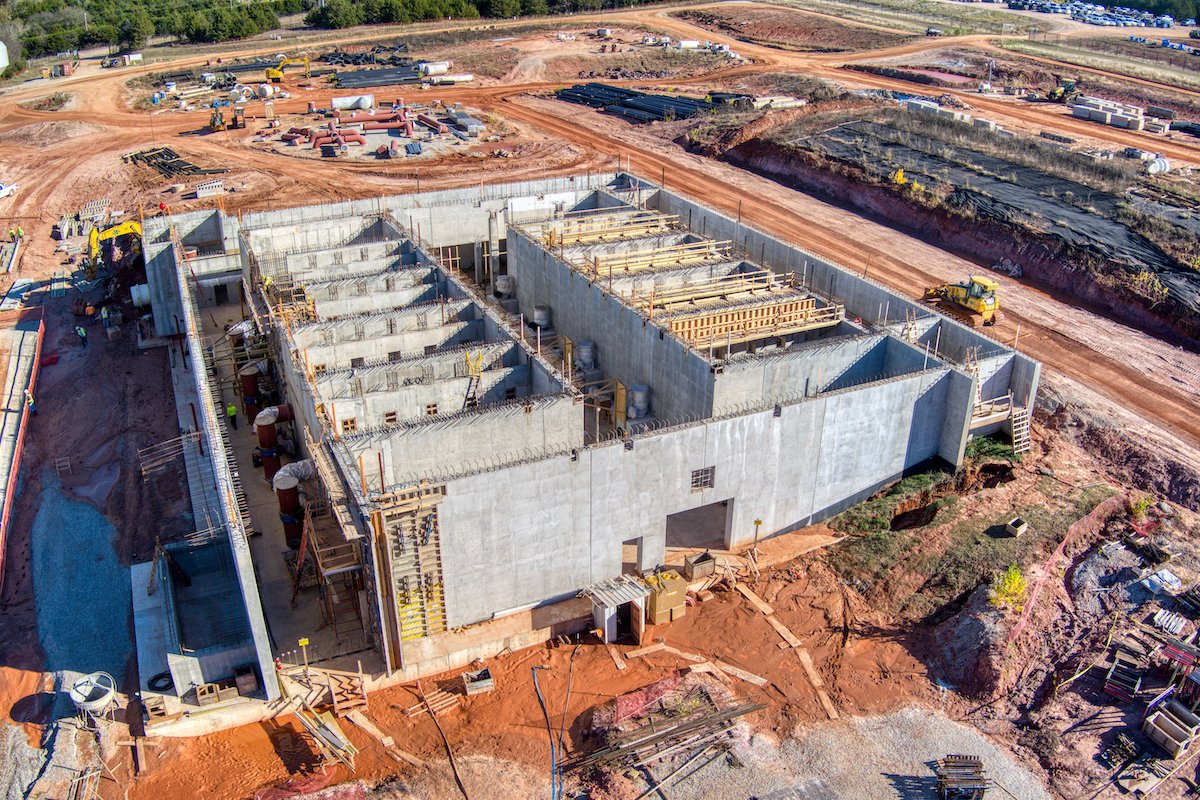
Shutdown and Outage Window Construction in Coweta
Shutdown, turnaround and outage-window construction for Coweta plants, with trade partner scheduling, lockout planning and river-bottom site care.
A shutdown is the one stretch of the year when a plant owner can reach equipment that normally runs, and every day of it costs money. We plan and manage industrial construction in Coweta around those windows: foundation replacements, piping and electrical changes, equipment swaps and building repairs that have to be finished before production restarts. Licensed trade partners do the field work, and we schedule, coordinate, supervise and inspect it.
Coweta sits on the Arkansas River about thirty miles southeast of Tulsa, which puts it close to the metro labor market and the river bottoms that shape local sites. A contractor working here needs a plan for wet ground as well as a plan for the outage. Staging areas, laydown yards and access roads are laid out so that heavy equipment can arrive when the plant is down and leave without damaging neighbors' land.
The town is growing, and major construction is under way beside industrial users. The Muscogee Nation's $100 million casino hotel began operating on March 2, 2026, where Highway 51 crosses East 131st Street South, at the southeast corner. It has 104,000 square feet, 46 rooms and 250 permanent positions. That kind of project draws on the same electrical, steel and concrete suppliers that industrial owners need, which is why we book trade partners early for outage work.
Competing for trades at a busy time
The school district went to voters in January 2023 for $50 million, including three storm shelters that also serve as gymnasiums. Separately, as of January 31, 2025 a technology center building of 11,810 square feet was going up at 31350 E. State Highway 51, with a value of $2.2 million. We have no role in those projects. We cite them because public, tribal and private work in the same corridor all draw on a limited pool of electricians, ironworkers and concrete crews.
The practical lesson is to commit early. A shutdown cannot move because a subcontractor is busy elsewhere, so we ask owners to approve long-lead purchases and trade commitments as soon as the scope is set. We confirm the date with each trade partner in writing, name the foreman, and keep a backup for the tasks that have only one qualified provider.
Owners who live by their outage calendar
Process and energy-related plants, metals and fabrication shops, and utility operators plan their year around planned outages. A refinery or plant may have a major turnaround on a multi-year cycle, with smaller maintenance windows between. Our work for utilities and power owners and for advanced manufacturing plants follows the same principle: the schedule is built backward from the date the line must run again.
Not every owner has an in-plant planning department. For smaller operations, we act as the planner: we list the tasks, estimate the crews required, order the materials and write the daily plan. The owner approves the scope and stays in control of production; we keep the construction organized and the paperwork current.
Lockout, hot work and a crowded site
An outage packs many trades into a small area for a short time. Welders, pipefitters, electricians and riggers work side by side, and the risk comes from the overlap. We prepare a daily plan that shows who is working where, which permits are open, which lines are isolated and which areas are closed to others. The plan is posted and reviewed at the start of each shift.
Lockout and tagout are verified by the owner's authorized employee before a trade partner begins. Hot work is controlled by permit and fire watch, confined space entries are logged, and lifts over live areas are planned in advance. We inspect the work against these controls throughout the outage and record any near miss so it can be corrected the same day.
Buildings that shut down with the plant
Outage work often touches the building as well as the equipment. A roof section above a process area may need replacing, a floor slab may need cutting out for a new pit, and a mezzanine may need to be extended for a new platform. We plan these changes with the structural engineer, the equipment vendor and the owner's operations group so that building work does not delay the mechanical work.
Buildings in this category include manufacturing plants, maintenance shops and warehouses attached to a process area. When a building is occupied by workers who must keep running, we separate the construction zone with barriers, air control and signs, and we agree on emergency routes.
What makes an outage expensive
Cost is driven by labor density, overtime and standby. A shutdown that runs around the clock needs two shifts of supervisors, inspectors and trade partners, and each hour of waiting for a part or an approval costs the same as an hour of work. We build the estimate from the daily plan, so the owner sees the cost of each shift.
Contingency should be matched to what remains unknown. Equipment that has not been opened for years may reveal corrosion or wear that was not visible, and a good estimate includes unit prices for the likely repairs. We also recommend pre-staging materials and prefabricating where possible, because work that is done before the outage does not consume the outage.
The work around the work
A shutdown rarely stands alone. Preconstruction planning, procurement and commissioning are all part of the package, and so is the site work that makes access possible. We link these steps through commissioning and turnover, so the equipment is tested and documented before production starts.
We also advise owners on industrial renovations and modernization that may fit in the same window. Combining two small projects can save mobilization costs, but it also raises the risk, so we examine each combination before recommending it.
How we run the weeks before the window
The best outages are won before they start. We begin planning several months in advance with a scope review, a task list, a critical path and a materials list. We hold pre-outage walkdowns with the owner and the trade partners, mark the work on the equipment and confirm access routes for cranes and trucks.
As the date nears, we hold a readiness meeting and check that every permit, tool, part and person is in place. Neighbors in Broken Arrow, Bixby and Tulsa often supply labor and materials, so we confirm deliveries and travel times, and we keep a contact list in case something goes wrong at night.
Mark the outage on the calendar and send us the scope
Tell us the equipment, the work list and the dates you can offer. We will return a plan with a critical path, a trade partner lineup and a price built from the daily schedule.
Common Questions
How far in advance should we plan a shutdown?
Several months for a major outage, and at least a few weeks for a small one. The earlier we start, the more of the work can be prefabricated and the fewer surprises appear during the window. Long-lead items often set the actual deadline.
Can construction continue if part of the plant keeps running?
Yes, if the work area is isolated and the safety plan is clear. We separate the zones, control access and coordinate lifts, hot work and traffic. The owner's operations staff approve each step that affects live equipment.
What happens if the work runs past the planned window?
The first step is to find out why and what remains. We keep a daily progress report with the critical path, so delays are visible early, and we propose recovery options such as added shifts or a reduced scope. The owner decides which trade-off to accept.
Does the Arkansas River location affect planning?
It can. Low ground may be wet after rain and may limit staging areas, so we plan stabilized haul roads, drainage and weather contingency. We check the site conditions during the pre-outage walkdown.